
 E-Paper



Why Mukesh still remains a crowd-puller
Mukesh fans started celebrating the legend’s landmark year along with the family with performances across the country from the beginning of 2023. A big fan of the singer, union minister Nitin Gadkari stayed right till the end of a concert held in Nagpur in February

 Prefer HTon Google


They are still singing his song – at orchestras on nukkads, at stage-shows in plush auditoriums, on reality-shows and at concerts overseas. Nearly five decades after his death, Mukeshchand Mathur aka Mukesh’s songs are a slow burn for Indian movie junkies.
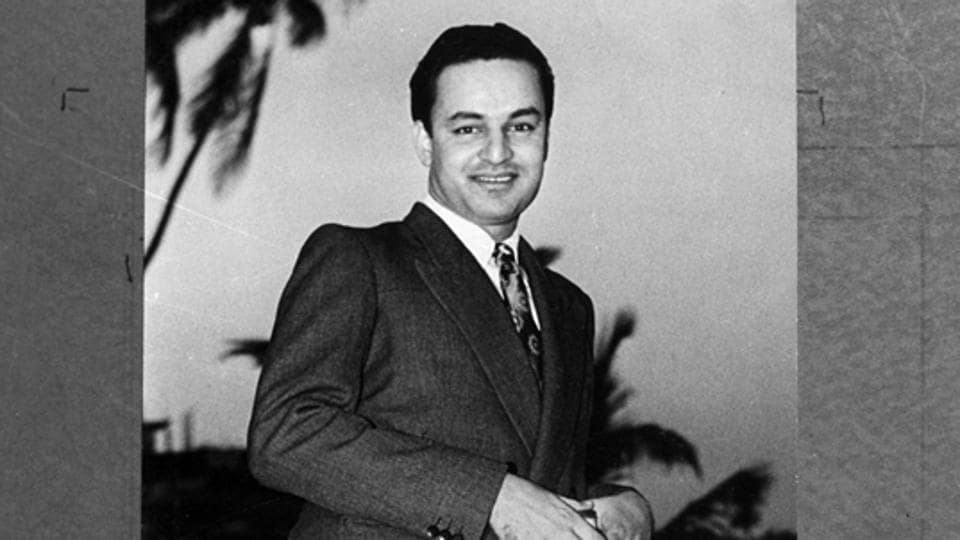
The Mathur residence at Lower Parel is abuzz with plans of world concerts, titled Shatayu Mukesh, to mark the iconic playback singer’s birth centenary on July 22, 2023. His son, 73-year-old Nitin Mukesh, will set out with his team of musicians on a two-month trip across USA and Canada in August. Accompanying him will be his sister Namrata, a singer, and younger son Naman, a social-media whiz. 1500-2000 songs, some unreleased, from Mukesh’s repertoire in Hindi and other regional languages will fill up the auditoria. Plans are on for shows in Australia and the UK later in the year.
In fact, Mukesh fans started celebrating the legend’s landmark year along with the family with performances across the country from the beginning of 2023. A big fan of the singer, union minister Nitin Gadkari stayed right till the end of a concert held in Nagpur in February. At a small show at the Vidhan Bhavan in March, seated in the audience, deputy chief minister Devendra Fadnavis sang along with Nitin Mukesh as soon as he broke into ‘Ek din bik jayega, maati ke mol’. When the singer skipped the third stanza to cut the song short, Fadnavis prompted him with the first verse of the third stanza – ‘Parde ke peeche baithi saawal gori…’ and Nitin picked up the cue.
Mukesh acquired the sobriquet of ‘tragedy king’ in the film industry for his nasal voice – it conveyed agony, sorrow and pathos like no other. What’s more, nearly five decades since his passing, emerging singers continue to breathe life into his music.
“It has been 47 years since my father passed away and I have no qualms about admitting that even today my kitchen fires burn because of him,’’ says Nitin, who remembers being affectionately called ‘laley’ by his father. “His legacy is evergreen and everlasting. At least, in my lifetime I will continue to sing his songs.’’
Nitin, the eldest of five siblings, is also penning his father’s biography as he says he “was fortunate to have spent the maximum time” with him, having “accompanied him on concerts in India and abroad”.
“I have clear memories of him from the time I was three,” he says. He was by his father’s side when he died of cardiac arrest in Detroit, where Lata Mangeshkar and he were on a live-concert tour, on August 27, 1976. Mukesh was 53.
After a restful afternoon, the singer suffered a stroke when he was planning to take his evening shower. He was rushed to the hospital and “was gone in 40 minutes”. “It was my blackest hour,” says his son. A Ram bhakt, Mukesh went into the ICU hugging a copy of the holy book given to him by Hridaynath Mangeshkar’s wife, Bharti, who was in Detroit with Lata Mangeshkar. In his lifetime, Mukesh was one of the first artistes to record the ‘Sampoorna Ramayana’ for HMV and to date, it is considered one of his most prestigious works.
A school dropout, he was keen that his children be educated and Nitin took a few raps on the knuckles for sometimes cutting class in school. The singer cut him some slack only when Nitin recorded an English song (picturised on Rishi Kapoor in ‘Mera Naam Joker’, 1970). “I was the only one who got some concessions, as I had the genes of a singer,” says he.
Although Mukesh sang the maximum number of songs for Dilip Kumar and Manoj Kumar, it is Raj Kapoor, who had once famously remarked ‘Mukesh meri rooh hai’. The comment stuck as Mukesh’s voice was closest to Kapoor, feels Nitin. “It was uncanny. They also spent a lot of time together socially,” he says.
Those who have visited the family’s old Napeansea Road residence have seen a larger-than-life portrait of Raj Kapoor and him occupying a place of pride in the living room.
Mukesh was known to save bottles of the collectible Munro’s King of King’s scotch whiskey (sold in porcelain jars) for the blue-eyed actor-filmmaker, who often dropped by at his residence. “He himself could afford only the modest Red Label,’’ says Nitin. Mukesh was diagnosed with diabetes at 34, after which he was asked to ration his drinks.
Just before ‘Ram teri Ganga maili’ was ready for release in 1985, Kapoor told this reporter, “I loved Mukesh not only because he was my ‘soul’ but also because he was the shoulder I used to cry on. Mukeshchand was easily the most affable person I have known. He did not have a mean word for anyone. He was patient and a good listener. And, no one had a negative thing to say about Mukesh.”
The last song he recorded for Kapoor was for the film ‘Satyam Shivam Sundaram’ in July 1976, just before the fateful America tour.
Recalling his father’s simplicity, Nitin says, “He loved dressing up but his clothes, cologne and everything in his wardrobe was modest.’’ He once refused to carry a pair of expensive shoes gifted by his eldest daughter on a world-tour as he said ‘in my lifetime I have not worn something so expensive on my feet’. The pair was later passed down to Nitin by his mother, who told him, ‘from now on, you will wear your father’s shoes’.
Some of Mukesh’s biggest hits came from composer Salil Chowdhury, who was also called the Beethoven of Bollywood: ‘Dil tadap tadap ke’ (‘Madhumati’, 1958), ‘Kahin door jab din dhal jaye’ (‘Anand’, 1971) and ‘Yeh din kya aaye’ (‘Chhoti si Baat’, 1975). Choudhury was of the opinion that Mukesh lent magic to his compositions.
Mukesh was to the manor born. Motilal, the suave superstar of the 1930s was acquainted with the Mathurs. He once heard a teen Mukesh singing a K L Saigal song when he was in Delhi to attend a wedding. Spotting talent, Motilal brought Mukeshchand (one of the 10 children of the kayastha Mathur family) to Mumbai. In tinsel town the actor provided the boy with a roof over his head, put food on his table and clothes on his back, but told him he would get no allowance. If he wanted money, he would have to step out of his comfort zone and earn it.
With a stroke of luck, Mukesh got a break soon enough as an actor in ‘Nirdosh’ (1941), followed by lead roles in a few other films. That may have fuelled his kitchen, but as Nitin says, “It was sheer luck that my father did not turn out to be a good actor. Had he succeeded, the world may never have seen such a legendary singer.”
He is wary of every singer with a nasal voice likening themselves to Mukesh. “No one, including me, came anywhere close to the original. Legends cannot be imitated, substituted or replicated. People still pine for him alone.’’
Nitin feels he is inimitable as he himself is in demand today for his late father’s music. “I get invitations from across the country and abroad to perform his music every other day. Even today, people want me to start a concert with ‘Dil jalta hai, toh jalne do’, from ‘Nirdosh’. That was his very first song from 80 years ago,” he says. One of Mukesh’s last songs was ‘Kabhie kabhie mere dil mein khayal aata hai’ (‘Kabhie Kabhie,’ 1976) which fetched him a Filmfare award, posthumously.
“In the beginning, I thought the Mukesh craze would fade in five to ten years of his passing. But five decades after his death, people still want me not because of me but because they hear Mukesh in me. He was a rockstar.’’
An early Mukesh-like voice to hit the screen was that of Manhar Udhas, in 1969. Music composer Viju Shah, composer Kalyanji’s son, recalls his father using Manhar to sing a scratch for one of his compositions for ‘Vishwas’ (1969). “When Mukeshji walked in to dub the song, as was practice, he told my father ‘Yaar, why are you getting me to dub this? This boy Manhar has sung ‘Aap se humko bichhade hue’ so well.’”
“This sort of large-heartedness is rare to come across in the film industry,” he says.
A self-taught man, Mukesh who was a non-matriculate, went to a Pashtu school and only wrote in Urdu. He could not read Hindi; all his song books were in Urdu. “But over a period of time, he managed to learn and speak English impeccably.”
So did his father have favourite singers?
“While he acknowledged all his fellow singers and lavished them with praise, to Mohammad Rafi, he had once said ‘Arre Rafi miya, kya gaana gaya tumne,’ after listening to ‘Din dhal jaye’ (‘Guide,’ 1966) on loop.” When ‘Guide’ had released, Mukesh is known to have offered Rafi an overseas ticket as a token of his appreciation; alongside, he also jested saying with Rafi out of town, he and artistes like him would have opportunity to sing some golden tunes. To Kishore Kumar Mukesh is often known to have said, ‘Kishore tum ne toh sabki chutti kar di.’


