
 E-Paper



Light on secret life of city leopards
The findings from a two-year-long study were released by the forest department, along with researchers from Wildlife Conservation Society (India), on Wednesday. Crucially, the study proves (using empirical data) what Mumbaikars, especially Adivasis living near this landscape, have long held as common knowledge: a leopard is always close at hand.

 Prefer HTon Google


Mumbai: A first-of-its-kind study that used radio telemetry to observe human-leopard interactions in Sanjay Gandhi National Park (SGNP) has revealed valuable insights on how these apex predators utilise space, time and food in the SGNP and adjoining areas of Aarey and Tungareshwar Wildlife Sanctuary.
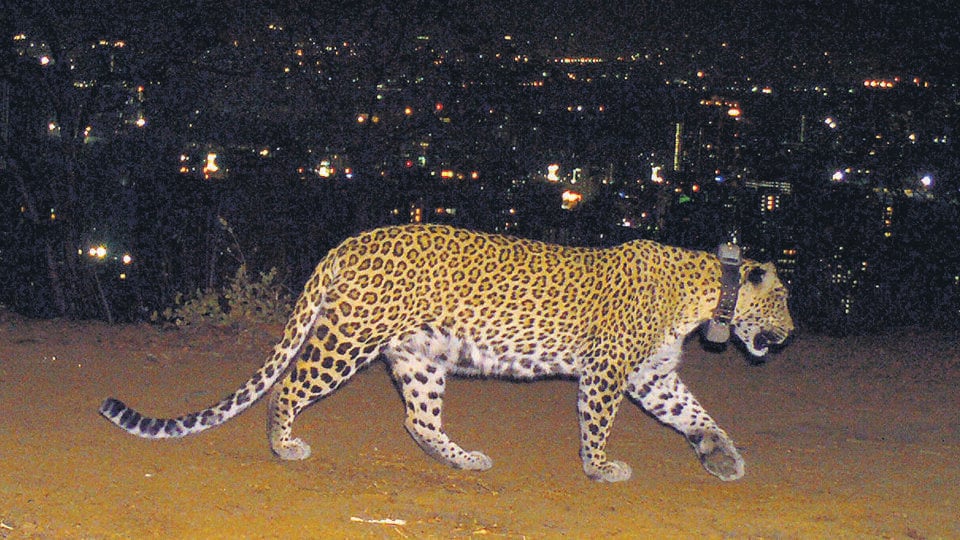
The findings from a two-year-long study were released by the forest department, along with researchers from Wildlife Conservation Society (India), on Wednesday.
Crucially, the study proves (using empirical data) what Mumbaikars, especially Adivasis living near this landscape, have long held as common knowledge: a leopard is always close at hand. Case in point here is a female specimen, Kranti, who delivered two separate litters of cubs over the study period (Oct ‘18 to Oct ‘22).
“Kranti’s selection of denning sites was very close to human settlements on both occasions. The first denning site was approximately 60m from a Waghoba (leopard) shrine and 203m from the nearest human settlement. During her second litter, her den was barely 25m from an open area where people did farming-related activities and had a high tourist visitation rate (approximately 30 people/hour for morning walks),” the study notes.
“She kept her cubs at this site for the first 13 days and then moved them to another denning site 186m from the nearest human settlement and 47m from a trail frequented by tourists and tribals,” according to the study.
“We selected animals who have been known to live around the Park’s periphery, closer to humans. The underlying goal was to generate data that can help in conservation,” said Nikit Surve, programme head (human-wildlife interactions), WCSI. Previous research by Surve had shown SGNP to have the highest documented density of leopards in the world, at about 26/100km2.
Surve’s team has now demonstrated using GPS data to track how leopards move through SGNP’s porous boundaries, the areas they frequent, the roads they cross, where and what they eat, where they nurse their cubs, how they, too, avoid conflict, and at what time of the day they are most active.
Domestic prey (dogs, cats, fowl) formed the majority of leopard’s diet, and garbage dumps near human settlements in the study area were also found to attract leopards, especially at night. Such insights will help the forest department make informed management decisions.
Remarkably, the leopard Jeevan (L126) crossed the busy Ghodbunder Road on 15 occasions, every so often “sitting by the roadside and observing the road from a vantage point before crossing”, the study says. On some occasions, Jeevan would directly cross the road, whereas, on others, he used nearby culverts.
Another leopard, Maharaja (L93) crossed the Chinchoti-Bhiwandi road and the Vasai-Panvel railway line on six occasions, but he preferred to cross directly across the road when vehicular movement was low. “The corridors need to be strengthened by building and maintaining box culverts or well-designed underpasses at strategic locations,” the study recommended.
In another instance, Kranti was seen on a camera trap placed on a trail frequented by humans. Just a minute later, she was seen turning in the other direction, and a minute after that the camera trap caught a pair of human legs walking by.
“We actually managed to speak to those individuals, and they had no clue how close they were to a leopard. We saw something similar with Tulsi (L36) when she was photographed being chased by a dog at a dumping site within 20metres of a human settlement,” Surve explained.
The study also records the leopard Savitri (LC115) trying to hunt on a film set in Film City, walking on the roof at 11pm while the din of the shoot was dying down and people were wrapping up their chores.
“Her presence was justified by two adult dogs and seven puppies. She finally hunted a pup once all the people left the filming set,” the study said, adding, “Even when leopards are present in human-use areas, they avoid humans, as is evident from our results.”


