
 E-Paper



Raj takes a leaf out of uncle’s book, to try win over Aurangabad
Raj, whose party competes with the Shiv Sena for the same electoral catchment, is taking a leaf out of his late uncle and Sena supremo Bal Thackeray’s book, by zeroing on Aurangabad


Mumbai: On 1 May, Maharashtra Navnirman Sena (MNS) chief Raj Thackeray, who is gradually taking a turn towards right-wing politics, is scheduled to hold a rally at Aurangabad in Marathwada, around 350 km from Mumbai.
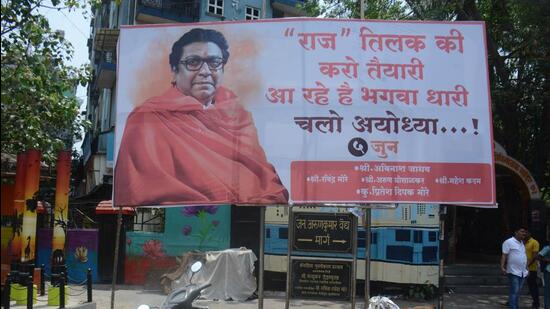
Raj, whose party competes with the Shiv Sena for the same electoral catchment, is taking a leaf out of his late uncle and Sena supremo Bal Thackeray’s book, by zeroing on Aurangabad as the site for his ambitious metamorphosis into what his party cadres would call ‘Hindu Hriday Samrat 2.0’.
In the late 1980s, Bal Thackeray had used Aurangabad as his spring-board to expand the Shiv Sena beyond its traditional zone of influence in Mumbai and Thane. Buoyed by its victory in the 1985 Brihanmumbai Municipal Corporation (BMC) elections, the Shiv Sena chief began to recast himself as the Hindu Hriday Samrat — as Sena workers referred to him then — in the wake of communal tensions in the country and in Maharashtra.
The MNS is said to be eager to tap into disgruntled Shiv Sena voters who may be upset at the party being forced to dilute its commitment to Hindutva after coming to power in an alliance with ‘secular’ forces like the Congress and the Nationalist Congress Party (NCP). Raj also changed the flag of his party to a saffron one and has set a deadline of May 3 for loudspeakers to be taken down from mosques failing which his workers will play the ‘Hanuman Chalisa’ before them.
This gradual turn to Hindutva and dilution of the anti-Hindi speaking migrant agenda, is seen as clearing the decks for an electoral adjustment between the MNS, which has taken a pro-nativist, sons-of-soil position for a decade-and-half, and the Bharatiya Janata Party (BJP).
In 1987, the Sena chief openly solicited votes for Hindutva in the by-elections to the Vile Parle assembly seat in Mumbai, which its candidate Dr Ramesh Prabhoo won.
The following year, Thackeray toured the communally-sensitive Marathwada region and his party made a swash-buckling entry into its politics. It won 27 of 60 seats in the civic polls at Aurangabad held that year. In 1989, the Shiv Sena drew first blood in the Lok Sabha elections by getting four of its candidates elected. Of these, two were from Marathwada including Moreshwar Save (Aurangabad) and Ashok Deshmukh (Parbhani). Marathwada remains a stronghold of the Sena.
Aurangabad seems to be an obvious choice for the MNS in its Hindutva ambitions due to its deep communal fault-lines.
That the MNS is seeking to replicate the Shiv Sena of the 1980s is evident from the teasers of Raj’s proposed rally released on social media, which position him as a Hindutva icon and use the same iconography deployed by the Sena. It also refers to Aurangabad as ‘Sambhajinagar’—the name popular among Sena and BJP loyalists. Incidentally, the rally, permission for which has not yet been granted by the police, is scheduled to be held on the same grounds where the late Shiv Sena supremo had addressed his first rally in 1988.
“In 1988, Balasaheb had held a public meeting on the Marathwada Sanskrutik Mandal ground in Aurangabad, and the Shiv Sena could get 27 corporators elected. Raj saheb hence has an emotional connect with this ground,” said MNS leader Prakash Mahajan, who is the younger brother of late BJP leader Pramod Mahajan.
“Since this area was part of the Nizam state and as the Razakars unleashed atrocities on the Hindus, the Hindus in this region are hardline when it comes to Hindutva sentiment,” explained Mahajan, when asked about the choice of Aurangabad.
The Marathwada region was part of the dominions of the Nizam of Hyderabad. The years leading to independence saw the para-military Razakars, who were a private militia supported by the Nizam, unleash a reign of terror against the Hindus. The liberation of Hyderabad in 1948 by the Indian Army in what was however dubbed as ‘Operation Polo’ or ‘Police Action’ was followed by massive communal violence against Muslims. A mixed-faith committee under Pandit Sunderlal that toured the region estimated the deaths between 30,000 and 40,000. The collective inter-generational trauma of this violence has fueled right-wing politics in the region.
However, former Shiv Sena MP Chandrakant Khaire, who was among the first batch of Sena corporators elected in 1988, claimed that Raj would not dent the party’s prospects. “It will make no difference. People will just flock to his meeting to hear his speech and watch his mimicry,” he added.
In the 2019 Lok Sabha polls, Imtiaz Jaleel of the All India Majlis E Ittehadul Muslimeen (AIMIM) defeated Khaire from Aurangabad. The presence of a Sena rebel in the fray had queered Khaire’s pitch.
Senior journalist Prakash Akolkar, who is the author of Sena’s first Marathi biography Jai Maharashtra (1998), noted that Raj’s Hindutva pitch may not yield the expected results like it had for the Shiv Sena. “Then, the Ram Janmabhoomi agitation had reached a crescendo in the country and the BJP was yet to join the campaign officially. This helped Bal Thackeray. Now, the Hindutva icons are Narendra Modi and Amit Shah. Then, the question is, will the people support a duplicate Hindu Hriday Samrat?”
Akolkar said that while there were doubts if the MNS could gain massively from this campaign, it could tap fence-sitting Sena voters, and thus help the BJP in the coming civic body polls scheduled to be held later this year.
Senior journalist and political analyst Hemant Desai said that the Sena’s spread in Marathwada had coincided with factors like the violence against Dalits after the demand for renaming the Marathwada University after Dr Babasaheb Ambedkar and Sharad Pawar’s decision to merge his Congress (S) into the Congress (which led to his cadre migrating to the Shiv Sena in the region). A commission of inquiry under Justice Dinshah Pirosha Madon had criticised the Shiv Sena and right-wing groups for their role in the 1970 riots at Bhiwandi.
Desai said that Raj could see gains due to the rising majoritarian sentiment in the country. “The BJP has no staunch Hindutva face in the state as its leaders like (former chief minister) Devendra Fadnavis and state unit chief Chandrakant Patil don’t have a Hindutva charisma... Raj’s popularity (on this count) may affect them,” he said.
Stay updated with all the Breaking News and Latest News from Mumbai. Click here for comprehensive coverage of top Cities including Bengaluru, Delhi, Hyderabad, and more across India along with Stay informed on the latest happenings in World News.


