
 E-Paper



SC upholds NGT order, instructs BMC to take steps to stop polluting water bodies
The Supreme Court on Friday declined to stay an order of the National Green Tribunal (NGT), dated October 2020, which rapped the Brihanmumbai Municipal Corporation (BMC) for discharge of raw sewage into city creeks, rivers and drains.

 Prefer HTon Google


The Supreme Court on Friday declined to stay an order of the National Green Tribunal (NGT), dated October 2020, which rapped the Brihanmumbai Municipal Corporation (BMC) for discharge of raw sewage into city creeks, rivers and drains. The SC said prescribed pollution norms are being violated, and directed BMC to expedite compliance with NGT’s orders which includes paying environmental compensation to the tune of ₹34 crore, in addition to future penalties.
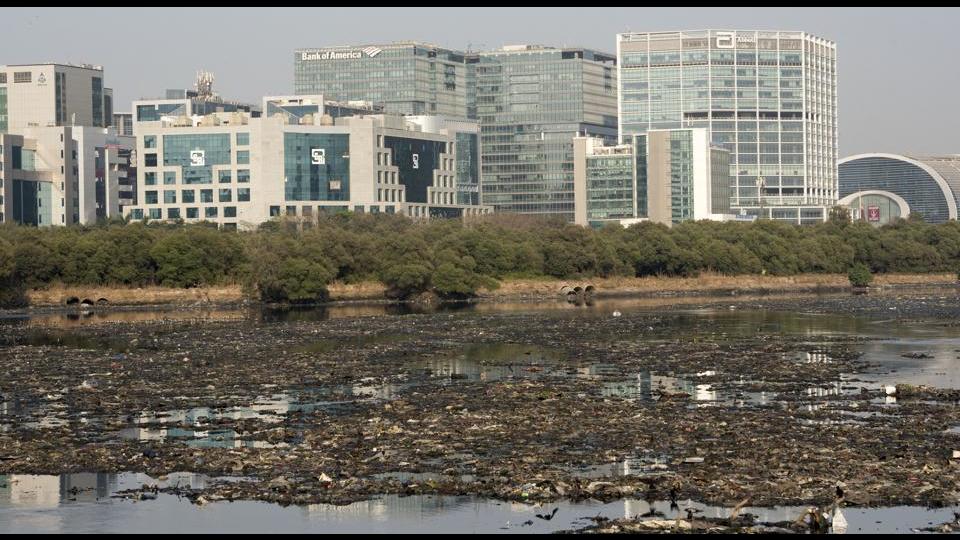
BMC had filed a civil appeal before the Supreme Court in March, seeking a stay on NGT’s directions issued in response to a public interest litigation (PIL) by NGO Vanashakti. The civic body had also attempted to stay a subsequent execution application that Vanashakti filed before NGT in June after observing little action by BMC toward complying with the Tribunal’s orders. A May audit report by the Maharashtra Pollution Control Board (MPCB) revealed that none of the Tribunal’s mandated actions have been complied with so far.
The SC on Friday allowed Vanashakti’s execution application to proceed and also clarified that the municipal commissioner himself will be responsible for compliance with NGT’s directions. However, the Apex court granted some relief in that the commissioner need not appear before the Tribunal in person.
NGT had last month directed BMC commissioner Iqbal Chahal to be present in person for the next hearing on August 28, while imposing additional environmental compensation of ₹2.1 crore on BMC.
“The municipal corporation must, in our view, make every effort to comply with the directions of the NGT by setting up the required facilities and upgrading existing facilities. Humanity can ill afford the luxury of using water bodies as dumping grounds of municipal waste. It is absolutely no valid answer to say that the directions which have been issued by NGT would pose budgetary implications for the municipal corporation...,” noted the Supreme Court bench comprising justice DY Chandrachud and justice MR Shah.
The Apex court also directed that within a period of two weeks, the commissioner shall file an affidavit before NGT “categorically indicating the steps which have been taken to comply with the directions of NGT, particularly with regard to ensuring compliance with the requisite standards for the discharge of effluents including municipal waste and sewage.”
BMC, in a written response to MPCB earlier this year, had stated it would require at least another “four to five years” to stop polluting Mumbai’s creeks, stormwater drains and rivers with raw or partially-treated sewage.
Officials with BMC’s sewage disposal project declined to comment on the story, saying that an official response will be presented to NGT in compliance with Supreme Court directions.
At present, only one of the eight operational sewage treatment plants (STP) — the 37 million litres per day (MLD) one in Colaba — in the city is compliant with the Central Pollution Control Board’s (CPCB) latest discharge standards. The remaining STPs in Worli, Bandra, Ghatkopar, Bhandup, Versova, Charkop and Malad, some of which were constructed more than 20 years ago, are currently not fully equipped with the required sequencing batch bioreactor (SBBR) technology and continue to discharge polluting effluents into creeks, laboratory analyses by MPCB showed.
However, fully-functional STPs are not the only solution to the problem. To prevent dry weather flow of untreated sewage in city’s creeks and rivers and to prevent the flow of waste into rivers, Mumbai also needs a well-connected system of sewer lines. The existing 2,025-km-long network services only 84% of Mumbai’s developed area and 68% of the city’s population, as per BMC. Due to these shortcomings, there are still 93 openings across the city and suburbs which continue to discharge untreated sewage directly into creeks and drains.


