
 E-Paper



Travel in Mumbai: Public transport share slipped by 13% points in 12 years
Over 400km of metro rail corridors, 1,200km of an additional road network, 530km of dedicated bus lanes, multiple inter-state and intercity bus terminals, passenger water terminals, cycle tracks are some of the infrastructure projects that are envisaged in Mumbai Metropolitan Region (MMR) in the next two decades.

 Prefer HTon Google


Over 400km of metro rail corridors, 1,200km of an additional road network, 530km of dedicated bus lanes, multiple inter-state and intercity bus terminals, passenger water terminals, cycle tracks are some of the infrastructure projects that are envisaged in Mumbai Metropolitan Region (MMR) in the next two decades. The Mumbai Metropolitan Region Development Authority (MMRDA) on Thursday released the Comprehensive Transportation Study (CTS) outlining some new projects and implementation of proposed projects in MMR.
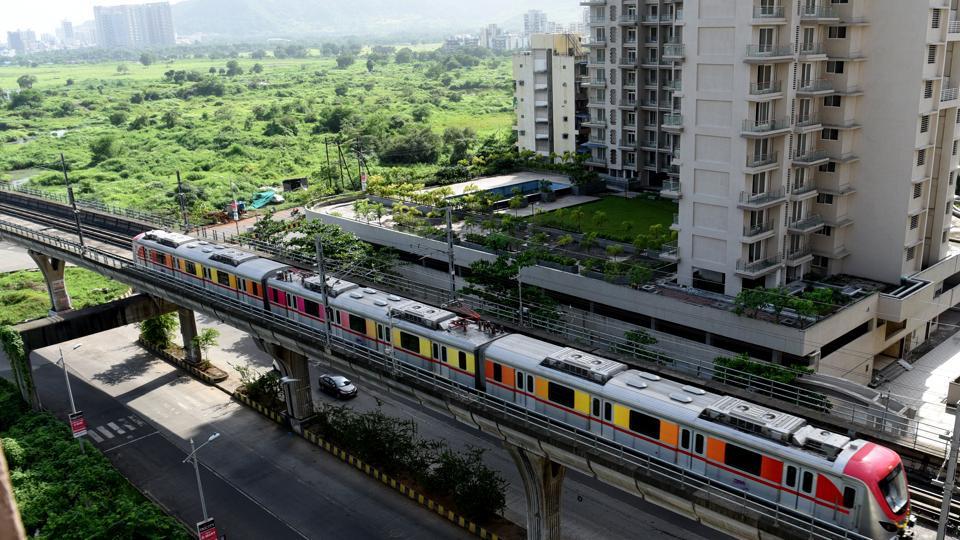
It also said that the share of public transport has dropped considerably between 2005 and 2017. MMRDA officials described the decline in the use of public transport in MMR as a “danger signal” and “serious issue” which needed to be addressed immediately. SVR Srinivas, Metropolitan Commissioner, MMRDA, said the share of suburban trains, Brihanmumbai Electric Supply and Transport (BEST) Undertaking buses has gone down in the 12 years.
“In the past 10 years or so, a serious trend has been observed. The share of public transport in MMR has dropped from 78% to 65%. The share of railway and BEST buses also has reduced. This means that private vehicles have tremendously increased. This is a danger signal according to me,” Srinivas said during the unveiling of the CTS.
According to the report, the trips of two-wheelers and cars have increased nearly twofold during the period. In 2005, MMR had 0.63 million trips in cars and 1.05 million two-wheeler trips. This increased to 2.34 million two-wheeler trips and 1.59 million car trips in 2017. Interestingly, though the trips of suburban trains increased from 6.98 million to 8.11 in the 12 years, the percentage of people reduced from 51.8% to 43.2%.
Srinivas added, “In a city like Mumbai which grows vertically, the share of public transport should increase and this is dangerous. We are at a point of inflexion and need to take immediate steps. Unless we have more people using public transport, we cannot cope with the demand.” He added that with the implementation of the CTS they intend to increase the share of public transport to 75.4%.
The first Comprehensive Transport Study was released in 2008 based on which several projects were implemented in Mumbai and MMR, including the 6.45-km Santacruz-Chembur Link Road, Mumbai Urban Transport Project (MUTP), which included suburban railway projects, 11.4km Versova-Andheri-Ghatkopar metro line, and 16.8-km Eastern Freeway project.
The CTS 2021-2041 largely consists of projects proposed or planned earlier. The new study, meanwhile, is divided into the short term plan (till 2026) medium-term (till 2031) and long term (till 2041). The study recommended a 487-km metro network, 232-km suburban rail network, 533-km dedicated bus lanes/BRTS, and an additional road network of 1,264-km by the horizon year 2041.
Tourism and environment minister Aaditya Thackeray, who is also the guardian minister of the Mumbai suburban district, said developed nations largely depend on public transportation. For Mumbai, the dependency would come when there are additional BEST buses, more metro lines. “Today we have 3500 buses, we will be able to fully utilise the public transport potential when we have 10,000 buses,” he said.
State urban development minister Eknath Shinde said that like suburban railways, Metros will have to be the lifeline of MMR which will help reduce the private vehicles on the roads. He also said that the projects need to be completed in a time-bound manner to see their full impact.
Chief minister Uddhav Thackeray said, “Planning is a continuous process. The transport system is the bloodstream of our city and our needs are increasing and planning is a must to follow these needs. Today, the percentage of people travelling through public transport has reduced as seen by the numbers. But it will increase only when we give a clean and neat public transport system to people. However, we should not kill the environment while going for development.”
Some of the projects proposed in the CTS include a four-lane tunnel under the Sanjay Gandhi National Park between Borivali and Thane, as 20.75km of Metro line between Taloja and Kalyan, Nariman Point-Cuffe Parade missing link, Thane coastal road, Metro line between Siddhivinayak (Prabhadevi) and the upcoming Navi Mumbai International Airport. The estimated cost for all projects to be completed is over ₹4 lakh crore. The MMRDA expects that nearly ₹48,761 crore will come from private participation, ₹93,933 crore would come from the Centre through either share or subsidy, and ₹803 crore from development charge.
The study further recommended four interstate Bus Terminals, 13 inter-city bus terminals, five inter-city rail terminals, five major and 14 minor truck terminals and 25 passenger water terminals by the year 2041. As a part of an immediate requirement, the study has also recommended various traffic management measures such as junction improvements, flyovers, elevated roads, road-over bridges, subways, and cycle tracks.
The study recommended the construction of 322km of metro lines or 14 metro corridors, 172km of additional suburban railway, 319km dedicated bus lanes or Bus Rapid Transit System (BRTS), 824km of additional road network in the MMR by 2026. The estimated cost of these projects is ₹3.13 lakh crore.


