
 E-Paper



Air quality dips in Noida, Ghaziabad as compared to last year, Greater Noida fares better
Experts warn that if this trend continues, Ghaziabad could soon slip into the ”very poor” category, which poses significant health risks to residents, especially those with pre-existing conditions such as asthma, heart disease, and respiratory issues

 Prefer HTon Google


The air quality in Noida, Greater Noida, and Ghaziabad continued to remain ”poor” with the Central Pollution Control Board (CPCB) recording an air quality index (AQI) of 300 in Noida, 254 in in Greater Noida, and 305 in Ghaziabad on Wednesday, signalling the start of the annual deterioration in air quality as the colder months approach.
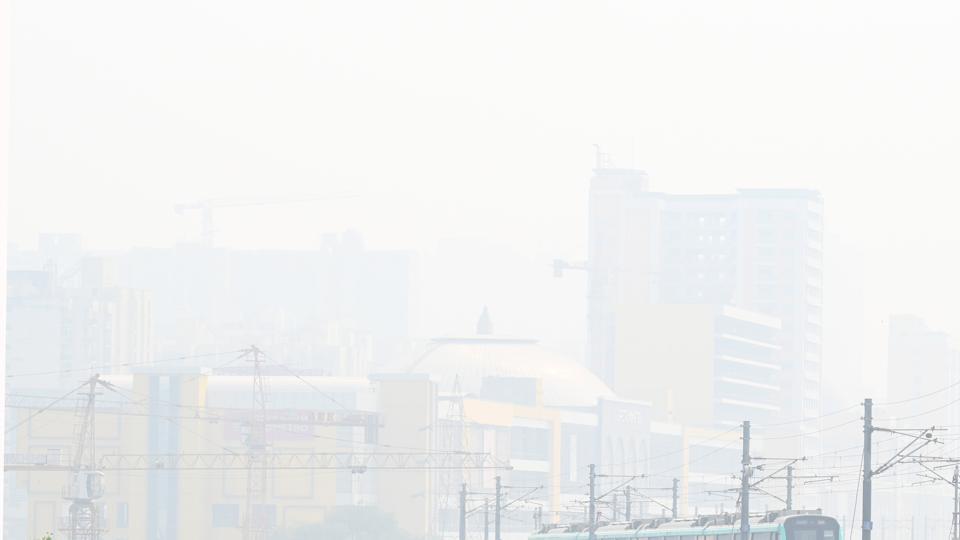
Noida, part of Gautam Budh Nagar district in the National Capital Region (NCR), has seen its air quality worsen significantly compared to last year. On October 23, 2023, the AQI in Noida stood at 229, in the ”poor” category. However, this year’s AQI of 300 marks a notable decline.
Greater Noida, on the other hand, has shown a slight improvement. Last October 23, the AQI in Greater Noida was 299, while this year it dropped to 254, though it still remains in the ”poor” category, according to the CPCB data.
The most alarming deterioration, however, is in Ghaziabad, where the AQI has escalated sharply. In 2023, Ghaziabad recorded an AQI of 220 on October 23, but this year the number has spiked to 305, pushing it deeper into the ”poor” category.
Experts warn that if this trend continues, Ghaziabad could soon slip into the ”very poor” category, which poses significant health risks to residents, especially those with pre-existing conditions such as asthma, heart disease, and respiratory issues.
According to AQI scale, readings between 0 and 50 are considered “good”, 51 and 100 are ”satisfactory”, 101 and 200 are ”moderate”, 201 and 300 are ”poor”, 301 and 400 are ”very poor”, and 401 and 450 are ”severe”. The AQI is considered “severe+” , when it exceeds 450.
Weather experts said the rise in AQI in Noida and Ghaziabad can be attributed to a combination of factors. As winter approaches, the onset of cooler temperatures and reduced wind speeds prevent pollutants from dispersing, trapping them closer to the surface.
Additionally, the burning of crop stubble in neighbouring states of Punjab and Haryana, besides industrial emissions and vehicular pollution also contribute to the worsening air quality, they said.
“Pollution levels rise as temperatures drop, especially when winds are calm during the night. Lack of wind allows local pollutants to accumulate. Over the last 24 hours, wind patterns have shifted from easterly to westerly, which can further impact air quality. Additionally, stubble burning from Punjab and Haryana continues to contribute to the worsening pollution situation. As we approach Diwali, we can expect conditions to deteriorate further,” said Mahesh Palawat, vice president, climate and meteorology, Skymet Weather.
As pollution levels remain a pressing concern across the NCR, authorities are ramping up efforts to control emissions by limiting the use of diesel generators, enforcing stricter regulations on industrial output, and promoting cleaner transportation alternatives.
While Greater Noida’s slight improvement offers some hope, the overall air quality across the region is still concerning, with residents urged to take precautions. In response to alarming air quality levels in the National Capital Region (NCR), the Commission for Air Quality Management (CAQM) on Monday activated Stage 2 of the graded response action plan (Grap) to combat “very poor” air quality.


