
 E-Paper



NCRTC to place 2,000 CCTV cameras for safety of rapid rail passengers
Ghaziabad: Prioritising the safety aspects of travel — especially for women, children and senior citizens — the National Capital Region Transport Corporation (NCRTC) has plans to cover the entire 82-kilometre stretch of the Regional Rapid Transit System (RRTS) project with a strong network of about 2,000 CCTV cameras, sources said on Wednesday


Ghaziabad: Prioritising the safety aspects of travel — especially for women, children and senior citizens — the National Capital Region Transport Corporation (NCRTC) has plans to cover the entire 82-kilometre stretch of the Regional Rapid Transit System (RRTS) project with a strong network of about 2,000 CCTV cameras, sources said on Wednesday.
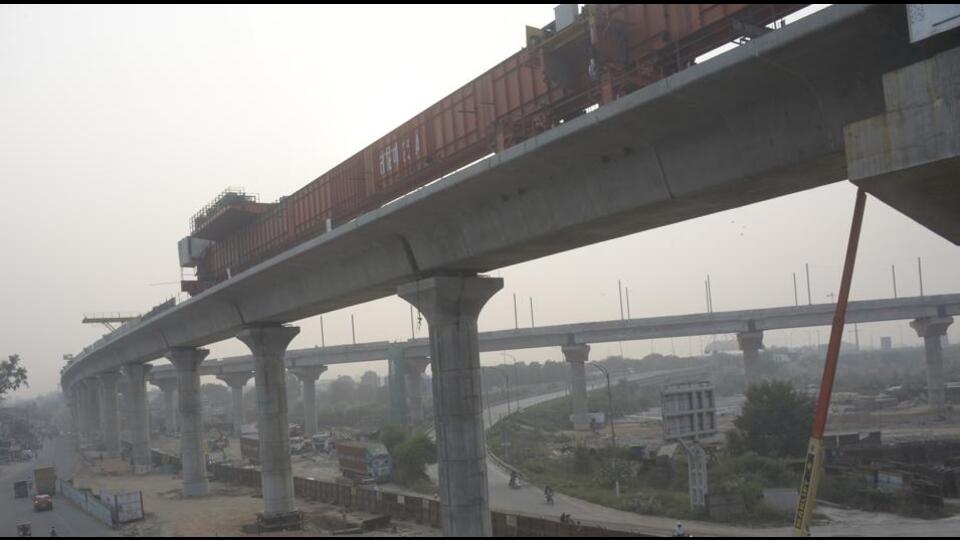
The RRTS project is pegged at ₹30,274 crore and will link the three cities of Delhi, Ghaziabad and Meerut with a high-speed train network, which is estimated to cater to about 800,000 passengers on a daily basis once commissioned in March 2025.
“The CCTVs will be regularly monitored with the help of three control and command centres. The CCTV coverage will be widespread for the surveillance of all public access areas at stations and even on overbridges connecting adjacent roads. The internal security of the stations will be manned by a security agency. With these features, we are sure that passengers can safely use the RRTS trains even at late night,” said Puneet Vats, NCRTC chief public relations officer.
The three command and control centres are being developed at Jangpura in Delhi, Duhai in Ghaziabad and Modipuram in Meerut. The one at Duhai is already in its advanced stage as it will also cater to the 17-km ‘priority section’ in Ghaziabad, which is scheduled to get operational in March 2023.
The priority section in Ghaziabad will be the first RRTS stretch across the country. The section will have five stations at Sahibabad, Ghaziabad city, Duhai, Guldhar and Duhai depot.
The six coaches of RRTS trains will also have one coach reserved for women passengers, while reserved seats will also be made available for women, senior citizens and differently-abled persons in other regular coaches.
NCRTC officials said that coaches will also have emergency stop buttons for use in any emergency situation or in case a passenger requires immediate help.
“Further, we are also deliberating to ensure that station-use time gets reduced for passengers. This will be done with the help of reducing time in different processes so that passengers are able to access the trains fast and also make faster exit from stations. A team has been deployed to chalk out a detailed plan,” Vats added.
Most of the RRTS stations will have three to four levels and the NCRTC is also providing provision of lifts and escalators, which will be helpful in providing better accessibility.
The 82-km long RRTS corridor will have 25 stations with 22 stations under the jurisdiction of the state of Uttar Pradesh.
The NCRTC has proposed 30 trains of six coaches each, besides 10 trains with three coaches each that will serve as a local transit module in Meerut. The trains have a design speed of 180 kilometres per hour (kmph) with a running speed of 160kmph and an average speed of 100kmph.

Stay updated with all the Breaking News and Latest News from Mumbai. Click here for comprehensive coverage of top Cities including Bengaluru, Delhi, Hyderabad, and more across India along with Stay informed on the latest happenings in World News.


