
 E-Paper



4 tribals, 2 Dalits in new Odisha council of ministers led by CM Majhi
The move comes after the BJP successfully breached the Dalit-tribal vote bank of the BJD in the 2024 assembly as well as the Lok Sabha elections in the state


The new council of ministers in Odisha led by chief minister Mohan Charan Majhi has four tribals and two Dalits- a move that comes after the Bharatiya Janata Party (BJP) successfully breached the Dalit-tribal vote bank of the Biju Janata Dal (BJD) in the 2024 assembly as well as the Lok Sabha elections in the state.
In this Assembly election, the BJP won 18 of the 33 reserved Scheduled Tribes (ST) seats, wresting nine seats from the BJD and the Congress. In tribal-dominated Mayurbhanj district, it won all the nine assembly constituencies while it won 14 of the 24 seats reserved for Dalits, wresting nine seats from BJD, indicating its rising trust among the Dalits and tribals. The party won four of the five Lok Sabha constituencies reserved for tribals and all the three Lok Sabha constituencies reserved for Dalits. The party’s vote share went up by 8 % from the 32% it won in 2019 election.
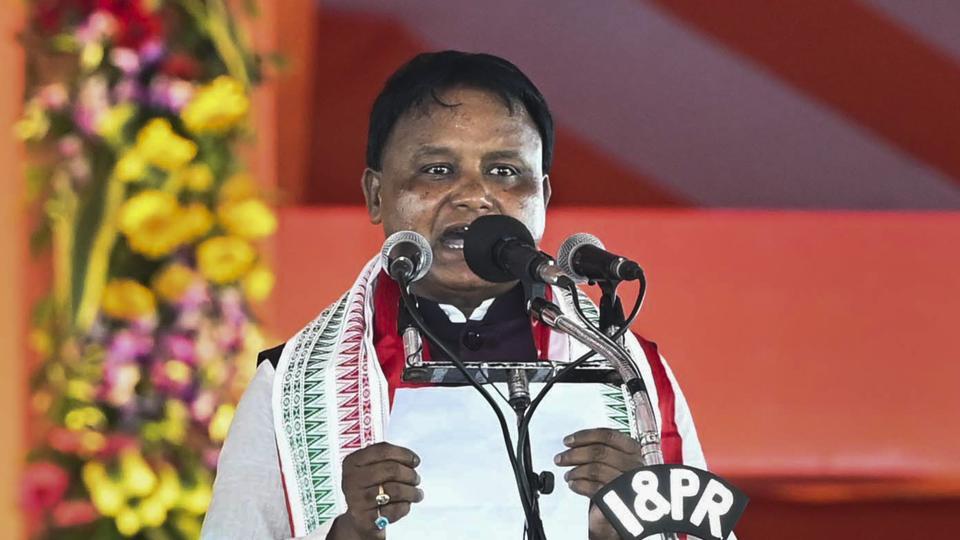
Among the 16 ministers who took oath on Wednesday, four are tribals while two are Dalits with BJP making Majhi, a Santhali tribal, its first chief minister, a move aimed at not just the forthcoming assembly polls in Jharkhand but setting the narrative of being a party of lower castes. While the CM is a tribal, for the first time in the history of Odisha politics, there are two tribal Cabinet ministers - Rabi Narayan Naik and Nityanand Gond - while Kolha tribal Ganesh Ram Singh Khuntia has been made minister of state with independent charge.
BJP also made a Dalit a Cabinet minister while another young Dalit politician from coastal Bhadrak district was made a minister of state with independent charge. The Cabinet also has a woman as deputy chief minister, a first in Odisha while another woman would be Speaker of the Assembly. Among the 16 ministers, nine are upper caste with revenue and disaster management minister Suresh Pujari as the only Brahmin face while deputy CM Kanak Vardhan Singhdeo is the sole representative of Kshatriyas.
In the regional representation, only four in Majhi Cabinet are from coastal Odisha compared to seven in the previous Naveen Patnaik ministry.
The council of ministers led by Naveen Patnaik had no Dalit but had three tribals, of which only one was a Cabinet minister. Jagannath Saraka, who was SC/ST development minister in the previous regime, lost the election.
Political analyst Rabi Das said by making Majhi as the chief minister and tribals as Cabinet ministers, the BJP has sent a clear message that it is not a party of upper caste as it was perceived all along. “It’s a clear shift in its politics in a state where the tribals and Dalits comprise 40 % of the population. Till now the CMs used to be from upper caste. But in the Majhi ministry, the upper castes have lost out and the under-privileged castes have won, and this would impact the state’s politics and policies in several ways,” said Das.
Another political analyst Gyana Ranjan Swain also agreed that BJP’s political messaging has been perfect in its ministry composition.
“Many people see Naveen Patnaik as a progressive chief minister, but his Cabinet was always loaded in favour of people of upper caste and those from coastal districts. By making a tribal as CM and inducting three more tribals in the ministry, the BJP is clearly making an overture to tribals who supported the party in the late 90s but later supported BJD. BJP is clearly eyeing the social coalition of Dalits and tribals, but they also need to do a lot more for the tribals, Dalits as well as OBCs, who are numerically superior to the upper castes. The hegemony of the coastal Odisha has also been broken in the Majhi ministry,” said Swain.



