E-Paper



After 4 years, ASI reiterates demand to open inner treasury of Jagannath temple
The two chambers of the ‘Ratna Bhandar’ of the Jagannath temple – ‘Bhitar Bhandar’ (inner treasury) and ‘Bahar Bhandar’ (outer treasury) – reportedly has more than 800 valuables and jewellery


More than four years after an unsuccessful attempt to inspect the ‘Ratna Bhandar’, or chambers containing valuables, of the Lord Jagannath temple in Puri, the Archaeological Survey of India (ASI) has renewed its demand for the opening of the chambers for inspection.
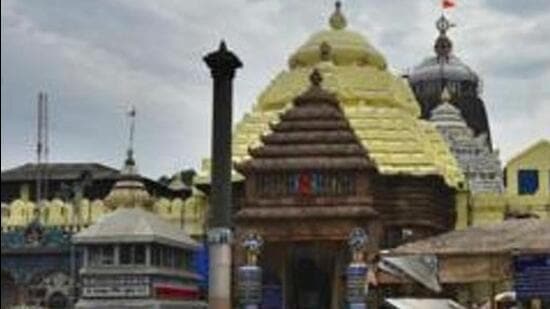
In a letter to the chief administrator of the 12th Century temple, the superintendent of the Bhubaneswar circle of ASI said that the temple authorities should take necessary steps to open the inner chamber of the treasury, which contains valuables such as gold, silver and jewels donated by devotees and granted by kings over \centuries. ASI superintendent Arun Mallick did not comment on the letter, but the Sri Jagannath Temple Administration officials said a decision in this regard will be taken during the managing committee meeting.
Temple administrator (development) Ajay Kumar Jena said the next course of action will be decided at the meeting. “No one knows what exactly is stored inside the Ratna Bhandar. A detailed inspection is required to find out what lies inside the treasure house of the Lords. The process which we followed in 2018 for Ratna Bhandar inspection will be adopted if the managing committee decides to go for a check,” said Jena.
The two chambers of the Ratna Bhandar of the Jagannath temple – ‘Bhitar Bhandar’ (inner treasury) and ‘Bahar Bhandar’ (outer treasury) – reportedly has more than 800 valuables and jewellery.
Also Read:New radar survey around Puri’s Jagannath Temple triggers fresh row in Odisha
According to a list prepared by Puri king Gajapati Ramachandra Dev in February 1926, there are 837 items including 150 items of gold ornaments, including the golden crowns of Jagannath, Balabhadra and Subhadra, weighing over 15 kg. Besides, there are gold necklaces, precious gemstones, plates of gold, pearls, diamonds, corals and silver articles in the inner treasury.
In April 2018, the inner chamber of the Ratna Bhandar was to be inspected after the Orissa high court in March that year ordered the ASI to inspect its structural condition and submit a status report. The high court order was in response to a PIL for an effective repair and renovation of the temple. A special team was formed to carry out an inspection, but the keys were missing. The team then carried out an inspection from outside and reported that the physical condition of Ratna Bhandar was weak.
The Naveen Patnaik-led government later formed a one-man commission headed by retired HC judge Raghubir Das to probe the sequence of events and circumstances leading to the missing of the keys. The commission submitted a 324-page report in December 2018, but the state government is yet to place the report before the assembly.
Temple officials said the Ratna Bhandar was last inspected partially in 1984 when only three of its seven chambers were opened. The verification of the Ratna Bhandar was started by temple administrator L Mishra in March 1962, which continued till August 1964 during which 602 items were checked. A fresh verification was taken up in May 1967, and only 433 items could be checked. In 1985, the ASI tried to open the inner chamber of the temple to carry out some repair work. However, only two of the three locked doors could be opened.
As per the Jagannath Temple Act, the Ratna Bhandar needs to be audited every three years. However, successive governments have shied away from auditing it, apprehensive about political repercussions, as any valuable reported missing may trigger adverse reaction against the government.
Earlier on July 6, Puri’s titular ‘king’ Gajapati Maharaja Dibyasingha Deb expressed his desire to see the Ratna Bhandar be opened as soon as possible, and also raised demands for an early repair of the treasury.