E-Paper



AQI ‘severe’ again; Delhi set for worst December air since ’18
The worst AQI this season was recorded on December 14 at 461, the second-worst December reading on record.

 Prefer HTon Google


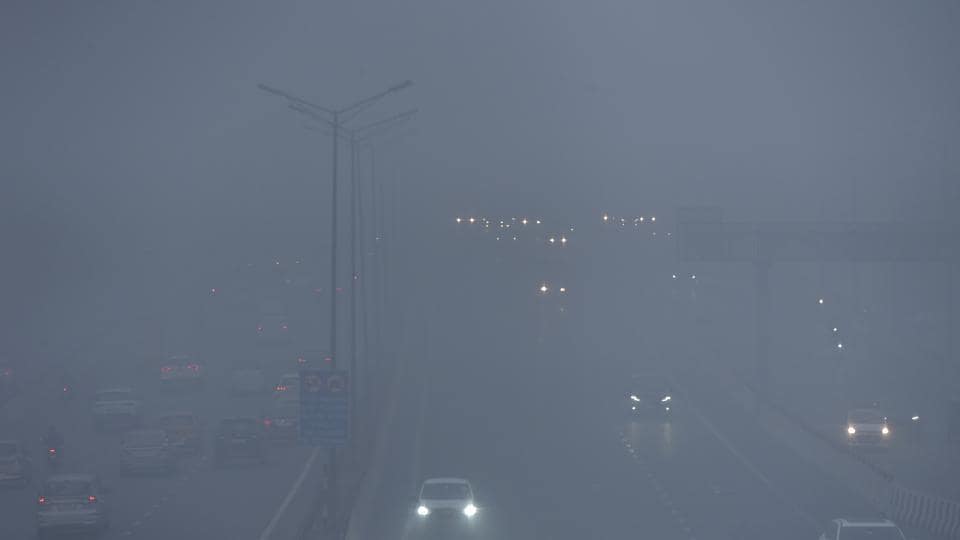
Delhi’s air quality remained entrenched in the “severe” category on Monday, marking the eighth such day this year and the fifth in December alone, as a combination of low winds and a thick layer of smog trapped toxic pollutants over the city. The 24-hour average Air Quality Index (AQI) climbed to 401, up from 390 (“very poor”) on Sunday, shrouding the city in a persistent haze.
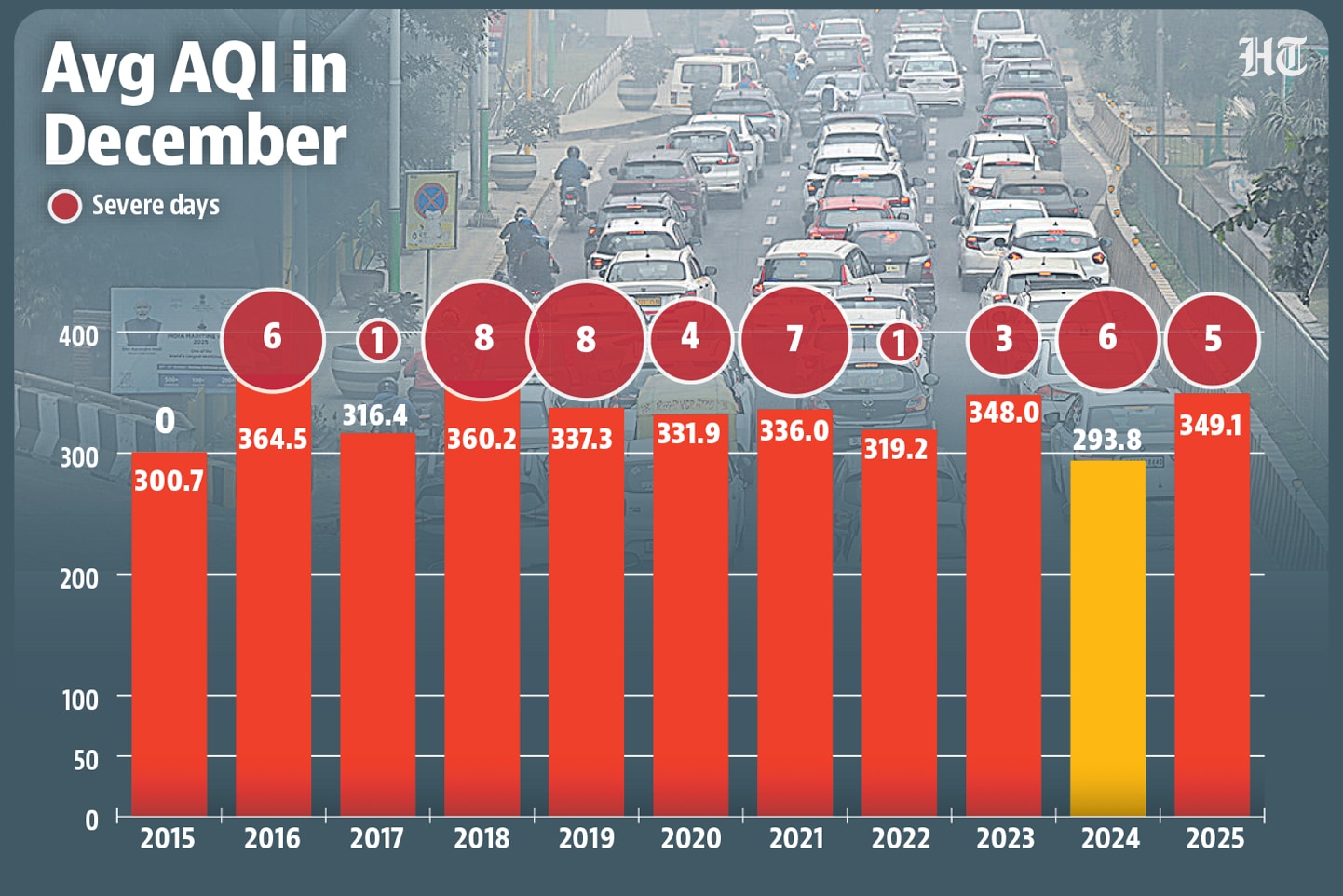
With an average AQI of 349 for December so far and meteorological conditions expected to remain unfavorable, this month is poised to become Delhi’s most polluted December since 2018, when the average AQI was 360. In contrast, last December’s average was significantly lower at 294.
With just two days left to go with December, the Capital has not recorded a single day of “moderate” or “satisfactory” air this month, with AQI readings consistently above 200. The worst AQI this season was recorded on December 14 at 461, the second-worst December reading on record.
The government’s Air Quality Early Warning System forecasts a slight improvement to the “very poor” category on December 30-31, but warns of a rapid deterioration back to “severe” by January 1. The AQI is predicted to remain in the “very poor” range for the subsequent six days.
The India Meteorological Department has issued a red alert for dense to very dense fog on Tuesday, which will further reduce visibility and exacerbate pollution exposure. Temperatures are expected to remain stable, with maximum between 20-24°C and minimum between 7-9°C over the next two days.
The pollution burden is widespread across the city. Central Pollution Control Board data showed 23 of Delhi’s 40 monitoring stations in the “severe” zone on Monday, with Jahangirpuri (AQI 464) and Wazirpur (AQI 461) being the worst affected.
Former head of the CPCB’s air laboratory, Dipankar Saha, emphasized the regional scale of the problem, stating, “Meteorological factors play the most important role in the dispersion and dilution of a homogeneous air mass across the entire region. Within this air mass, air quality remains the same, barring a few exceptions in high-emission areas.”
Experts point to stagnant weather patterns as the primary driver of the prolonged pollution episode. “We have not seen rains since October. While there have been western disturbances, they have all been feeble and that only introduces moisture to the air, while slowing down winds,” said Mahesh Palawat, vice president at Skymet.
The absence of rain this December stands in stark contrast to last year, when 53.8 mm of rainfall over five days helped settle dust and cleanse the air.
13 times above safe limits
An analysis by the Centre for Research on Energy and Clean Air (CREA) for December 1-27 reveals an average PM2.5 concentration of 207 micrograms per cubic metre (µg/m³) in Delhi. This is 3.45 times above India’s daily safe standard (60 µg/m³) and a staggering 13.8 times above the World Health Organization’s guideline (15 µg/m³). While severe episodes are not new, the frequency and intensity this month are concerning.
Data highlights a regression after a slight improvement. Compared to last December, which saw eight “moderate” and nine “poor” air days, the current month has been unrelentingly toxic. The consistent “very poor” to “severe” air underscores a failure to mitigate emissions under adverse weather conditions.