
 E-Paper



Bihar’s first craft village project launched at Jitwarpur in Madhubani
Bihar launched its first craft village in Jitwarpur, boosting traditional arts and rural economy, aiming to promote heritage tourism and support artisans.

 Prefer HTon Google


In a significant boost to the country’s traditional arts and rural creative economy, the foundation of Bihar’s first craft village was formally launched at Jitwarpur in Rahika of Madhubani on Saturday. The initiative is being implemented under the National Handicrafts Development Programme (NHDP) of the ministry of textiles in collaboration with Bihar Museum.
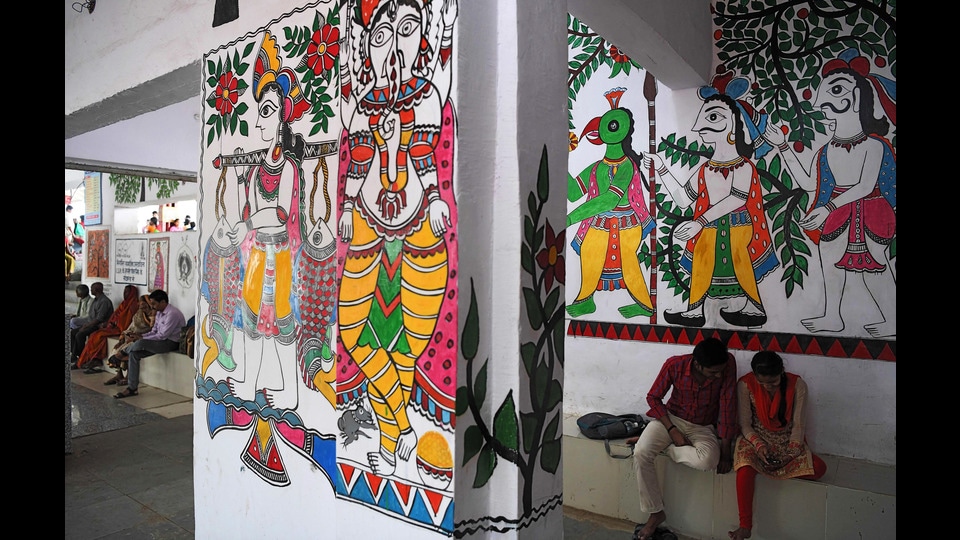
The project was inaugurated by Bihar’s art, culture and youth department minister Arun Shankar Prasad, while the programme was presided over by Anjani Kumar Singh, director general of Bihar Museum. The execution responsibility has been assigned to Bihar State Road Development Corporation Limited, said District Public Relations Officer Parimal Kumar.
Jitwarpur, a village of around 400 households, is nationally known as a hub of Mithila (Madhubani) painting and is often described as a “living school of art,” where nearly every household is engaged in creative work. The village holds the distinction of producing an exceptional number of nationally honoured artists, including Padma Shri awardees Jagdamba Devi (1975), Sita Devi (1980) and Baua Devi (2017), who were instrumental in taking Mithila art to the global stage.
Chandrakala Devi has received a National Award for her work in papier-mâché. In addition, the village is home to 18 national-level artists and more than 50 state-level artists, with three artisans also honoured with the Shilp Guru Award.
The programme was attended, among others, by Padma Shri awardees Dulari Devi, Shanti Devi and Shivan Paswan.
Apart from painting, artisans in the village are also engaged in papier-mâché, sikki grass craft and terracotta work. Residents welcomed dignitaries with traditional music and floral greetings at the village entrance, reflecting widespread enthusiasm about the project.
Local legislator Mohd Asif Ahmad termed the initiative a “historic opportunity” that would help artisans secure fair market value for their creations by reducing dependence on middlemen.
According to officials, the Centre has approved funding of approximately ₹9 crore for the project, with 80% to be borne by the Ministry of Textiles and the remaining 20% by Bihar Museum authorities. Ashok Kumar Sinha, the project’s nodal officer, said the development aims to transform Jitwarpur into a model cultural destination while preserving its artistic heritage.
Phase-I Development Plan includes: Construction of a guest house with modern amenities near the existing common facility centre, development of 12 craft stalls showcasing Mithila painting, papier-mâché, sujni embroidery and terracotta, creation of a grand entrance gateway reflecting Mithila artistic motifs, restoration of three government ponds with landscaping and beautification, installation of around 100 streetlights, strengthening of internal roads and external wall painting of houses in traditional Madhubani style, to be executed by resident artists.
Authorities have set a target to complete major components within one year. Nearby art centres such as Ranti and Raiyam are also proposed to be linked to the broader cultural tourism circuit.
Officials noted that while several states already host craft villages, Bihar had long lacked a dedicated handicrafts village despite its rich artistic traditions. The Jitwarpur initiative is expected to promote heritage tourism, generate livelihoods, and provide a structured marketplace for artisans.


