E-Paper



Mahanadi row: Chhattisgarh opens barrage gates ahead of tribunal visit to Odisha
The Mahanadi Water Disputes Tribunal will visit the Kalma barrage in Chhattisgarh and command area of Hirakud reservoir in Odisha to check availability and use of water in non-monsoon season


Ahead of the visit of the Mahanadi river water disputes tribunal to both Chhattisgarh and Odisha, the Chhattisgarh government has opened 20 gates of Kalma barrage, the last barrage on Chhattisgarh side of the river.
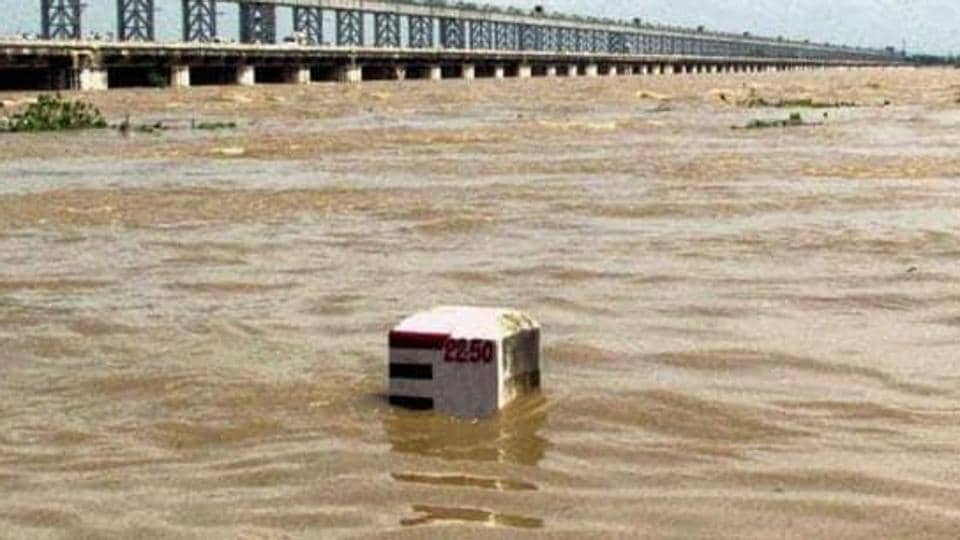
The Mahanadi Water Disputes Tribunal led by Supreme Court Justice AM Khanwilkar will visit the Kalma barrage in Chhattisgarh and command area of Hirakud reservoir in Odisha in April end and May first week to check the availability and use of water in non-monsoon season.
The Mahandi Water Disputes Tribunal was formed in March 2018 after Odisha government filed a complaint in November 2016 with the Ministry of Jal Shakti under Section 3 of the lnter-State River Water Disputes (ISRWD) Act.
Also Read: Hirakud dam is safe, says chief engineer after official redflags delay in survey
The tenure of the tribunal has been extended twice since then with the last extension coming in March this year. The tribunal has been asked to submit its report by December 2025.
“They started opening the gates only in the second week. So far, 20 gates are open through which 1000-1500 cusecs of water is flowing into Mahanadi in Jharsuguda district.
Earlier, Odisha had written to Chhattisgarh about the drop in the inflow of water on numerous occasions, but this is the first time the gates have been opened in non-monsoon season.
“There is a probability that the gates were opened since the tribunal is visiting the neighbouring state this week,” said engineer-in-chief of Odisha’s water resources department, Bhakta Ranjan Mohanty.
Chhattisgarh, however, rebutted the charge, insisting that the allegations on Kalma barrage was being levelled just before the tribunal’s second tranche of site visits to Chhattisgarh to create prejudice.
Sudhakar Patri, former chief engineer of the water resources department said Chhattisgarh has acted smartly to mislead the tribunal.
“It has opened the gates of the barrage to level up the water. The tribunal will not just see the water level but verify various records and documents before reaching a conclusion,” he said.
BJD leader and state planning convergence minister Rajendra Dholakia also said the timing of the opening of the Kalma barrage gate seemed to mislead the tribunal.
“It’s a fact that the barrage was built by Chhattisgarh government without permission from the central water commission. They open the barrage gates during monsoon season without any intimation which causes flood in Odisha district. But in non-monsoon season the gates are shut which has led to drying of Mahanadi in summer,” he said.
Sudarshan das, leader of Mahanadi Bachao Andolan, said that due to Kalma barrage, the ecological balance and biodiversity, ecology of the river is changing for the worse while livelihood of people around Mahanadi has been badly affected.
“Neither these projects got due approval from environment impact assessment authority and other statutory bodies including the central water commission. The way Chhattisgarh government has built the barrages over the Mahanadi river basin, it seems it does not want to give a single drop of Mahanadi water to Odisha,” he said.
Water conservationist Rajendra Singh, who had visited Kalma barrage last year had predicted that this tribunal will go the way of Cauvery dispute between Karnataka and Tamil Nadu which went on for 50 years.
The river, which runs through at least 20 of Odisha’s 30 districts, fuels Odisha’s economy and agriculture.
Apart from providing at least 60% of the state’s 4.2 crore population with subsistence, the Mahanadi also forms a big part of its cultural ethos.
As many as six biodiversity hotspots in Odisha – including the Bhitarkanika wildlife sanctuary, Chilika lake, Tikarpada sanctuary and Chandaka elephant reserve – directly depend on the river.
After the Odisha government built a 25-km-long earthen dam across its expanse at Hirakud, Sambalpur district, in 1953, it is irrigating over 2.35 lakh hectares of cropland and generates 347.5 megawatts of hydropower for the state.
In response, the Chhattisgarh government said the attempt by senior Odisha engineers was contrary to the spirit of the joint protocol agreed upon between the States of Odisha and Chhattisgarh prior to the Tribunal’s site visits.
“Chhattisgarh’s releases during this time of the year through its storages are normal releases like any other year, for the industry, for Nistari, and for Rabi / Summer crops wherever required. The storage capacity of Odisha Hirakud Reservoir located on the Mahanadi is much more than the storage capacities of all the reservoirs in the Mahanadi basin in Chhattisgarh put together. Consequently, Odisha has no reason to complain about water shortage. Also, unlike Odisha which has an exploitative water resource management of the Mahanadi Basin, Chhattisgarh benefits from its conservation focussed water resource management, where every drop is attempted to be conserved,” the Chhattisgrh government’s statement said.
It said Chhattisgarh has not only focussed on rainwater conservation through its in-stream check dams and barrages, but also embarked upon a large scale water conservation project through Narwa Garwa Ghurva Badi (NGGB) program of recharging monsoon runoff to the aquifers. Odisha greatly benefits from Chhattisgarh’s water conservation measures, as the groundwater releases into the streams and tributaries of Mahanadi eventually reach Odisha. “The satellite images taken this year on April 25, 2023 compared with the satellite images on the same dates last year and three years ago, show nearly no difference in the Hirakud Reservoir’s upper reaches and the flow regime in the Mahanadi,” the statement said.