
 E-Paper



Congress, independents take on poll body over EVMs without VVPATs
The opposition leaders accused the poll body of acting under pressure from the ruling party, citing its unwillingness to implement VVPAT despite ample availability of the machines across the country

 Prefer HTon Google


Gurugram: Senior Congress leaders and independent candidates have made allegations of bias and a lack of transparency against the state election commission in the run-up to the municipal polls. In a formal representation to Haryana Governor Bandaru Dattatraya, former MLA and Congress district in-charge Karan Singh Dalal and other opposition leaders expressed concerns over the state election commission’s refusal to use ballot papers and its decision to allow electronic voting machines (EVMs) without Voter Verifiable Paper Audit Trail (VVPAT).
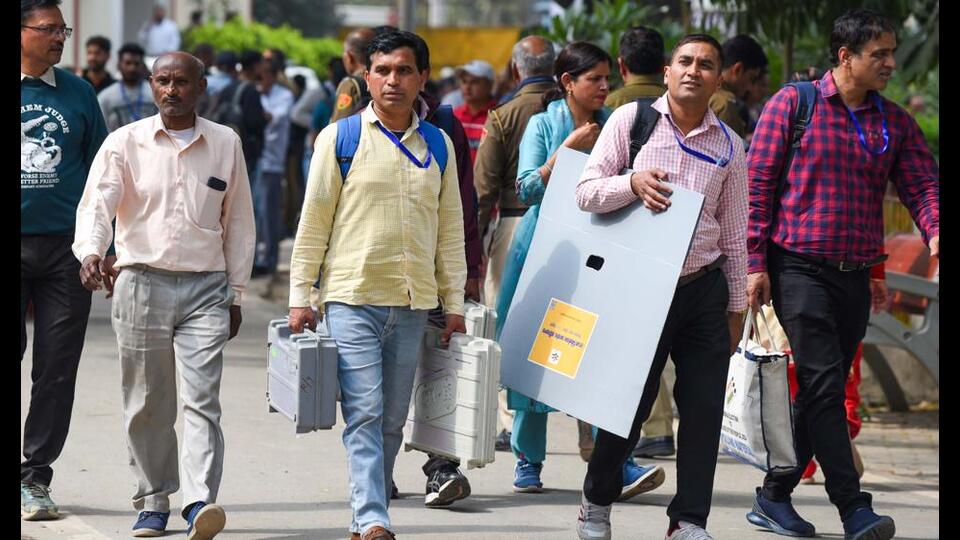
The opposition leaders accused the poll body of acting under pressure from the ruling party, citing its unwillingness to implement VVPAT despite ample availability of the machines across the country. They pointed to recent Supreme Court judgments in ADR vs ECI and Subramanian Swamy vs ECI, which mandate matching at least 5% of votes using VVPAT for verification in cases of dispute. The leaders claimed that conducting elections without VVPAT raises doubts over the transparency of the polling process and accused the commission of deliberately avoiding accountability.
Dalal, in his letter to the Governor of Haryana, said that while the state election commission justified the use of EVMs based on legal provisions, it has failed to provide any valid reason for not using VVPAT. “If the Uttarakhand municipal elections could be conducted using ballot papers, Haryana should also consider the same to ensure credibility and public trust in the election process. The opposition leaders further alleged that the state election commission, led by a retired IAS officer from Haryana, is functioning at the mercy of the state government and may be favouring the ruling party,” he said.
Rama Rani Rathee, an independent candidate from Ward 23, alleged that the district administration has replaced eight EVM machines across five wards, raising concerns over transparency in the electoral process. She questioned why VVPAT machines, which were used during Lok Sabha and assembly elections, are not being deployed in the municipal elections for councillors and the mayor.
“Why are they using old EVM machines, some of which are reportedly faulty? If VVPAT machines were used for parliamentary and assembly elections, why are they missing from these elections?” she asked.
She also questioned the delay in counting of votes, demanding to know why the results are not being declared on the same day as polling. “What is the reason behind postponing the counting of votes? If elections are being conducted today, why is the counting not happening immediately?” she asked.
The Congress and other independent leaders demanded that immediate action be taken to ensure a free, fair and transparent election process. They urged the Governor to intervene and instruct the state election commission to either switch to ballot papers or ensure the use of VVPAT with EVMs, according to the legal mandate. They warned that any attempt to bypass electoral safeguards would only lead to distrust among voters and cast serious doubts on the authenticity of the election results.
The controversy over the use of EVMs without VVPAT has escalated tensions, with opposition parties signaling that they may pursue legal options if their demands are ignored.


