The Delhi government has approved a new bill aimed at making it easier, faster and cheaper to do business in the Capital, with provisions for a single-window approval system, deemed approvals for delayed clearances, self-declaration for low-risk activities, fewer duplicate registrations and a three-year exemption from routine inspections, an official said on Wednesday.
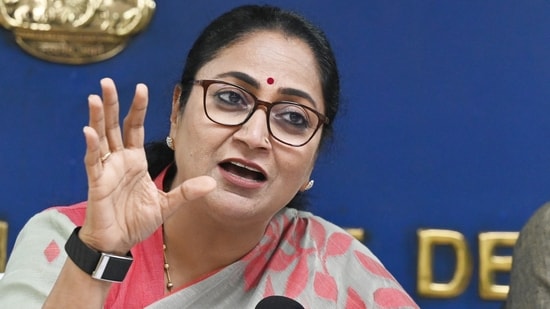
At a cabinet meeting chaired by chief minister Rekha Gupta on Tuesday, the Delhi Ease of Doing Business Bill, 2026, was cleared to overhaul the existing system of approvals, registrations, licences and clearances required by enterprises.
DSIIDC to anchor single-window business approvals
One key feature of the Bill is a single-window online system through which businesses can apply for approvals, registrations, no-objection certificates, licences and other clearances, the official said.
The platform will cover a wide range of requirements, including building plans, fire-related approvals and water, sewer and electricity connections. The Delhi State Industrial and Infrastructure Development Corporation (DSIIDC) will function as the single nodal agency for business approvals delivered through the system.
Also read: CM Gupta orders action against schools found compromising on children’s safety
Self-declaration, deemed approvals to speed up clearances
{{/usCountry}}Also read: CM Gupta orders action against schools found compromising on children’s safety
Self-declaration, deemed approvals to speed up clearances
{{/usCountry}}The Bill proposes immediate approval for several activities, subject to the conditions prescribed in the legislation. Self-declaration will be accepted for specified low-risk activities and cases falling within prescribed limits.
Another provision is deemed approval. If the competent authority fails to decide within the prescribed period, approval will be deemed granted under the proposed law.
The Bill also seeks to reduce the compliance burden arising from multiple registrations. Enterprises already registered under frameworks such as GST, FSSAI, the Micro, Small and Medium Enterprises Development (MSMED) Act, 2006 or the labour codes will not have to obtain separate registrations for trade, health-trade, eating house, or shops and establishments, as applicable under the proposed framework.
Also read: Green makeover of flyover spaces to improve Delhi’s look: Rekha Gupta
Three-year exemption from routine inspections
The government also plans to introduce a trust-based inspection regime. Routine inspections will not be conducted for three years after registration, although inspections can still be ordered in cases involving serious complaints.
Another significant change is the proposed negative-list-based system. Instead of requiring businesses to obtain permission for every activity unless expressly allowed, the Bill proposes that an enterprise can conduct an activity at a location unless it appears on the specified negative list.
The principle, according to the government, is that anything not prohibited is permitted.
Businesses to submit information only once
The Bill also seeks to end repeated document submissions. If a document or piece of information is already available with a Delhi government authority, it cannot be sought again from the applicant. This establishes a “provide information only once” approach for businesses, the official said.
Gupta said the proposed reforms would reduce the time, cost and uncertainty associated with setting up and operating businesses in Delhi.
Following the Delhi Cabinet’s approval, the proposed legislation will now be sent to the Ministry of Home Affairs.
Stay updated with all top Cities including, Bengaluru, Delhi, Mumbai and more across India. Stay informed on the latest happenings in World News along with Delhi Election 2025 and Delhi Election Result 2025 Live, New Delhi Election Result Live, Kalkaji Election Result Live at Hindustan Times.
Stay updated with all top Cities including, Bengaluru, Delhi, Mumbai and more across India. Stay informed on the latest happenings in World News along with Delhi Election 2025 and Delhi Election Result 2025 Live, New Delhi Election Result Live, Kalkaji Election Result Live at Hindustan Times.