E-Paper



Farrukhabad: A city frozen in time, waiting for political thaw
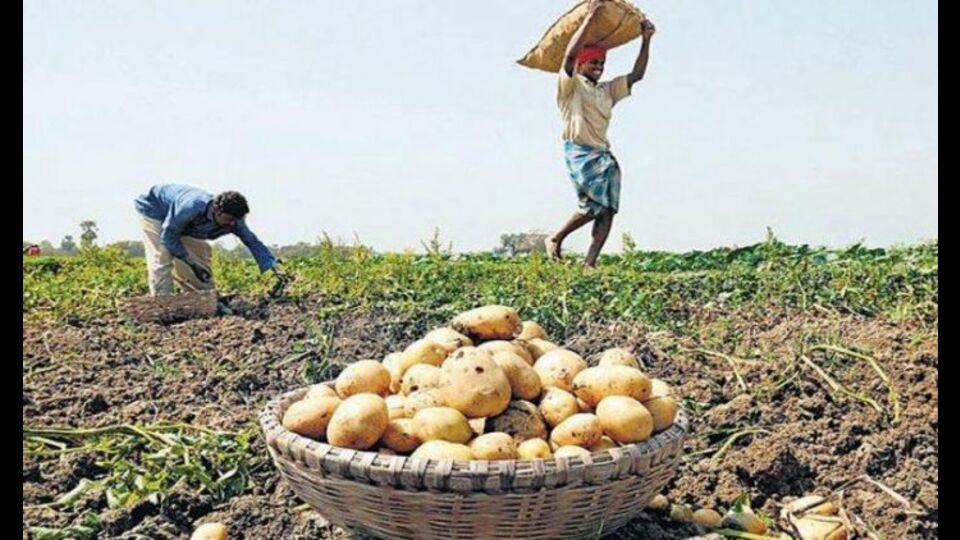
Despite being a major potato-producing district, farmers are still awaiting the establishment of a food processing unit. The district is dotted with private hospitals alongside a government hospital, but in case of a cardiac emergency, one has to rush to nearby Kannauj

 Prefer HTon Google


Not much has changed in Farrukhabad, a city with three rivers, since Nawab Mohammad Ali Bangash founded it in 1714, and christened it in honour of the then Mughal emperor Farrukh Siyar.
Time in Farrukhabad doesn’t move forward, it simply accumulates. The city hasn’t been able to shake off its isolation, as if forgotten by time, nor could it keep pace with the enthusiastic growth seen in the rest of the country.
In this election, Farrukhabad is desperately hoping to change its fortunes. This is the constituency that has given two foreign ministers to the country: Khurshid Alam Khan during Rajiv Gandhi’s reign from 1984 to 1989, and then his son Salman Khurshid in Manmohan Singh’s government from 2009 to 2014.
It has been a BJP stronghold. The party has lost just one Lok Sabha election since 1996, with Salman Khurshid breaking BJP’s winning streak in 2009. At present, the saffron party holds all four assembly segments — Sadar, Bhojpur, Amritpur, and Aligunj (Etah), while its ally, Apna Dal, holds Kaimgunj, where the famed Pathans from Afghanistan are largely concentrated.
“You will find Mainpuri, Kannauj, even a tehsil like Chibramau more developed than Farrukhabad; the roads can serve as a cross-country obstacle course; it doesn’t have its own sewage system,” said Rameshwar Singh, a retired teacher living close to Mascenic intersection.
“When the rain comes, the narrow lanes in the old city get flooded, and people have to navigate through waist-deep water,” said Mukesh Srivastava, who lives in Awas Vikas colony and runs a shop.
“Farrukhabad doesn’t have any industry. It has lots of hospitals mushroomed around the only district government hospital and are the major job generator in the district. There are about 270 hospitals, most of them operating in one or two rooms. The government hospital has 11 doctors against the sanctioned strength of 33 and doesn’t have a cardiac unit-- in case of any emergency people rush to medical college of Farrukhabad’s erstwhile tehsil Kannauj 60 km away,” he said.
“It has been a garrison and a big city, but it has only four or five hotels and is bereft of any place where one can go and dine with family. For ages, the entire city has just one market, the Sadar market, and a few schools,” said Shivam Singh, who works in Delhi.
At Badri Vishal college, the students are upset with the Agniveer scheme, and the farmers are worried about the loss of ₹200 on every bag of potato. A cold storage owner, Jugal Kishore Mishra, said the potato production had come down by one fourth, and 99 storages were running at 70% of capacity.
“In the past, promises were made about bringing food processing units to help the potato farmers sell their produce closer and get better money in Farrukhabad, but it remained just that, a promise,” said Urooj Akhtar Khan, a farmer.
Khan said that with losses in the last three years, the farmers reduced the acreage of potato significantly. “The price of potato in retail had gone beyond ₹30 a kg, but the farmers did not get the right prices, and due to blight disease in winters, their costs also went up. At present, a farmer is losing ₹4 per kg. Farrukhabad is a vital cog in potato production, which stretches from Kannauj to Agra through Mainpuri and Ferozabad,” he said.
This time, the BJP is aiming for a third consecutive win from Farrukhabad. They have nominated Mukesh Rajput again, aiming to match the record of Mool Chandra from Congress, who served until his passing in 1962. He was succeeded by socialist icon Ram Manohar Lohia, who won in the by-election.
The Samajwadi Party has fielded an oncologist, Dr. Naval Kishore Shakya, who is the son-in-law of Swami Prasad Maurya and runs hospitals in Farrukhabad and Lucknow.
Meanwhile, Congress leader Salman Khurshid has also joined the campaign and sought votes for Shakya in Kaimgunj. Khurshid has contested the seat four times and won twice, in 1991 and 2009. In the 2019 elections, he could only muster five per cent of the votes. However, the BSP has put up former Congress leader Kranti Pandey.
The Lodhi and Shakya communities are equally poised in numbers, each around 2.5 lakh, while Muslims and Yadavs total four lakhs.
The Brahmins are also an important player with 2 lakh votes. To maintain its stronghold, the BJP has ensured that all its MLAs, Capt Sunil Dutt Dwivedi and Sushil Shakya, take care of equations in the Brahmin and Shakya communities.