
 E-Paper



How India is building the world’s most ambitious bioenergy ecosystem
This article is authored by Varun Karad, co-founder & CEO, REnergy Dynamics (RED).

 Prefer HTon Google


The approval of the GOBARdhan National Unified Scheme for Compressed Biogas (CBG) marks one of the most significant policy interventions for India’s bioenergy sector since the launch of the SATAT initiative in 2018. More importantly, it signals that India now views bioenergy not merely as an alternative fuel, but as a strategic pillar of energy security, rural development, sustainable waste management, and climate action.
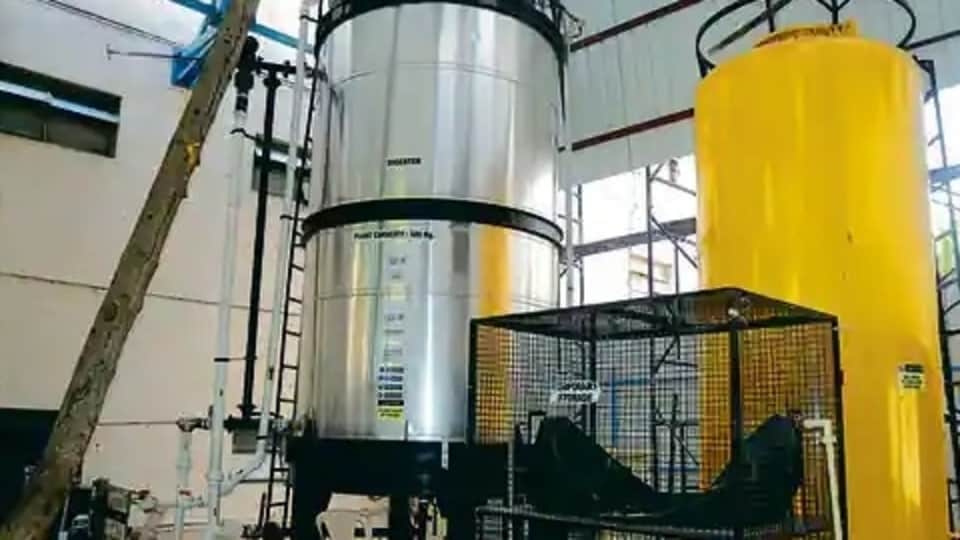
Much has been written about the technology behind compressed biogas. However, one of the biggest misconceptions about India’s CBG industry is that its slow growth has been due to technological limitations.
That is simply not true.
The technology to convert agricultural residues, municipal solid waste, cattle dung, and other organic waste into compressed biogas has existed for years. Indian entrepreneurs, technology providers, and project developers have repeatedly demonstrated that commercial scale production is technically achievable.
The real challenge was never technology. It was economics.
For years, developers faced a difficult choice. They could invest in world class technologies capable of delivering higher methane recovery, operational reliability, and long-term plant performance, but the commercial returns did not justify those investments. Alternatively, they could reduce capital expenditure by compromising on engineering quality, process redundancy, automation, or equipment, often resulting in lower efficiency and inconsistent long-term performance.
In other words, the industry did not lack innovation. It lacked the economic framework that rewarded good engineering.
The GOBARdhan National Unified Scheme addresses this challenge by bringing together the five pillars required to build a commercially sustainable bioenergy ecosystem: viable pricing, assured offtake, access to finance, capital assistance, and supporting infrastructure. Collectively, these reforms change the investment thesis for compressed biogas in India.
The first and perhaps the most significant reform is the increase in the administered procurement price from ₹1,478 per MMBTU to ₹2,110 per MMBTU. Until now, many projects, particularly those dependent on purchased agricultural feedstock, operated on extremely thin margins. Depending on feedstock costs, logistics, financing, and operational efficiency, production costs typically ranged between ₹50 and ₹75 per kilogram. The revised pricing fundamentally improves project economics, allowing developers not only to build commercially viable projects but also to invest in better technology, stronger engineering, and higher operational standards.
However, commercial viability alone does not create investment. Projects must also be bankable.
One of the biggest concerns for lenders under the previous framework was revenue uncertainty. Procurement by oil marketing companies operated on a best effort basis, making future cash flows difficult to predict. For banks, uncertain revenues translate directly into higher lending risk.
The introduction of an assured offtake framework fundamentally changes this equation. By creating greater certainty around demand and linking procurement to the national blending programme, the policy significantly improves revenue visibility and lender confidence. Banks finance predictable cash flows, and this reform creates exactly that.
The proposed credit guarantee mechanism addresses another structural challenge that has constrained the sector for years.
Many technically competent entrepreneurs have found it difficult to secure project finance because they lacked the collateral required by financial institutions. A well-designed credit guarantee framework has the potential to reduce lending risk, improve access to finance, and enable a new generation of entrepreneurs to participate in India’s bioenergy transition. While the detailed implementation guidelines will determine its ultimate impact, the intent is clear: broaden access to institutional finance and accelerate investment into the sector.
Capital assistance is equally important, particularly for second generation compressed biogas projects based on agricultural residues.
A properly designed second generation CBG facility requires far more than an anaerobic digestion system. It demands sophisticated feedstock handling, preprocessing, storage infrastructure, process redundancy, advanced automation, safety systems, and high-quality engineering to ensure reliable year round operation.
As a result, the capital investment for a well-engineered agricultural residue based CBG project can exceed ₹10 crore per Tonne Per Day (TPD) of installed CBG capacity, excluding land costs. This reflects the complexity of processing feedstocks such as paddy straw and other agricultural residues, which present unique engineering and operational challenges.
Against this backdrop, the provision of capital assistance of up to ₹2 crore per TPD is a highly impactful intervention. While it does not replace private investment, it substantially reduces the upfront capital burden, lowers the equity requirement, and significantly improves project viability. More importantly, it enables developers to invest in technologies and engineering that are designed for long term performance rather than compromising on quality to reduce initial capital costs.
Viewed individually, each of these reforms strengthens one aspect of the ecosystem.
Viewed together, they fundamentally transform it.
Higher administered pricing makes projects commercially viable. Assured offtake makes them bankable. Credit guarantee support makes them financeable. Capital assistance reduces investment risk and encourages better technology adoption. Pipeline connectivity and ecosystem support complete the framework required to build a mature and scalable industry.
India now stands at an important inflection point.
The success of India’s solar sector demonstrated that technology alone does not build industries. Stable policy, predictable economics, and investor confidence do.
The same opportunity now exists for bioenergy.
The GOBARdhan National Unified Scheme is not merely another government programme. It represents the economic foundation upon which India’s bioenergy industry can scale.
If implemented with consistency and supported by continued collaboration between government, financial institutions, technology providers, and industry, this policy has the potential to establish India as the world’s most ambitious bioenergy ecosystem. It can unlock billions of dollars of investment, create globally competitive companies, generate rural employment, strengthen energy security, reduce agricultural burning and landfill dependence, and position India as a global leader in renewable gaseous fuels. India did not need better technology. It needed better economics. The GOBARdhan National Unified Scheme finally brings the two together.
(The views expressed are personal)
This article is authored by Varun Karad, co-founder & CEO, REnergy Dynamics (RED).


