E-Paper



In Odisha’s new scheme for Covid-19 orphans, monetary assistance till age of 18
Children who lost their parents, or the main earning person of the family, to Covid-19 on April 1, 2020, or thereafter, will be covered under the scheme.


The Odisha government on Sunday announced a new scheme for education, health and maintenance of Covid-19 orphans under which a monthly sum of ₹2500 will be provided for the orphans till they turn 18, chief minister Naveen Patnaik announced.
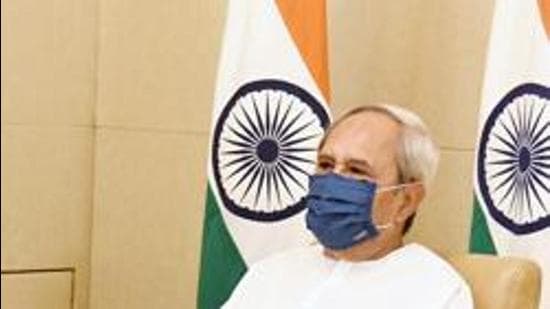
Announcing the programme named Ashirvad, the chief minister said children who lost their parents or the main earning person of the family on April 1, 2020, or thereafter, to Covid-19 will be covered under the scheme. The orphans can be children who have lost both or either of their parents.
The scheme mirrors several provisions of the PM Cares For Children scheme announced by the Centre last month but has several additional monetary assistance for them as well as for surviving parents.
The amount of ₹2500 per month will be deposited in the bank accounts of family members who have taken the responsibility for the children after the death of their parents. The assistance will continue till the child attains 18 years of age or till a family adopts the minor.
However, if the orphan stays in a child care institution, a recurring deposit of ₹1,000 per month will be made in his or her surviving parent’s account till the child turns 18. If a child has lost either of his parents who the only earning member, ₹1,500 per month will be provided for the minor’s maintenance. If the surviving parent is a female, she will also be entitled to Madhu Babu Pension of ₹300 per month.
Officially, 54 children have lost both their parents while 967 lost one of their parents to Covid-19 in Odisha.
These orphans will get treatment under the state government’s Biju Swasthya Kalyan Yojana, a state government scheme under which medicines, diagnostics, dialysis, chemotherapy, operation, ICU and in-patient admission is free in state government hospitals. Besides, they will be also included as beneficiaries under the National Food Security Act (NFSA).
The children can also continue in the schools in which they were studying before the death of their parents. However, in case the family member taking responsibility for the child stays somewhere else, an arrangement for schooling will be made in that area. If necessary, the government will help in the admission of the children in Adarsh Vidyalaya or Kendriya Vidyalaya
If the relative of the child wants to admit him to a private school, the district collector will provide all assistance as per the Right To Education Act. The state government will also assist such children to pursue higher education under the Green Passage scheme that was announced earlier this week.
Under the ‘Green Passage’ scheme, all educational expenses such admission, tuition, and examination fees of such orphans studying in schools or colleges, and those who want to pursue medical, engineering and other courses, will be taken care of by the state government.
The ‘Green Passage’ scheme covers children who want to pursue higher studies in the field of engineering, medicine and technology.
The CM announced that if the relative of the orphan who has taken the responsibility for the child is eligible for a house under the Pradhan Mantri Awas Yojana or Biju Pucca Ghar Yojana, out of turn allotment will be made for him. The relative will be covered under any other government welfare scheme as per his eligibility.
The district child welfare committee will coordinate with the local tehsildar and police to protect the property of the orphan children. The children can also get financial assistance from Biju Sishu Suraksha Yojana and Juvenile Justice Fund, if necessary.
The chief minister asked the district collectors to prepare a list of Covid orphans with assistance from the District Child Protection Committee, Childline and panchayat level organisations. He directed the collectors to launch a drive every year so that no Covid orphan is left out from the scheme.
The scheme comes three week after Prime Minister Narendra Modi announced a slew of benefits under PM Cares For Children for those orphaned due to Covid-19. Under it, PM Cares will contribute through a specially designed scheme to create a corpus of ₹10 lakh for each child when they reach 18 years of age. The corpus will be used to give a monthly stipend from 18-23 years of age to take care of the child’s personal requirements during the period of higher education. On reaching the age of 23, the child will get the corpus amount as a lump sum for personal and professional use. The government will also ensure free education for such children.
Under the central scheme, children under 10 years will be given admission at the nearest Kendriya Vidyalaya or in a private school as a day scholar. PM Cares will also pay for the expenditure on uniform, textbooks and notebooks. For children between 11 and 18 years, the child will be given admission at any central government residential school, such as Sainik School and Navodaya Vidyalaya.
In case the child wants to continue under the care of guardian/grandparents/extended family, then he or she will be admitted to the nearest Kendriya Vidyalaya or at a private school as a day scholar. If the child is admitted to a private school, the fees as per the RTE norms will be provided from the PM Cares.
The child will be assisted in getting an education loan for professional courses/higher education in India as per the existing education loan norms. The interest on this loan will be paid by PM Cares.