
 E-Paper



HPV vaccination: The kryptonite for cervical cancer in India
Vaccination for the target age group & screening among adult women are a must, even as awareness campaigns to end misconceptions are mounted

 Prefer HTon Google


For the first time since records began, no woman aged 20–24 died from cervical cancer in England over a five-year period. The reason was a vaccine given to schoolgirls nearly two decades earlier. A recent study in The Lancet, linking HPV vaccination records from 2008–18 with mortality data through 2024, found no cervical cancer deaths among women in the first cohorts offered the vaccine. Screening participation had actually declined in this generation, making vaccination the only plausible explanation.
England is not alone. Last year, Public Health Scotland reported that among women vaccinated at ages 12–13, no case of invasive cervical cancer had been detected after up to 16 years of follow-up. Older, unvaccinated women in Britain continue to develop cervical cancer and die from it. Among women vaccinated in adolescence, however, the disease has effectively disappeared.
Meanwhile, Australia introduced HPV vaccination in 2007, reached coverage above 80%, and replaced Pap smears with primary HPV testing in 2017. Cervical cancer incidence fell to 6.3 cases per 100,000 women by 2021, and for the first time since national records began in 1982, no woman under 25 was diagnosed with the disease. Australia is projected to become the world's first country to eliminate cervical cancer as a public health problem, reducing incidence below four cases per 100,000 women annually around 2035.
Cervical cancer occupies a unique place in medicine. Nearly all cases begin with persistent infection by the human papillomavirus (HPV), and two strains (HPV-16 and HPV-18) cause about 70% of them. Unlike most cancers, the principal cause is known, infection can be prevented, and the disease develops slowly enough for screening to detect precancerous lesions before they become life-threatening. It is the only major cancer for which the World Health Organization has adopted a formal strategy for global elimination.
India could end cervical cancer deaths but has a long way to go. Nearly one in four of the world's approximately 349,000 cervical cancer deaths in 2022 occurred in India. Cervical cancer is the country's second most common cancer among women and strikes disproportionately during the economically and socially productive years between ages 30 and 60.
Recognizing that elimination is now achievable, the World Health Organization has set three global targets for 2030: vaccinate 90% of girls against HPV by age 15, screen 70% of women with a high-performance test by ages 35 and 45, and ensure that 90% of women with cervical disease receive appropriate treatment. Australia is approaching all three. Until recently, India had scarcely begun the first and is far from the second and third goals.
The greatest weakness is screening. According to the fifth National Family Health Survey (NFHS-5), only 1.9% of Indian women aged 30–49 had ever been screened for cervical cancer, against the WHO target of 70 percent. Screening in India relies largely on visual inspection with acetic acid, an inexpensive but relatively insensitive method that remains underutilised. Even Tamil Nadu, among India's best-performing states, reaches fewer than one in ten eligible women. Unsurprisingly, declines in cervical cancer mortality have lagged far behind those seen in countries with organised screening programmes.
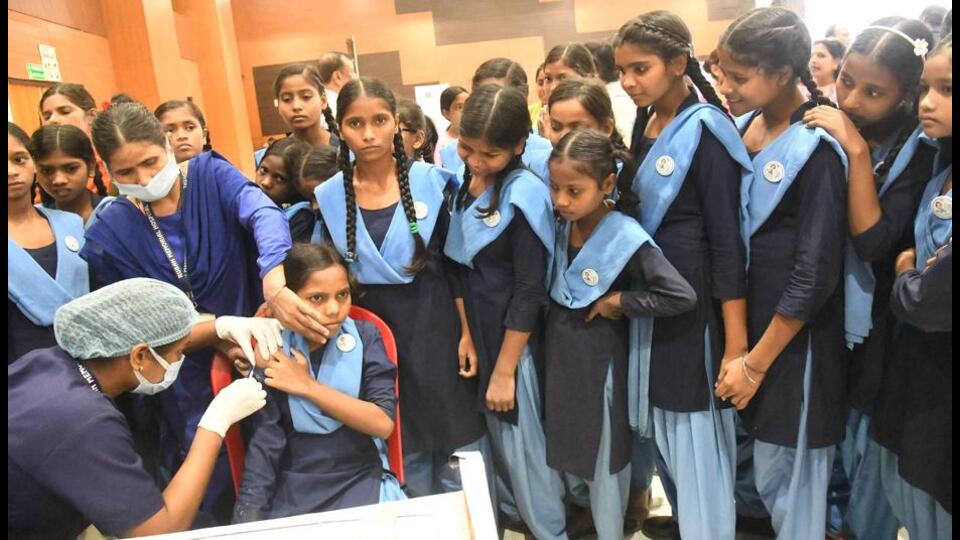
There is, however, reason for optimism. Earlier this year, the Government of India began rolling out HPV vaccination nationally using a single dose of Gardasil-4 vaccine to roughly 1.15 crore girls aged 14 years every year across all states and Union Territories. The vaccine is provided free of cost at designated Government health facilities, and by building on the Universal Immunisation Programme and school-based delivery, India can capitalise on one of the world's largest and most effective vaccine distribution systems. Over time, the expectation is that Cervavac, the first HPV vaccine developed and manufactured in India by the Serum Institute of India would also enter the programme if and when it has met the necessary standards.
Yet, vaccination alone will not eliminate cervical cancer. The girls vaccinated today will not reach the ages at greatest risk for another two or three decades, while the women most likely to develop cervical cancer over the next thirty years are unvaccinated adults. Screening is the only effective defence for older women. Unless India expands screening rapidly, ideally through HPV testing, and strengthens referral and treatment systems, it will not be able to prevent deaths in older women.
Public confidence is another challenge. Misconceptions linking HPV vaccination to infertility persist despite overwhelming evidence to the contrary. Over a decade ago, an HPV demonstration programme was derailed by controversy over several unrelated deaths and delayed national adoption for almost a decade. A key need is to ensure the trust of parents and communities as the programme is rolled out further.
Science has done its job. If India can sustain vaccination and expand screening over the next two decades, cervical cancer could be a thing of the past. Few public health interventions would save more lives at such little cost.
Ramanan Laxminarayan is president, One Health Trust. The views expressed are personal
(This is a Hindustan Times digital exclusive)


