E-Paper



Keeping tradition alive in Sangam City, Akharas wrestle changed times, lack of resources
The traditional Akharas of Sangam city are carrying forward the rich traditions, albeit struggling for want of adequate support

 Prefer HTon Google


Shravan and monsoon in India have been synonymous with traditional Indian wrestling for ages with competitions of varying scales being held during the season. The traditional Akharas of Sangam city are carrying forward the rich traditions, albeit struggling for want of adequate support.
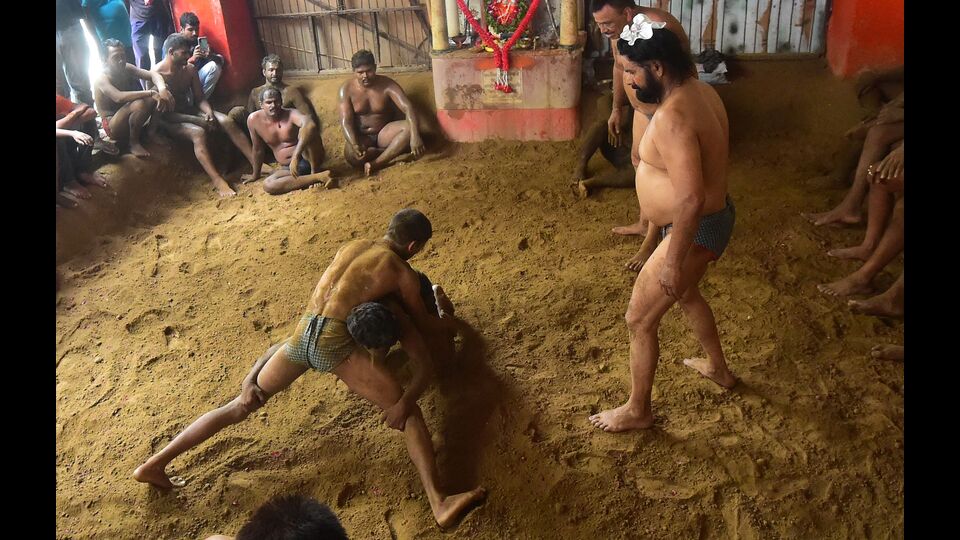
A visit to these Akharas shows wrestlers, both old and young, practising various moves like ‘Dhobipatak’, ‘Janghiya’ and ‘Gadhalod’ or Multanani with passion and vigour matching those of the past generations. “We pursue wrestling due to the passion we have for this ancient sport and without any support from the local administration or state government. The wrestlers bear their own expenses as well as that of the akhara,” rued a senior wrestler, Anand, practising wrestling for two decades now.
Unlike in the past when many Akharas were active in Prayagraj, today only two traditional wrestling gymnasiums are running regularly.
Raghunath Das Akhara, located in Daraganj, has been active since 1955. Here, Prakash Pehlwan teaches wrestling to 30 wrestlers daily. He teaches the wrestlers the method of various wrestling moves like ‘Bahelli’, ‘Dohri Tang’, ‘Kala Jung’ and ‘Bangdi’ among others, sure to beat the opponent in the mud arena in his own unique style.
Wrestlers relate how they pool in resources to meet all expenses. The lights have been installed in the Akhara by themselves and there is no facility to sit and wait for one’s turn in the mud pit yet. There is a hand pump on the gymnasium premises, but it has not been working for the past two years. Many times, the gymnasium has to be closed due to rainwater filling the premises and waterlogging the site making it impossible for wrestlers to practise, said Prakash.
However, he remains undeterred by the hardships. “As long as I am alive, I will keep teaching new wrestlers this ancient art of India. I will go on as long as I can, even if no aid is provided from any level,” he said.
Loknath Gymnasium is older. Here, 15 to 20 wrestlers practise daily. Wrestlers from not only nearby areas but also from the wrestling arena of Mukesh Pehlwan of Jhunsi come to Loknath Gymnasium for practice bouts and learn new techniques from fellow wrestlers.
The gymnasium’s president Ravindra Pandey says that the tradition of wrestling is being preserved. “Our’s is the oldest gymnasium of the region having started just after independence. That is why all the wrestlers who learn different moves from their respective gurus come here, dig the soil of the arena and practise with fellow wrestlers just like their previous generation,” he said with pride.
Pandey concedes that even as the count of Dangals (traditional wrestling matches and tournaments) have dipped and youths prefer modern day gyms and martial arts like Karate and Judo, the art of traditional wrestling is facing perhaps its toughest days at the moment.