
 E-Paper



Lights, Camera, Permission! DM’s online nod mandate creates concerns for festive event organisers
Ashutosh Varma, the spokesperson for the Samajwadi Party, criticised the district administration’s approach.


LUCKNOW In the run-up to the much-anticipated Durga Puja festival, a recent directive issued by the Lucknow district magistrate, Suryapal Gangwar, mandating online applications for event permissions a month in advance, has presented unexpected challenges for Durga Puja organisers. With just one week remaining until the commencement of the Puja, organisers are grappling with the new online permission requirement, even though they have already obtained paper-based approvals.
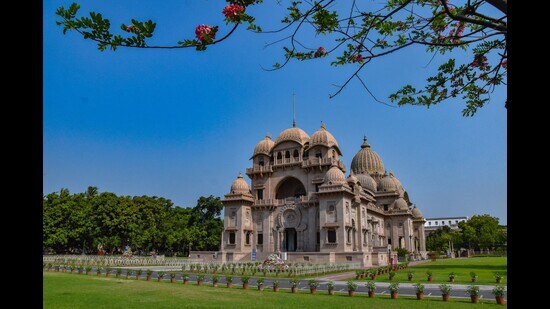
DM Suryapal Gangwar has instructed organisers of entertainment events during the festive seasons of Dussehra and Diwali to seek permissions before hosting any form of entertainment programs at hotels, clubs, water parks, amusement parks, resorts, professional venues, and residential colonies. These directives have been issued with the primary aim of ensuring the safety of the general public during these festive events.
Explaining the process, Gangwar stated, “To secure prior permission for such events, organizers are required to apply through the Niveshmitra portal at least 30 days before the scheduled program. Essential certificates, including those for fire safety, electrical safety, and peace protection, must be obtained from the relevant authorities and uploaded online. The entire permission process is conducted online. In the event of any difficulties arising during the online application process, organizers can seek assistance by visiting room number 40A at the District Magistrate’s office.”
Tuhin Banerjee, the Administrator of the Trans Gomti Puja Committee in Aliganj, expressed their commitment to adhering to all district administration norms. He stated, “We are already taking comprehensive measures, including fire safety precautions and CCTV surveillance.”
Dimple Dutta, the secretary of the Rabindra Palli Puja Committee, also affirmed their willingness to cooperate with the new directive, stating, “We have received the letter from the DM’s office, and we will comply with any additional requirements.”
Somnath Mukherjee, the joint secretary of the Sadbhavna Sanskritik Samiti in Sahara Estate, mentioned, “We have already submitted our application for permission to the DM’s office and anticipate receiving approval soon. This is an annual tradition, and we are committed to following the necessary procedures.”
However, Ashutosh Varma, the spokesperson for the Samajwadi Party, criticized the district administration’s approach. He argued, “Just 15 days before Dussehra, the district administration has imposed an order that prohibits any Dussehra or Diwali events without prior permission. Organisers are now expected to obtain online permission a full month in advance and must secure certificates for fire safety, electrical safety, and peace protection from relevant authorities. Instead of introducing a streamlined process, the district administration has made obtaining permission a complex and burdensome task for ordinary citizens wishing to organise events.”
Varma contended that the DM’s directive reflects an autocratic attitude, with the government seeking to regulate even small events held in colonies and streets during festive seasons.
In response to these concerns, the DM’s press release emphasised that any event falling under the definition of “Entertainment” according to Section 2(a-2) of the Uttar Pradesh Cinematograph (Regulation) Act-1955 requires prior permission from the District Magistrate under Section 4A of the Act. Organising such programs without obtaining this permission is a punishable offense under Section 8 of the mentioned Act. Violations may result in up to six months of imprisonment, a maximum fine of ₹20,000, or both. For continuous violations, an additional penalty of ₹2,000 per day may be imposed.
The press release firmly stated that strict legal action will be taken against those who violate the rules, as per the relevant legal provisions outlined above.


