
 E-Paper



Nagaland government to constitute panel to frame new municipal act
Elections to the state’s urban local bodies (ULB) have not been held in the state for almost two decades due to issues surrounding quotas for women

 Prefer HTon Google


The Nagaland government will constitute a panel to consult different sections of the Naga society to frame a new municipal law according to the local customary and social practices, a minister in chief minister Neiphiu Rio’s cabinet informed on Thursday.
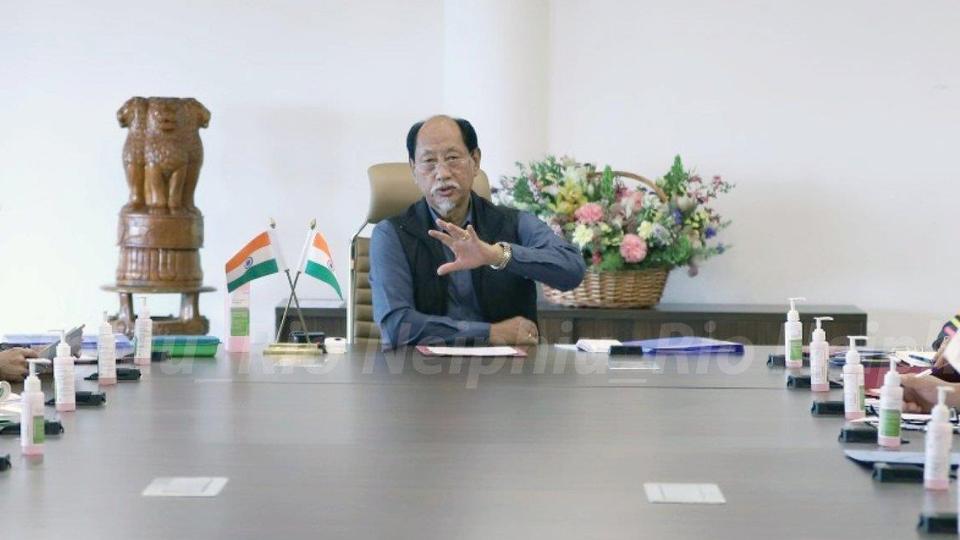
“There is no timeframe but the government is aware of the urgency, so we will lose no time,” parliamentary affairs minister and former Rajya Sabha MP KG Kenye said while addressing a press conference in Kohima.
He justified the move of Nagaland Legislative Assembly (NLA) to repeal the Nagaland Municipal Act 2001 on March 28, saying that successive state governments’ attempts to amend the act had failed to fulfil the desire of the people.
Elections to the state’s urban local bodies (ULB) have not been held in the state for almost two decades due to issues surrounding quotas for women and, a less discussed but significant matter of payment of land and property tax.
Also Read: Nagaland assembly resolves to repeal Nagaland Municipal Act
Leading Naga tribal bodies and civil society organisations have long opposed the ULB polls under the 2001 law on the contention that the act was copied from another state and certain clauses were in contravention to Article 371A of Constitution.
Nagaland is a state created out of a political agreement with a special provision under Article 371A inserted in the Constitution of India which provides that no act of Parliament in respect of religious or social practices of the Nagas, Naga customary law and procedure, administration of civil and criminal justice involving decisions according to Naga customary law, and ownership and transfer of land and its resources shall apply to the state of Nagaland unless the NLA by a resolution so decides.
“After 22 years since the enactment of our Municipal Act, we have reached a stage where we had to relook, and the NLA resolved to completely repeal the act,” Kenye said.
He maintained that the act was enacted in the backdrop of Nagaland being a resource-crunch state where the Centre was to provide funds for developing the townships only if there was a municipal law in place. While not alleging the then lawmakers of any ill motive, he said the act was enacted without realising that it will contravene the social practices as protected in Article 371A. “It was not in consonance with the views and stand of the Naga people,” he added.
On the allegation of civil society organisations that the state’s municipal act was borrowed from another state, Kenye admitted it was true and that the act was copied from the states where municipal law was already implemented.
Minister Kenye also pointed out that there were oversights on the part of the then executive as well. “With due apology, they should have framed our own law. It was a gross oversight on their part that the legislative assembly was made to adopt the act in haste,” he asserted.
On the ongoing litigation in the Supreme Court through a public interest litigation (PIL) filed by the People’s Union for Civil Liberties (PUCL) seeking 33% reservation for women in civic bodies in Nagaland, Kenye claimed some sections of the media have exaggeratedly reported that CM Rio’s government was charged with contempt of court for repealing the municipal act.
Stating that the court had listed the next hearing on May 1, the minister expressed that the state government’s legal team would throw light on the issue and clear the air so that the apex court will give a fair judgment.
The apex court on April 17 issued notices to the government for striking down its own municipal act and asked the Centre to make its stand clear whether the constitutional scheme of one-third reservation for women in municipal and town council elections can be violated by the Nagaland government by repealing the 2001 law.
The court observed that though the state had resorted to the special provision/exemption under Article 371A, it has not been able to demonstrate that there are social, religious or customary practices of the Naga community which precludes women from participating in elections.


