E-Paper



Odisha: CM Mohan Majhi’s achievements in the first year and challenges ahead
Majhi, a Santhali tribal from mineral rich Keonjhar and with an RSS background, was a surprise choice for the post of CM as BJP ended the 24-year BJD reign.

 Prefer HTon Google


As the Mohan Charan Majhi-led Bharatiya Janata Party (BJP) government in Odisha marks its first anniversary on June 12, its first year has been marked by ambitious initiatives, a focus on accessibility, and a deliberate attempt to erase the shadow of the Biju Janata Dal’s (BJD) long rule amid several unresolved challenges.
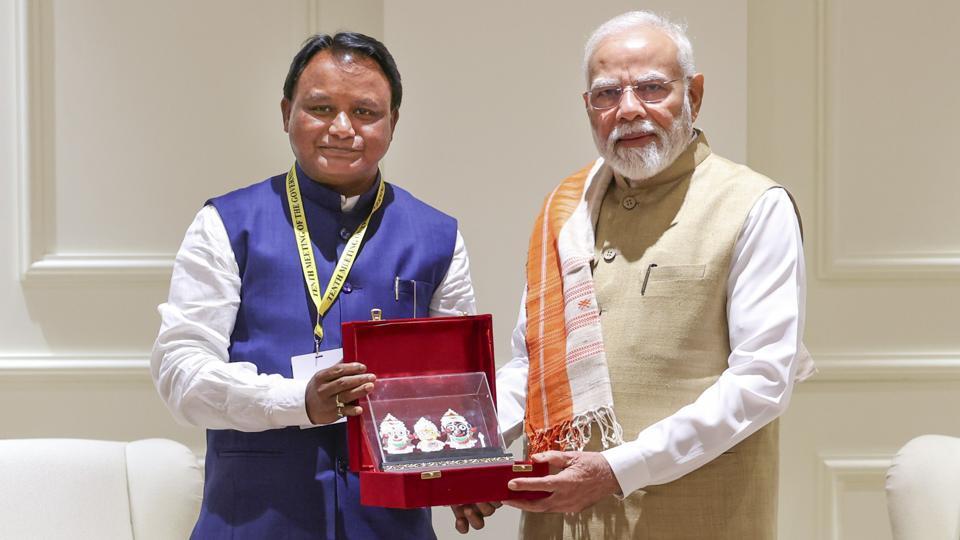
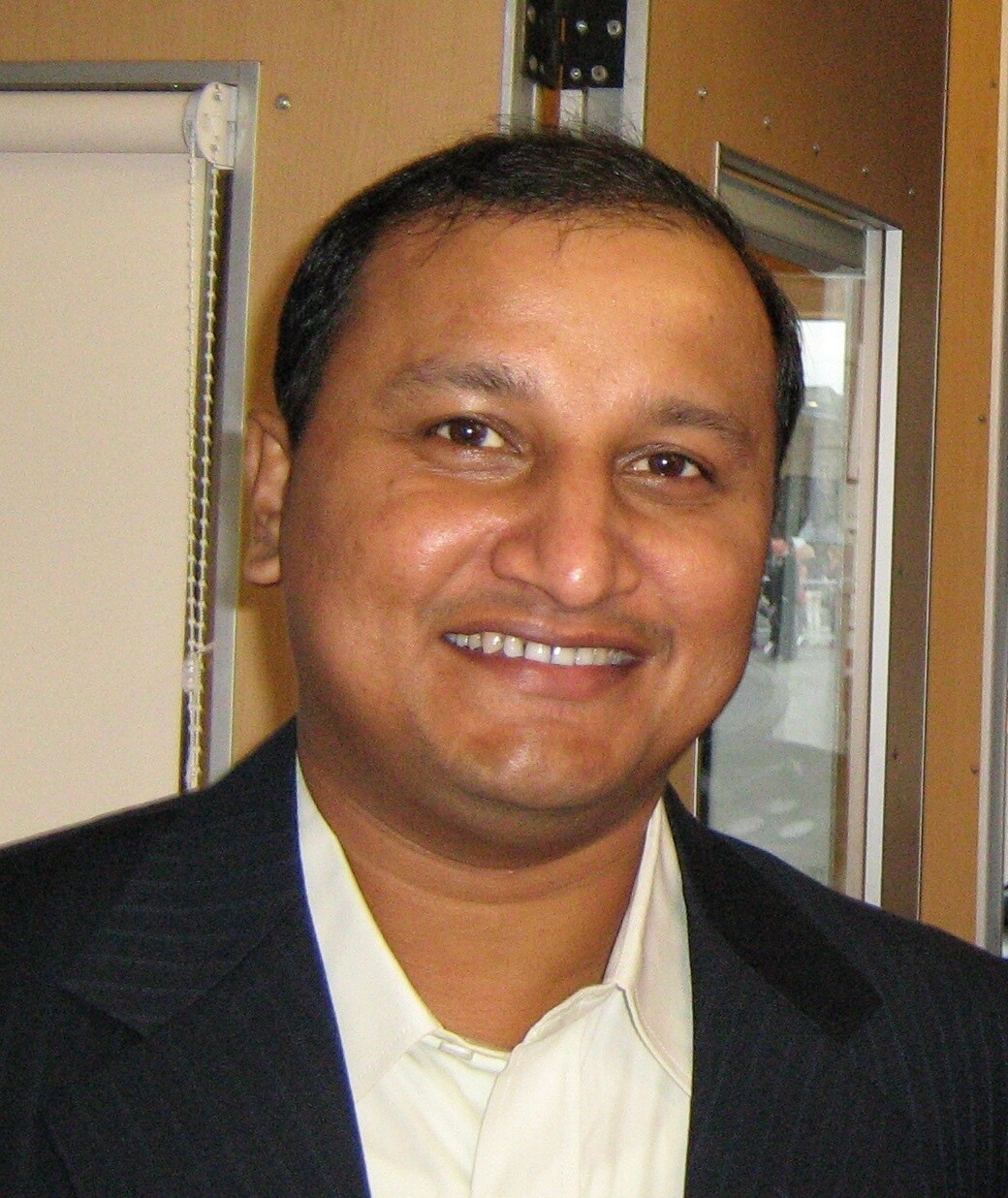
Majhi, a Santhali tribal from mineral rich Keonjhar district and a former school teacher with RSS background, was a surprise choice for the post of chief minister as BJP ended the 24-year BJD reign under Naveen Patnaik on the promise of “Odia Asmita” (Odia pride) and a break from the bureaucratic dominance of the BJD era. A year later, Majhi has delivered on some of the promises made by his party while more needs to be done in fulfilling others.
Here are some of the achievements and unresolved challenges of the first BJP government in Odisha.
Achievements:
1. Focus on cultural identity
A standout achievement of the Majhi government has been its focus on cultural and religious restoration, striking a chord with locals. Within its first 100 days, the administration fulfilled a key election promise by reopening all four gates of the Srimandir (Jagannath Temple) in Puri, a move that ended years of restricted access and was widely celebrated by devotees and religious leaders. The unlocking of the Ratna Bhandar, the temple’s treasury sealed for nearly four decades, cemented the government’s commitment to preserving Odisha’s cultural heritage. “We’ve honoured the trust of Odisha’s 45 million people,” Majhi said, emphasising the government’s commitment to its manifesto.
However, the opening of the four gates has led to massive crowding inside the temple premises, affecting pilgrim experience as the government still toys with the idea of queue system of devotees like those existing in Tirupati temple. “It’s true the BJP government opened all the four gates of the temple, but it has not found a way to improve devotee experience once they enter. The crowd management has been not very effective and it need to be sorted out soon,” said Prasad Harichandan, senior Congress leader.
2. Empowering Women through Subhadra Yojana
The Subhadra Yojana, a cash transfer scheme for women between the age of 21 and 60 years, helped BJP breach BJD’s women supporters in the 2024 polls.
The Subhadra Yojana, named after the deity Subhadra (sibling of Lord Jagannath), under which the 1 crore+ women would get ₹50000 over a span of five years, has emerged as a cornerstone of the Majhi government’s social agenda. By far the biggest state-funded scheme, the state government would transfer ₹55825 crore to the eligible women beneficiaries over 5 years. The 2025-26 budget allocated ₹10,145 crore for Subhadra and introduced Subhadra Plus, an umbrella initiative with components like Kishori Subhadra and Subhadra Surakhya to enhance women’s safety and economic opportunities.
“The scheme is financially empowering women and providing them safety nets while promoting their role as valuable members of society,” said deputy chief minister Pravati Parida.
However, BJD’s Rajya Sabha MP Sulata Deo says it is political jumla as BJP had promised the amount to all women and at one go. “In their election manifesto, BJP did not have any exclusionary criteria and said ₹50000 would be given at one go. Now they are giving ₹10000 a year which translates to a little more than ₹800 a month and is not regular. Had the beneficiaries received ₹50000 at one go, they could have started some business enterprise at their villages,” said Deo.
3. Bonus of ₹800 per quintal of paddy to farmers
The Majhi government’s decision to pay bonus of ₹800 per quintal of paddy over and above the minimum support price as per its election promise addressed a long-standing demands for better prices. By end of last month, the state government transferred bonus of ₹5900 crore to about 16.6 lakh farmers who sold their paddy to the state government in the 2024-25 kharif marketing season. Deputy CM K.V. Singh Deo, who also holds the agriculture portfolio, said the ₹800 bonus of per quintal of paddy has freed the farmers from exploitation by middlemen. “Our government believes in action, not empty promises. What we assured farmers before the elections has been delivered in less than six months,” said Singh Deo.
However, BJD leaders alleged that the tall claims of state government notwithstanding, farmers have been taken for a ride. “The unethical practice of katni-chhatni (deduction paddy from sacks) by rice millers continued with at least 10 kg of paddy deducted from each sack grain on the pretext of the same not meeting the fair average quality. At least 14 farmers have died by suicide over crop loss due to unseasonal rains,” alleged Pramila Mallick, senior BJD MLA.
4. Grievance redressal
Unlike his predecessor Patnaik, who started his grievance redressal cell in 2000 after becoming chief minister with much fanfare and then stopped attending it completely after 2008, Majhi is using it as a citizen outreach mechanism. Additionally, it will likely help him to build a pro-people image.
After Patnaik stopped attending the grievance cell hearings in 2008, BJD tried to revive it as his closest aide VK Pandian toured all the 30 districts in the lead-up to the 2024 elections for collecting grievances, but those were perceived as displays of political might rather than genuine attempts to address citizens’ concerns.
Majhi, on the other hand, has been personally attending the grievance redressal cell on Mondays with key ministers and secretaries, personally hearing woes of thousands of people, including the disabled, senior citizens, and those in urgent need of assistance. In April, he held a grievance cell hearing in Sambalpur, a key district in western Odisha, and has announced that next hearing would be held in Berhampur, a key town in southern Odisha. So far, he has attended 10 such hearings in which 10,234 grievance pleas have been received. Official sources said, 8,524 (83%) of the grievances have been resolved.
However, not many are convinced with the effectiveness of the grievance redressal system, arguing that over a period of time, Majhi would find it difficult to attend the hearings regularly once he gets busy. “It has been a year since the state is preparing an online portal to address the grievances, but it its yet to be operational. The government should instead focus on strengthening grievance hearing mechanisms at district and block levels, where most grievances originate,” said a former chief secretary.
Unresolved challenges
1. Generating employment
With over 12 lakh educated youths registered at the state’s employment exchange, generating employment is the biggest challenge for the Majhi government. Though the unemployment rate in Odisha was 3.9% as per Periodic Labour Force Survey done in April this year, comparatively lower than national unemployment rate of 5.1%, the absolute numbers of unemployed graduates and undergraduates is still a major headache. As per official figures, 3.17 lakh graduates are unemployed while six lakh undergraduates are looking for jobs. BJP in its election manifesto promised to fill 65,000 vacancies in the government in its first two years, but, so far, the Majhi government has managed to fill up just about 27,000 government jobs in the last one year.
“Odisha’s economy, heavily reliant on agriculture and mining, struggles with limited industrial diversification. Despite ambitious promises to create jobs through industrialization and infrastructure development, the government faces structural, economic, and social hurdles. The chief minister during the Utkarsh Odisha-Make in Odisha Conclave in January this year claimed success in attracting 593 projects worth ₹16.73 lakh crore, with a potential to create 12.88 lakh jobs across 20 sectors. However, translating these MoUs into tangible employment remains a challenge, as past industrial projects in Odisha have often prioritized capital-intensive sectors like mining and metallurgy, which offer limited job opportunities,” said economist Amarendra Das.
Many see the government’s recent move in raising the upper age limit for government jobs to 42 years as a half-hearted attempt. “Where are the jobs in government sector? Practically speaking, which person would continue to apply for government job till the age of 42,” asked BJD leader Lenin Mohanty.
2. Slow action on promised action against corruption
The Majhi government has drawn flak over its perceived failure in acting against senior officials whom it had accused of perpetrating scams in the Naveen Patnaik regime. VK Pandian, who served as Naveen Patnaik’s private secretary for 10 years and later as chairman of the 5T (Transformational Initiatives) programme, was a central figure in the BJD regime, often accused by the BJP of wielding disproportionate control over the state’s administration.
After coming to power, state law minister Prithviraj Harichandan had said everything right from expenses for Pandian’s helicopter tours to districts to the construction of helipads will be under investigation. Similarly, the official proceedings against powerful IPS officers DS Kuttey and Ashis Singh over their alleged interference in conduct of the simultaneous elections to the state Assembly and Lok Sabha last year, ended prematurely as the two went on a central deputation. Similarly, IAS officers like Ashis Thakre who was under the glare of Orissa High Court over misuse of DMF funds, too went on central deputation recently.
“The BJP’s anti-corruption rhetoric is selective. They’ve avoided touching Pandian’s inner circle to maintain bureaucratic stability,” alleged Congress leader Santosh Singh Saluja. “The government’s inaction shows a lack of political will to dismantle the old power structure.”
3. Renaming Schemes: Symbolism Over Substance?
Many see the Mohan Majhi government’s decision to rename 21 schemes launched by the Naveen Patnaik government, including the Biju Swasthya Kalyan Yojana (now Ayushman Bharat Gopabandhu Jana Arogya Yojana) and KALIA (now CM-KISAN) as mere rebranding exercise. While BJP leaders argues that these changes enhance service delivery, critics, including the BJD, view them as superficial attempts to erase Biju Patnaik’s legacy.
“The government renamed Ama Gaon Ama Vikash and renamed it Viksit Gaon Viksit Odisha allocating ₹5000 crore for development of 6500 panchayats gram five-year period. If you look at the allocation, it works out to a couple of lakhs for a gram panchayat every year which is too meagre for any worthwhile development work,” said BJD’s Ranendra Pratap Swain.
4. Governance issues
The biggest challenges that the Mohan Majhi government faces is having a smooth governance model that can deliver result. With no administrative experience, Majhi has been finding it tough to make an impression among the state’s bureaucrats that has affected revenue generation as well as flow of central grant.
As per official statistics, central grants in centrally-sponsored schemes such as Pradhan Mantri Awas Yojana, Pradhan Mantri Krishi Sichayi Yojana, and Jal Jeevan Mission to Odisha declined from ₹21,500 crore in 2023-24 to ₹17,000 crore, a fall of over 18 % while the same had gone up by over 15.48 % in 2023-24 compared to 2022-23. Mining revenue, a major source of state’s non-tax revenue, too has fallen by 10 % in 2024-25 compared to 2023-24 affecting state’s fiscal health.
“The state is facing a major governance deficit as bureaucrats are still unsure of the new ministers. Routine meetings take up much time leaving the officials little time to get down to work. The CM does not follow a routine in matters of governance and meetings that can wind up in 15-20 minutes often go for hours,” said a former chief secretary.
Political observer Rabi Das points to government’s inaction in a high-profile cases such as the one involving former Governor Raghubar Das, whose son Lalit Das allegedly assaulted a Raj Bhawan employee during President Droupadi Murmu’s visit to Puri in July 2024 over his inability in arranging a luxury vehicle. Despite the gravity of the allegations, police did not register an FIR and the matter was hushed up. “This incident, coupled with the way BJP ministers are conducting themselves are creating an impression that the CM lacks authority,” alleged Das.
However, state BJP president Manmohan Samal denied the allegations saying CM consults everyone before taking a decision. “Every CM have their own style of functioning,” he said.