E-Paper



Odisha demands central package for building disaster resilient infrastructure
Chief minister Mohan Majhi said though Odisha is prone to natural disasters, the state has emerged as a pioneer in disaster management, demonstrating remarkable resilience

 Prefer HTon Google


Odisha chief minister Mohan Majhi on Saturday asked the Niti Aayog for financial package to build disaster-resilient infrastructure in power, telecom sectors and coastal saline embankments to minimise the adverse consequences of cyclones and floods.
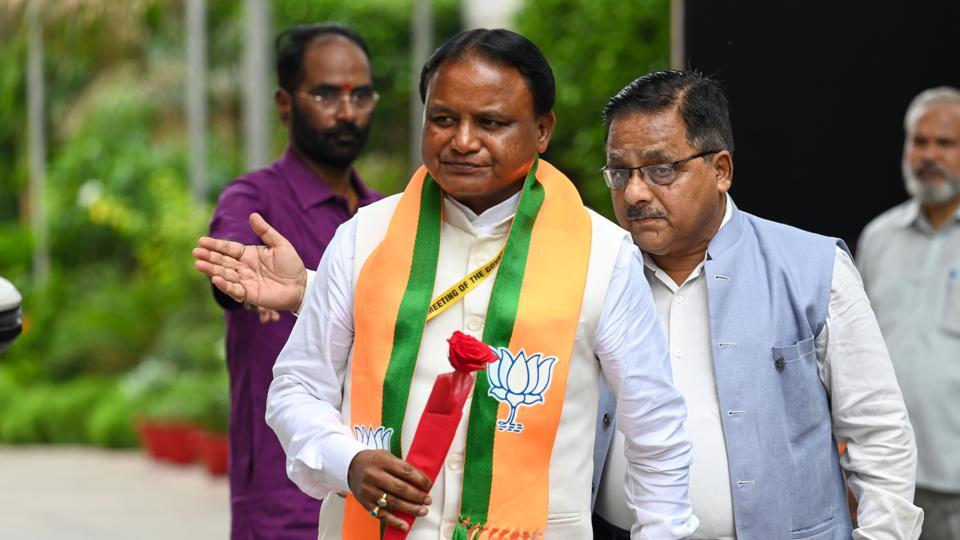
Speaking at the 8th Governing council meeting of the Niti Aayog in New Delhi, Majhi said though Odisha is prone to natural disasters, has emerged as a pioneer in disaster management, demonstrating remarkable resilience. Officials accompanying the CM said the state government wanted the Centre’s assistance for laying of underground cable in urban areas, resilient power transmission and distribution infrastructure in rural areas, building remote control GIS grid, raising the height of saline embankments to at least 6.5 metres above sea level and converting kaccha houses to cyclone resilient pucca houses.
When cyclone Fani struck Odisha coast in May 2019, it caused huge damage to the power infrastructures that left over 1 lakh km of 11-KV and low tension lines damaged while 2.18 lakh electric poles were damaged. Electricity could not be restored in Puri district for over a month. Fani caused damage worth at least ₹1,160 crore to Odisha’s power sector.
Majhi in his speech demanded that the Centre incentivise Odisha for reducing its carbon footprint and rendering ecological services as Odisha with 33 % forest cover has been playing a crucial role in environment protection. “However, the state’s high forest cover limits its ability to utilise land for development projects, affecting its economic growth,” said Majhi.
To establish large-scale port-based industrial zones in areas surrounding the existing port of Gopalpur, Majhi demanded that the salt pan land of around 4,300 acres owned by Centre be transferred to the State Government early.
Majhi stressed that though Odisha is rich in mineral resources and is a leading producer of various minerals in the country, it needs central support to move up the value chain and produce special metals and alloys for aerospace and defence.
The CM also sought central support for attracting Foreign Direct Investment (FDI) and state-of-the-art technology for design and manufacturing semiconductors.
“The year 2036 marks the completion of 100 years of the statehood of Odisha. Hence, the next decade is crucial for us. We envisage Odisha’s consistent growth at a rate of 8-10% annually, moving from a middle-ranking state to being one of the first bogies in the train of India’s development. Odisha’s 480-km-long coastline and water resources can pave the way towards a Blue Economy by exploring marine aquaculture, island tourism, beach tourism, water sports and other niche areas like seaweed cultivation,” he said.