E-Paper



Odisha government to deploy 80 volunteers to prevent electrocution of elephants
According to state records, 77 elephants died from electrocution between 2018-19 and 2022-23, mostly due to sagging high tension lines set by poachers to hunt wild boars

 Prefer HTon Google


The Odisha government has decided to engage volunteers for daily verification of electrical lines in susceptible villages to check livewires amid rising deaths of elephants and other wildlife such as boars in the state’s forests because of high tension lines set up by poachers.
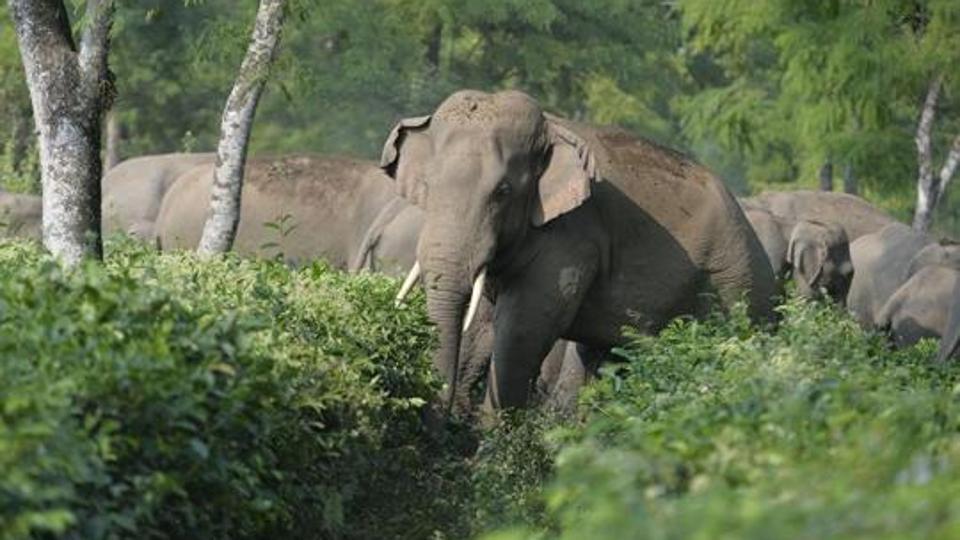
A high-power committee that met earlier this month decided that 80 volunteers funded by the wildlife wing of the state forest department and Tata Power, which looks after the power distribution lines, will start working on the ground to prevent such occurrences.
“These volunteers will be chosen from members of Elephant Depredation Committee and Van Suraksha Samiti of the area wherever possible,” said a senior official of the wildlife wing.
“The report of the Electrical Inspector on the deaths of wildlife due to electrocution will be shared invariably with the PCCF (Wildlife) for information and follow up,” the official said.
According to state records, 77 elephants died from electrocution between 2018-19 and 2022-23, mostly due to sagging high tension lines set by poachers to hunt wild boars. In many cases, villagers too set up livewires to stop elephants from venturing into their farmland.
Two weeks ago, a 20-year-old tusker died after it came in contact with the metal fencing of a farm that was charged with high voltage lines in the Athagarh forest division of Cuttack district.
The committee also decided to identify villages/persons that are particularly vulnerable to crop raiding and whose crops are damaged every year due to wildlife activities. “A scheme will be worked out to provide yearly disbursal of a fixed amount as ‘compassionate payment’ for crop damage to such villagers. This can be in line with the scheme by the fisheries department, wherein a fixed amount is given during no-fishing time for conservation of Olive Ridley turtles,” said a senior official.
The high-power committee had met to approve the 10-pillar strategy for elephant conservation and mitigation of human-elephant conflict, submitted to the Orissa high court last month. The case pertained to a PIL filed to seek more teeth to wildlife crime control efforts in the state. The state government had told the high court that it proposed to divide the state into four broad zones to reduce human elephant conflict.
While the three elephant reserves of the state have been put in Zone 1, the areas where the tusker population is very high, with little presence of humans, have been named as ‘elephant-human coexistence zones’ or Zone 2. The ‘Zone 3’ areas are places that are currently seeing a massive human-elephant conflict, while Zone 4 has areas where there is little-to-no recorded elephant presence.
In zones 3 and 4, the aim is to reduce the conflict through short-term strategies, minimise human and elephant deaths and retain a minimum viable number of elephants as per social carrying capacity.
Also Read:3 Odisha forest officials held for killing worker over elephant carcass burning: Police
It was also decided in the meeting that in Zone 4, efforts will be made to drive back the elephant herd or straying tuskers into the forested landscape.
“Tranquilisation and removal will be the last resort. However, in the eventuality of elephants straying into areas of high human density such as towns and cities, they will be captured and kept in rescue centres. Decisions regarding the area of release / retention in captivity will be decided on a case-to-case basis by the Chief Wildlife Warden,” the official added.