
 E-Paper



Odisha govt discontinues scheme for Covid-19 orphans, cites dip in virus cases
The scheme was announced for the education, health and maintenance of children orphaned due to the pandemic.


Four months after the announcement of the scheme of monthly financial support to the Covid-19 orphans, the Naveen Patnaik government on Monday announced its discontinuation from September 15 citing a drop in Covid-19 cases in Odisha.
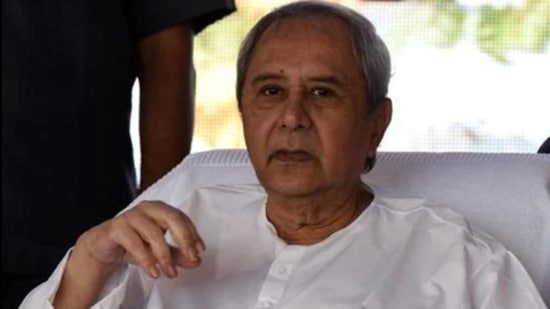
In a letter to all district collectors, the director of the Integrated Child Development scheme, Arvind Agrawal, said any children whose parent(s)/primary bread earner or any other person died due to Covid-19 after September 15 would only be covered under existing Child Protection Scheme of the government and not under Ashirbad. “It is observed that Covid-19 disease has a declining trend in the state for quite some time,” the letter said referring to the declining Test positivity Rate (TPR) as well as deaths in the state due to Covid-19.
On Monday, Odisha reported six new deaths, taking the total death toll to 8,104. The TPR over the last few weeks has gone below one and the number of recoveries has gone up to over a million. The recovery percentage of Odisha has risen to 98.5, higher than the national average of 97.45.
In June this year, Odisha had announced a new scheme called Ashirbad for the education, health and maintenance of children orphaned due to the pandemic. Under the scheme, they would have ₹2500 deposited into the bank account of their family members every month till they turn 18.
As many as 1,773 children lost their parents in Odisha to Covid-19 infections since 1 April 2020, according to a report compiled by the National Commission for Protection of Child Rights (NCPCR). While 163 kids lost both their parents, 1,610 children lost one of their parents since the outbreak of pandemic in Odisha on 1 April 2000, the NCPCR report said.
The commission, in an affidavit filed before the SC last month, said at least 101,032 children in the country lost one or both their parents during the first and the second waves of the Covid-19 pandemic between April 1, 2020, and August 23 this year.
Chief minister Naveen Patnaik who announced the scheme had said children who lost their parents or the main earning person of the family on April 1, 2020, or thereafter to Covid-19 will be covered under it. The orphans can be children who have lost both their parents or either one of them. The amount of ₹2500 per month will be deposited in the bank accounts of family members who have taken the responsibility for the orphans. The assistance will continue till the child attains the age of 18 years or till such date if somebody adopts him/her.
However, if the orphan stays in a child care institution, a recurring deposit of ₹1000 per month will be made in his or her surviving parent’s account till 18 years of age. If the child has lost either of his parents who was the only earning member, ₹1500 per month will be provided for maintenance. If the surviving parent is the mother, she will also be entitled to a pension under the Madhu Babu Pension scheme of ₹300 a month.
These orphans will get treatment under the state government’s Biju Swasthya Kalyan Yojana, a state government scheme under which medicines, diagnostics, dialysis, chemotherapy, operation, ICU and in-patient admission is all free in government hospitals. Besides, they will be also included as beneficiaries under the National Food Security Act (NFSA).
The children can also continue in the schools in which they were studying before the death of their parents. However, in case the family member taking responsibility for the child stays somewhere else, an arrangement of schooling will be made in that place. If necessary, the government will help in the admission of the children in Adarsh Vidyalaya or Kendriya Vidyalaya.
The Ashirbad scheme mirrored several provisions of the PM Cares For Children scheme announced by the Centre in May this year.



