
 E-Paper



Painting the Town with Tradition: Durga idol crafted from Kashi brothel soil adorns Lucknow pandal
The creation of the deity’s structure begins in Varanasi and comes to life in Lucknow, following an age-old tradition that starts on the first day of Rath Yatra


LUCKNOW In a stunning display of tradition and unity, the Trans Gomti pandal in Lucknow is creating a Durga idol using soil collected from the lanes of Kashi, where sex workers reside, along with the sacred waters of the Ganga.
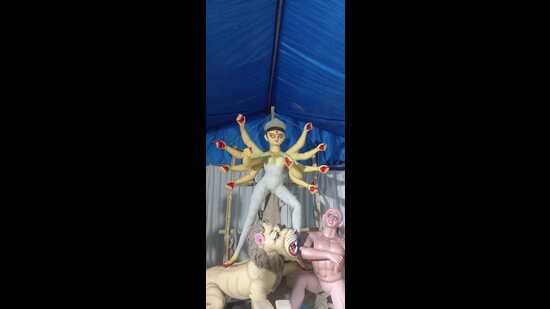
Renowned sculptor Abhijeet Biswas of Varanasi, known for his intricate structures and idols, including the RK Mission in Lucknow, elaborates on the significance of using soil from brothels, “On the day of Rath Yatra, one of our helpers visits the Kashi’s brothel area and requests a handful of soil. The idol-making process commences two-to-three months before Durga Puja. The belief is that soil donated by sex workers is sacred, symbolising unity, as people from all communities visit these areas without discrimination.”
The creation of the deity’s structure begins in Varanasi and comes to life in Lucknow, following an age-old tradition that starts on the first day of Rath Yatra and culminates with the auspicious drawing of the goddess’s eyes on Mahalaya.
Amid a trend of modern-themed Durga Puja pandals, the Trans Gomti Durga Puja committee in Aliganj stands firmly in tradition as they prepare for the upcoming 10-day celebration.
To lead these sacred proceedings, the committee has extended an exclusive invitation to two priests representing the third generation of Hindu mystics Sarada Devi and Ramkrishna Paramhansa.
Sambhu Nath Mukhopadhyay, aged 67, and his elder brother Santi Nath Mukhopadhyay, aged 69, are the chosen custodians of these age-old traditions, traveling from Joyrambati, a quaint village in West Bengal and the birthplace of Sarada Devi, born in 1853.
In a remarkable familial connection, the Mukhopadhyay brothers are the great-grandsons of Baroda Mukhopadhyay, one of Sarada Devi’s five brothers. As Sambhu Nath Mukhopadhyay explains, Sarada Devi, the revered wife and spiritual consort of Ramakrishna Paramahamsa, is affectionately referred to as ‘Takuma’ - grandmother in Bengali.
Their presence brings the time-honoured rituals and practices of Sarada Devi and RK Paramashra, upheld at RK Mission in Kolkata and worldwide. Tuhin Banerjee, the committee’s administrator, emphasizes their commitment to these traditions, with the elder brother reciting mantras and the younger one performing the puja rituals.
Over a century since Sarada Devi’s passing, her family still resides in her birthplace, preserving the legacy and rituals left behind by her and RK Paramanstha.


