
 E-Paper



Ram’s return will also mark end of Sita’s vanvas, say sanyasinis
For these sanyasinis residing in the temple town, the event will also mark the end of Sita’s vanvas (exile) and her return to Ayodhya along with Lord Ram, besides Ram Rajya “that also marks empowerment of women.”

 Prefer HTon Google


Chants of ‘Siya Ram Jai Ram’ resonate as saffron-clad sanyasinis (women ascetics) arrive in an ashram run by the Juna Akhara near Ram Ki Paidi here to participate in rituals organised before the consecration ceremony of Ram Lalla in Ayodhya on January 22.
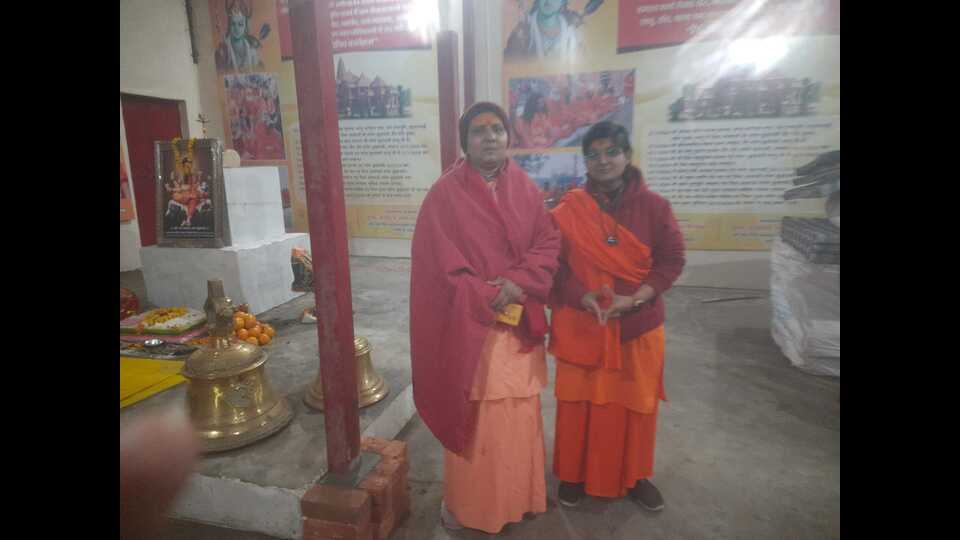
For these sanyasinis residing in the temple town, the event will also mark the end of Sita’s vanvas (exile) and her return to Ayodhya along with Lord Ram, besides Ram Rajya “that also marks empowerment of women.”
“The devotees cannot think of Ram without Sita. There was a time when Sita was forced to leave Ayodhya to lead a humble life in an ashram located in a forest. The people of Ayodhya and devotees will do penance by welcoming Sita with Lord Ram,” said Sadhana, a Juna Akhara renunciate.
Like her, Sharda Nandan Giri of Juna Akhara, who has come from Maharashtra, said, “When Lord Ram and Sita returned to Ayodhya, the devotees had celebrated Deepotsav. Later, Sita was banished from the kingdom and led a hermit’s life. Now, the moment has come when we will welcome both Lord Ram and Sita. The idol of Ram Lalla is being installed in the sanctum sanctorum of the newly constructed Ram Janmabhoomi temple. But the temple will also have an idol of Lord Ram along with Sita.”
Asserting that construction of Ram temple has ushered in a new awakening in the country, Mandakini Ramkinkar, who heads the Ramayanam ashram and has done doctorate in microbiology from Bombay University, said, “Ram Rajya marks equality, liberty and fraternity in the society. In the Shri Ramcharitmanas, Tulsidas has written that without Sita, we cannot imagine Lord Ram. In essence, both are one.”
“The way the name of the Lord is being chanted all over the country is a miracle. It is one of the most welcoming events of the era. Nobody could image that Ram consciousness will grip the people across the country with such magnitude. The consecration is happening with grace of Lord Ram,” added Mandakini Ramkinkar, who is a disciple of Padma Bhushan, the late Ram Kinkar, a noted scholar on Shri Ramcharitmanas and Indian scriptures.
“With blessings of Ram and Sita, women are establishing themselves in all fields of the society. The opportunity for women is opening up in the country. In religious orders, too, the women will be able to make a breakthrough,” she said.
Mamta Shastri, the first woman mahant of a mutt in Ayodhya, said, “We are celebrating the installation of Ram Lalla (child Ram) idol at Ram Janmabhoomi but for sanyasinis, it’s the celebration of Ram and Sita. For devotees, both Ram and Sita are one. Women from all classes and communities were respected by Ram and Sita. To meet Shabari, Lord Ram changed his path while moving in the forest during exile. There were many seers and saints, hermits in the forest, but Ram visited the hut of Shabari to give message to the society.”
Shastri, who holds a master’s degree in psychology, also said women played an important role in the Ram Janmabhoomi movement as well as in spread of Sanatan religion, spirituality and organisation of religious rituals. In Ayodhya, women have touched new heights in social and religious fields, several women scholars are exponent of religious texts and Ram Katha, she added.
Despite being led by a woman mahant, the Darshan Bhavan established by Vishwanath Das Shastri is well known among the Ramanandi temples in Ayodhya, she said.
Ram Sanehi, a senior member of Mai Bada mutt, said, “Sita is like our sister. She went into exile with her husband Lord Ram. When she returned to Ayodhya she was again forced into exile. She stayed in a forest ashram with her sons. Sita is returning to Ayodhya with Lord Ram. We will celebrate the occasion with enthusiasm. Ram Rajya also marks the empowerment of women.”


