
Sign in

Residents of Nuh villages want access to Delhi-Mumbai highway

Residents of around 200 villages from Nuh are demanding access to the Delhi-Mumbai Expressway from Marora village, 40 kilomtres from Nuh

Published on: Dec 21, 2021, 00:12:35 IST
Share
Share via
  • facebook
  • twitter
  • linkedin
  • whatsapp
Copy link
  • copy link

Residents of around 200 villages from Nuh are demanding access to the Delhi-Mumbai Expressway from Marora village, 40 kilomtres from Nuh.
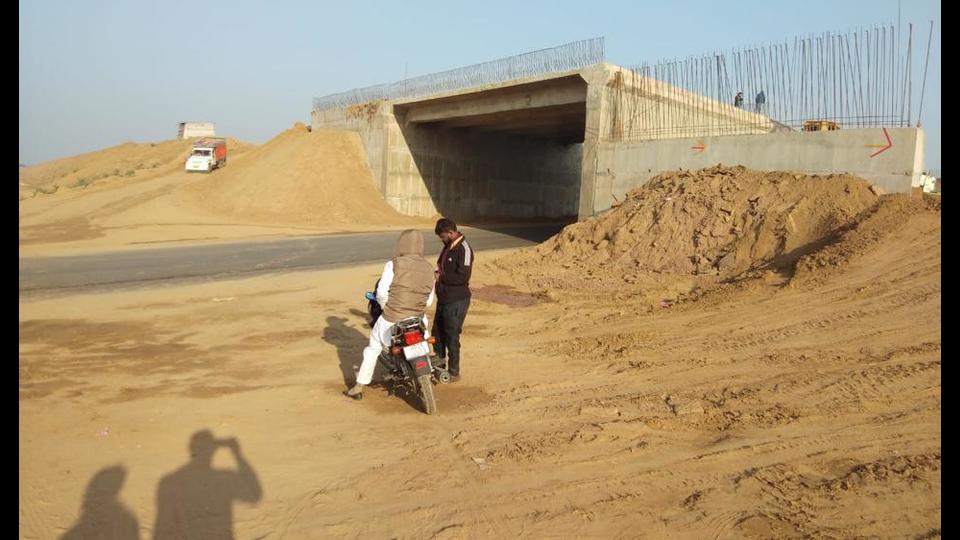
Residents said that due to the construction of the new expressway, they will have to travel extra 40km to visit religious places in Rajasthan and Uttar Pradesh. (Sourced)

Residents said they frequently visit religious places in Rajasthan, Uttar Pradesh and Haryana and the due to the construction of the new expressway, they will have to travel extra 40 kilometres. They said they need the creation of an exit on the expressway to access it.

Rajuddin, a social worker from Mewat, said that locals have been facing difficulties for the last 18 months. “The state highway from Nagina to Hodal is connected to the Mumbai Expressway. Morara village is the midpoint of Nuh and all villagers use this stretch to go tot Mathura, Vrindavan , Kashi and Tijara (Rajasthan),” he said.

Residents of the region have held several meetings and written to the President of India, Niti Aayog, the Prime Minister, the chief minister of Haryana, the union transport ministry and National Highways Authority of India, asking for access to the expressway but to no avail, locals said.

Residents of Nuh held a meeting on Monday where all heads of villages agreed to make collective efforts to gain access to the expressway.

Subhash Chand, the sarpanch of Jhimrawat, said that if the issue is not resolved within a month they will block the state highway and protest. “No one is ready to listen to our demands. The population mostly comprises farmers and they live hand to mouth--if we have to spend extra on travel and spend money why should we even vote for those who are not ready to understand our needs,” he said.

Villagers said that access to the expressway will connect 200 villages comprising a population of 500,000 along the stretch.

Saleem Khan , the sarpanch of Basai Khanjada village village, said, “The majority of the work has already been allotted to contractors--if we don’t get access now , we won’t be able to get later. The access will allow us easy commute to the national Capital and Rajasthan and will lift the economic activity of the district. Educated children look for jobs in Delhi, Gurugram, and Rajasthan,” he said.

The work on around 160 kilometers of the highway in Haryana is expected to be completed by March 2022.

This expressway is being developed as an eight-lane access-controlled greenfield expressway, which can be expanded to 12 lanes by adding four more lanes in the future. A median of 21-metre width is being built on this expressway, which can be reduced for widening the road.

Abbas Khan, a resident of Marora village, who is spearheading the demand for the access road, said that access is also important as the farmers have to visit different markets to sell their products and take a longer route and pay the toll price. “This is torture for them,” he said.

The villagers are planning to file a writ petition in the Supreme Court to get relief in the matter in January. “We have consulted a lawyer and we are preparing the documents to file the writ,” he said.

  • Leena Dhankhar
    ABOUT THE AUTHOR
    Leena Dhankhar

    Leena Dhankhar is Senior Editor and Bureau Chief, Gurugram, at Hindustan Times, where she has spent over 17 years chronicling the transformation of one of India's fastest-growing urban regions. From starting her career as a crime reporter to leading the Gurugram bureau, her journalism has been defined by investigative reporting, in-depth storytelling and an unwavering focus on public interest. Over nearly two decades, she has reported extensively across crime, politics, civic governance, elections, real estate, environment, courts, sports, education and entertainment, covering Gurugram, Faridabad, Nuh and Palwal. Her reporting has exposed several major scams and systemic failures, including insurance frauds, waste management irregularities, illegal arms manufacturing units in Nuh, illegal mining in the Aravallis, organised crime networks and governance lapses affecting millions of residents. Known for her investigative work and exclusive stories, Leena has reported on high-impact national issues, including the Nicaragua charter flight carrying Indian migrants that was turned back amid allegations of human trafficking, exposing the growing network of illegal immigration rackets. Her work has also focused on gang wars, prison administration, juvenile crime, women and child protection systems, the functioning of the Juvenile Justice Board and Child Welfare Committee, and environmental challenges such as pollution, waterlogging and deteriorating civic infrastructure. Beyond hard news, Leena has extensively documented Haryana's rich heritage, forests and wildlife, bringing attention to the state's historical landmarks, biodiversity, conservation efforts and ecological challenges through immersive reportage and feature writing. Her journalism has consistently gone beyond breaking news. She has documented Gurugram's rapid urbanisation through long-form narratives and enterprise reporting on issues ranging from pothole-ridden roads, flooding and waste management to the changing social fabric of India's Millennium City. She also writes widely read feature columns, including The Outsider, Changemaker, and Concern for Gurugram, profiling people, places and ideas shaping the city's identity. Leena is the author of Gurugram School Murder, published by Juggernaut Books, a deeply reported account of one of India's most high-profile school murder investigations. She is currently working on her second book, an investigative work exploring some of India's most significant scams and fraud investigations. Beyond print journalism, she has expanded her storytelling through public speaking and digital media. She is a TEDx speaker and has produced podcasts exploring Gurugram's transformation, civic challenges and untold stories. Her work reflects a commitment to narrative journalism that combines rigorous reporting with compelling storytelling. A law graduate with an MBA in Human Resources, Leena brings a multidisciplinary perspective to her reporting, particularly on governance, public policy and legal affairs. She has travelled extensively across India to pursue investigative assignments, often reporting from remote locations and conflict-prone areas in search of stories that matter.Read More