
 E-Paper



Sena cadre promises to keep the flame alive
Mumbai: It was a deja vu moment for the Uddhav Thackeray-led Shiv Sena, when the Election Commission of India (ECI) allocated the mashaal (flaming torch) symbol to the party, after freezing the long-established bow-and-arrow symbol

 Prefer HTon Google


Mumbai:
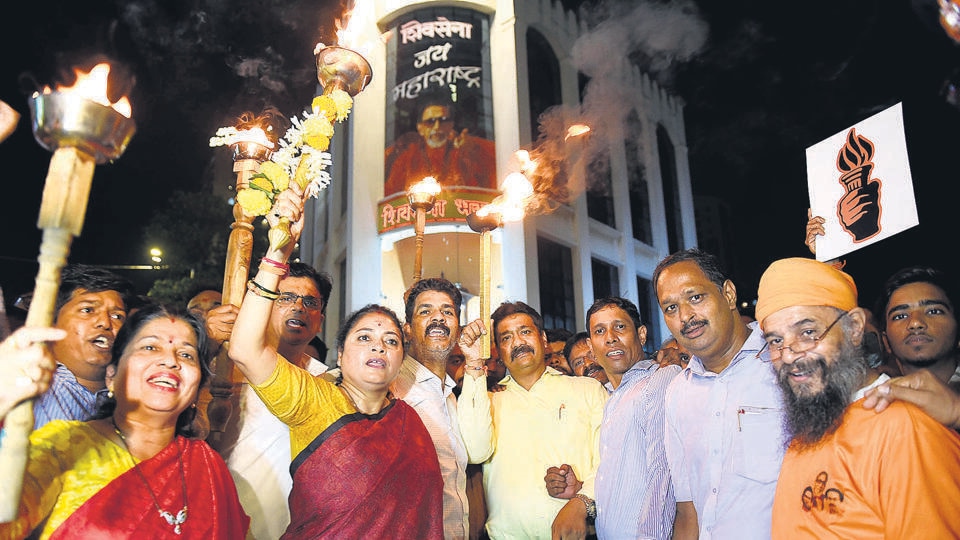
It was a deja vu moment for the Uddhav Thackeray-led Shiv Sena, when the Election Commission of India (ECI) allocated the mashaal (flaming torch) symbol to the party, after freezing the long-established bow-and-arrow symbol. In 1985, Chhagan Bhujbal was elected to the assembly from Mazgaon on this symbol, marking the upward trajectory of Shiv Sena to the point when it captured power in the Brihanmumbai Municipal Corporation (BMC) that year, and formed its government a decade later.
The symbol also resonates with Shiv Sainiks as it exists in the memorial for the martyrs of the Samyukta Maharashtra movement at Hutatma Chowk, in Fort, Mumbai.
Party workers and sympathisers have been on an overdrive on social media since Monday evening, trying to popularise the new name—Shiv Sena (Uddhav Balasaheb Thackeray) and the symbol. On ground, Sena leaders and workers lit mashaals at their offices and constituencies or took out processions in Mumbai and several parts of the state to popularise it.
Bhujbal, who quit the Shiv Sena in 1991 after a bitter fallout with the party leadership, and is now a front-ranking leader of the Nationalist Congress Party (NCP), recalled how he had chosen the symbol and popularised it. “In 1985, our party was not recognised. So, candidates chose symbols like a bat and ball etc. I chose the mashaal as it was easy to paint on a wall—wall graffiti was one of the prime vehicles of political propaganda,” he explained.
Bhujbal said some Shiv Sainiks had also dressed up as gondhalis—a community known for singing the praises of the Goddess—and danced with mashaals to popularise the symbol. He won the assembly polls from Mazgaon, becoming the second MLA in Sena history—the first was Wamanrao Mahadik, who won from Parel in a by-poll in 1970.
Though he was the lone party MLA in the house, Bhujbal’s win was a watershed for the party, which was in the political wilderness for almost a decade. Two months later, the Shiv Sena swept the BMC polls on the issue of Mumbai being severed from Maharashtra; Bhujbal became the mayor. Many Sena candidates had opted for the mashaal as their symbol.
Bhujbal said that while the rival camp, led by chief minister Eknath Shinde, had staged a coup of sorts by securing ‘Balasahebanchi Shiv Sena’ from the ECI, as against ‘Shiv Sena (Uddhav Balasaheb Thackeray)’ for the Thackeray camp, it would not affect the Thackeray-led Sena.
“Already, there are trolls on social media questioning whether the Balasaheb in Shinde’s party refers to Balasaheb Deoras (the late RSS chief) or Balasaheb Thorat (the Congress leader),” he said.
Veteran Shiv Sainik Satish Valanju said the party would work to take the symbol to the masses. “People do not vote for the symbol but for a political party, especially a party that has a strong grassroots organisation unlike other parties,” he explained.
Senior Shiv Sena leader and former minister Subhash Desai said there was “immense enthusiasm” among workers and the symbol would be “taken to everyone”.
Desai pointed to how the memorial to the martyrs of the Samyukta Maharashtra movement had the statues of a worker and a farmer holding a mashaal. ‘Prabodhankar’ Keshav Sitaram Thackeray, the father of late Shiv Sena supremo Bal Thackeray, was a leading light of the Samyukta Maharashtra movement that fought for the linguistic state of Maharashtra with Mumbai as its capital.


