
 E-Paper



Surajkund Mela enters final week, draws massive crowds
Indian artisans from Odisha, Rajasthan, Gujarat, and Tamil Nadu have showcased the rich legacy of handloom fabrics, pottery, wood carvings, and metal craft. The theme states, Odisha and Madhya Pradesh, have drawn major attention with their live craft demonstrations, tribal art displays and vibrant folk performances

 Prefer HTon Google


Faridabad: The 38th Surajkund International Crafts Mela is witnessing record-breaking footfall as it enters its final week, with thousands continuing to flock to the fair before its conclusion on February 23. The event, which has brought together artisans from 42 countries with over 1,200 stalls, has transformed Surajkund into a hub of art, culture, and global craftsmanship, offering visitors an immersive experience of handicrafts, music, dance and cuisine.
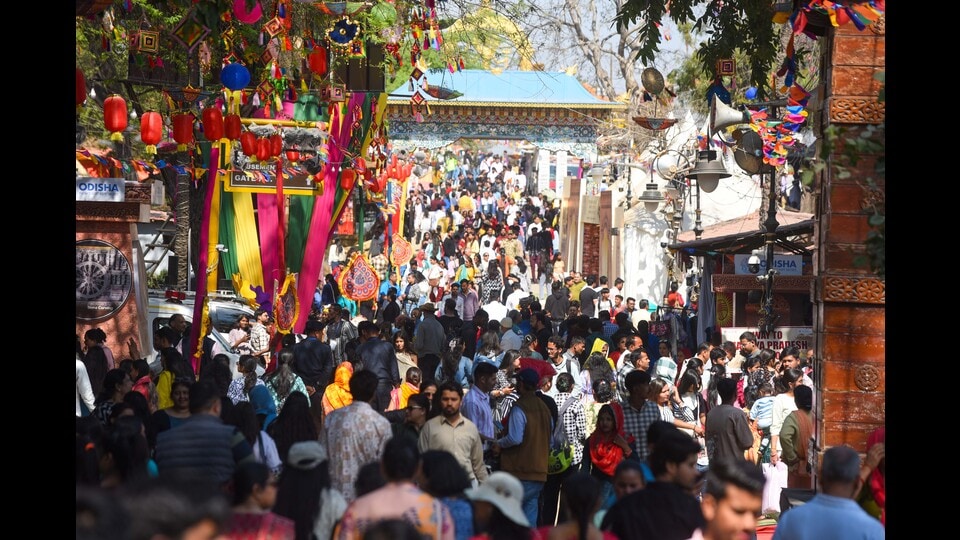
According to Kala Ramachandran, principal secretary of the Haryana Tourism Corporation and Vice-Chairperson of the Surajkund Mela Authority, the mela has attracted the highest number of visitors in its history. She credited the partnership with DMRC (Delhi Metro Rail Corporation) for facilitating smooth ticketing and providing real-time visitor data through QR-coded tickets. “This time, we introduced online registration for stall allocations to maintain transparency and create a database of artisans. The DMRC has been sharing daily visitor data, which is helping us track attendance and improve event management,” she said.
The stalls from countries such as Egypt, Ethiopia, Afghanistan, Belarus, Myanmar, and Sri Lanka continue to be crowd-pullers, displaying intricate handicrafts, handwoven textiles, and traditional artwork. Indian artisans from Odisha, Rajasthan, Gujarat, and Tamil Nadu have showcased the rich legacy of handloom fabrics, pottery, wood carvings, and metal craft. The theme states, Odisha and Madhya Pradesh, have drawn major attention with their live craft demonstrations, tribal art displays, and vibrant folk performances.
The culinary section of the mela has been a major attraction, with food stalls serving regional delicacies from across India and participating countries. Long queues could be seen at stalls offering Delhi’s chaat, Rajasthani dal baati churma, Bihar’s litti chokha, Punjab’s sarson da saag, and Odisha’s chhena poda.
Among the many visitors was 36-year-old homemaker Sunita Sharma, who visits the mela every year for shopping. “The variety of handcrafted products here is amazing. I always find unique home décor, jewellery, and fabrics that are not available elsewhere,” she said while browsing through handwoven shawls.
The main stage of the Surajkund Mela has come alive every evening with folk dances, classical music, poetry recitations, and contemporary performances. This year’s lineup includes Padma Shri awardee Mahavir Guddu, Papon, Mame Khan, and Dr. Satinder Sartaj, who have captivated audiences with their mesmerizing performances. Stand-up comedy by Surendra Sharma and Gaurav Gupta has also added a dose of laughter to the event.
For students, the mela has become an annual tradition. Riya Gupta, a Class 10 student, who took a day off from school to visit, expressed her excitement, saying, “I come here every year with my family. It’s like stepping into a different world filled with art, music, and food. This mela brings together so many cultures in one place.”
With the increasing footfall, authorities have strengthened security at the venue, deploying 1,600 police personnel and 600 CCTV cameras to ensure the safety of visitors. The partnership with DMRC has streamlined ticketing, with QR codes enabling faster entry and data tracking. Tickets are available both online and at metro stations, making it convenient for attendees.
As the mela nears its final weekend, excitement is at its peak. The festival, with its perfect blend of tradition, culture, and craftsmanship, continues to provide an unforgettable experience to visitors from across India and beyond. With just a few days left, people are making their last-minute plans to indulge in the vibrant atmosphere, explore handcrafted treasures, and savour the rich cultural heritage before the event concludes for another year.
Jail officials said that this year, a variety of furniture, decorative items, and bakery products made by inmates from 19 Haryana jails have been introduced at the Surajkund Mela. These handcrafted items, created as part of the prison rehabilitation program, have attracted significant interest from visitors. Officials added that the response has been overwhelming, with steady sales and decent daily revenue, highlighting the growing appreciation for inmate-made products.


