E-Paper



Surat textile industry faces 30% drop in demand, reduces working hours
The Surat textile industry has recorded a 30-40% drop in production and many factory owners have reduced the work hours to four-five days per week

 Prefer HTon Google


The Surat textile industry in Gujarat is grappling with a financial crisis resulting in a 30-40% drop in production and many factory owners have reduced the work hours to four-five days per week, said people familiar with the matter.
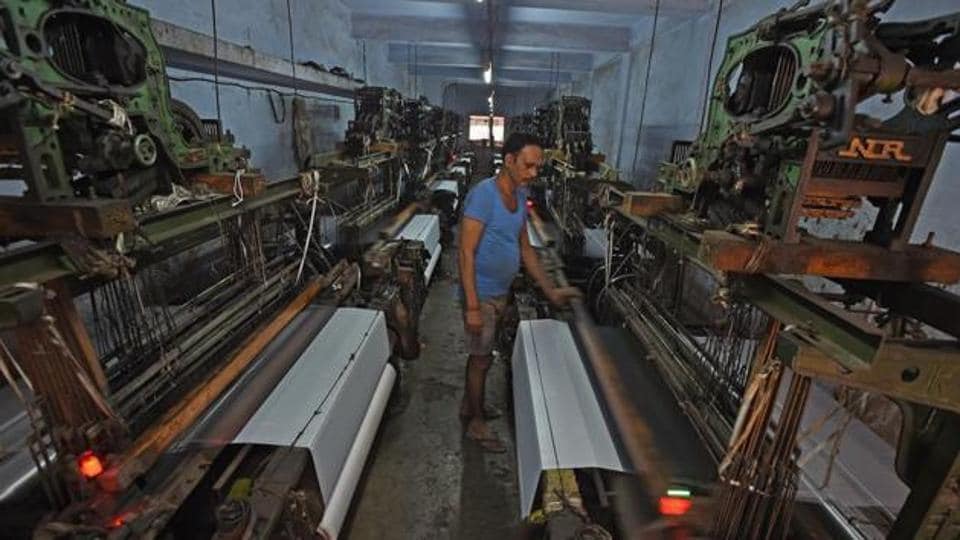
Surat is the second biggest textile manufacturing hub in India after Tiruppur in Tamil Nadu and produces a wide range of fabrics and garments, including silk, cotton, and synthetic textiles. With an estimated annual turnover of ₹80,000 crore, it employs close to two million labourers, many of whom are migrants from states like Uttar Pradesh, Bihar, Odhisha, Madhya Pradesh and some south Indian states as well. However, it has been facing various challenges that have led to a decline in its growth and profitability.
Kailash Agarwal, managing director of Himani Fashions Pvt Ltd that runs two textile production facilities in Surat, said that the production has come down by more than 30% in the last few months. His company has declared five days a week of work for all employees from the month of April.
“Soon after the Covid-19 outbreak and the lockdown that followed, there was a shortage of cloth in the country. The city of Surat reaped rich benefits as a result. This was short-lived as Surat is a hub for synthetic fibres--especially sarees and related material--, the demand for which has been on a constant decline. In garments and stitched products there are quality issues and the industry is facing tough competition from markets like Mumbai, Delhi, Indore and Jaipur,” said Agarwal, who employs around 2,000 people and has an annual turnover of around ₹250 crore. He also added that the share of Surat’s textile in international market was very low due to quality issues.
The Surat textile industry crisis will have a significant impact on the local economy and the people who depend on it. Many textile mills, if forced to shut down, will lead to job losses and a decline in the standard of living for many families. The crisis has also affected the textile traders, who have been struggling to find buyers for their products.
“The situation is worse than in the times of demonetisation. From a production demand of 4.5 crore metres of cloth a few years ago, it has come down to 2.5 crore meters per day presently. The production is down by 1 crore metres per day as there is unsold stock of about 1 crore metres per day. To tide over the situation, the companies have of late begun reducing the work hours. Some have announced five days a week while others have gone ahead and made it four days a week. Many factory owners had recently made significant investment for technology upgradation but they are lying unused due to lack of demand,” said Ashok Jirawala, president of the Federation of Gujarat Weavers Association (FOGWA).
There are an estimated 50,000 textile manufacturing units in Surat, according to Jirawala. While staying afloat in such times is a challenge, shutting down shops continuously would mean losing skilled labourers and hence the option of reduced work hours, he said.
Kamalvijay Tulsian, promoter of JR Dyeing and Printing Mills, one of the oldest saree manufacturing company in Surat, said the industry was on its way to stabilise post Coronavirus scenario in 2021, however, a sharp decline in cash flows has made things worse for the industry.
“I don’t know what went wrong, whether it was weak exports markets or raw material prices going down. The overall production in the industry is down by about 30%. The industry has decided to reduce weekly working hours to four and five days, but business will further decline during monsoon when many migrant workers will go back to their villages to pursue farming. This will pose a new challenge of finding skilled workers,” said Tulsian, who is also the president of the Pandesara Industrial Association.
According to people familiar with the matter, one of the significant factors contributing to the crisis is the rise of Chinese imports. The influx of cheaper textiles from China has made it difficult for the local manufacturers to compete. The Chinese textiles are of a lower quality, but they are significantly cheaper, making them an attractive option for many buyers. This has led to a decline in demand for locally produced textiles, which has hit the Surat textile industry hard, according to a Surat based textile mill owner.
Another factor that has contributed to the crisis is the increase in the cost of production. The cost of raw materials, such as cotton and silk, has gone up, while the cost of labor has also increased. This has led to a rise in the overall cost of production, which has made it difficult for the manufacturers to remain competitive.
The government of Gujarat and the central government have taken various measures, such as providing financial assistance to the industry and setting up textile parks to attract investment in the sector. However, these measures have not been enough to revive the industry fully. The industry needs a comprehensive plan that addresses the various challenges it is facing.
The proposed textile park in Gujarat will take at least 3 years to come up.
According to Jirawala, who joined the ruling Gujarat BJP last year ahead of the Gujarat assembly elections, the central government’s Textile Upgradation Fund scheme capital which expired in March this year, should be renewed to give a boost to the Surat’s textile sector. He said that the industry has approached the government to clear more than 550 files of factory owners whose applications for government announced subsidies for the sector are pending.