E-Paper



Google and India’s AI ambition, with an inkling of new beginnings
For every powerful AI model that US companies build, Chinese frontier labs respond with more affordable models, but with similar capabilities.

 Prefer HTon Google


Cognitive warmup. The big secret is out. We finally know AI music generation company Suno trained its models. One of the largest in terms of what they do, here’s a sketch that has been found of the millions of songs and lyrics they have scraped from various sources. 113,879 hours of YouTube Music, 62,117 hours of Pond5, and 12,287 hours of Deezer, to name a few. There is also audio from stock music libraries Pond5, Jamendo, Freesound, and the International Music Score Library Project, as well as podcasts via RSS feeds.
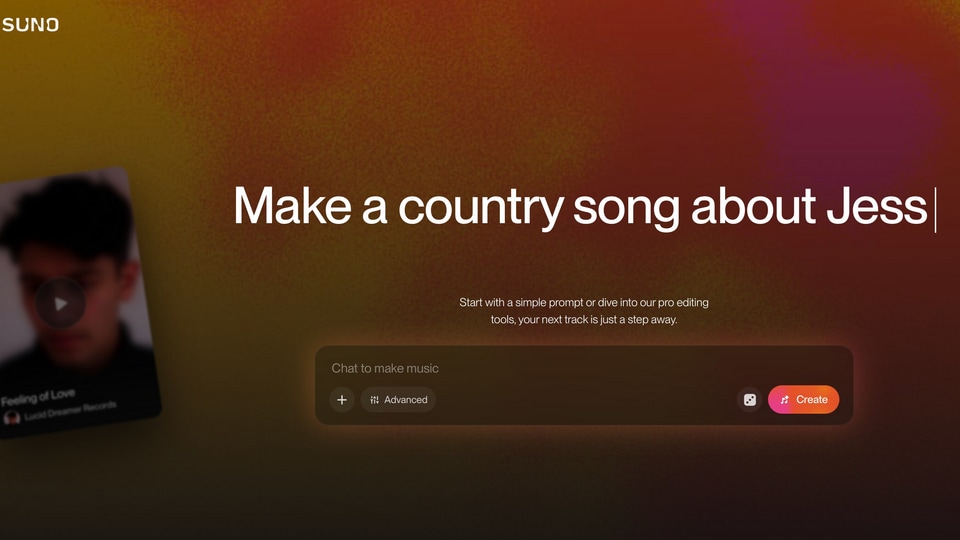
Suno has faced several lawsuits in recent years from the recording industry, mostly around using copyright data for training AI models. UMG, Sony, Warner Music Group, and the Production Music Library, all have been at loggerheads with Suno (or continue to be) at some stage. Suno’s most profound argument so far has been that it’s used “essentially all music files of reasonable quality that are accessible on the open internet”.
PREVIOUSLY, ON NEURAL DISPATCH
SAFETY, IN AN AGENTIC FUTURE
I have, time and detail, illustrated Google’s intent to making AI relevant for the masses in India. That includes real-world implementations across education, agriculture, healthcare and so on. This week, I’d like to circle back to an announcement from the I/O Connect India 2026…one that specifically talks about India’s cybersecurity apparatus in the era of AI agents.
Read: Google bets on India’s agentic AI future with new education, health push
“The agentic era extends that responsibility. Software can now interpret intent, use tools and take action autonomously. This gives developers extraordinary speed, but it also changes what must be secured. Safety can no longer be a final checkpoint before launch. It must be part of the underlying architecture from day one, shaping how agents are built and how they interact,” Google India says, in a statement.
There are three key initiatives Google has embarked on in India, for this.
- Google says they are making their specialised cybersecurity agent, Sec-Gemini v3, available to trusted government and enterprise testers including Flipkart. Sec-Gemini can reason across complex security data and help teams investigate incidents rapidly. This will be relevant for Indian enterprises and government services systems, amidst higher threat perception.
- For this, Google references the Big Sleep vulnerability research agent developed by Google DeepMind and Project Zero, and says that it can be useful in identifying software vulnerabilities. They also talk about the CodeMender agent that can automatically write security fixes and contribute directly to open-source projects. July 2025 marked a moment for the Big Sleep AI agent. “We believe this is the first time an AI agent has been used to directly foil efforts to exploit a vulnerability in the wild,” said Sandra Joyce, VP, Google Threat Intelligence, at the time.
- “To help startups build securely from day one, we are open-sourcing CAPSEM (Capabilities Security for Agents), a secure runtime environment developed by our Privacy and Security Research team,” Google India says. To put this simply, CAPSEM is a capability-safe runtime environment (think of it as an isolated virtual machine) that houses and safely restricts AI agents in terms of what they can access. If an agent is compromised or encounters a malicious prompt, the wider system remains fully protected.
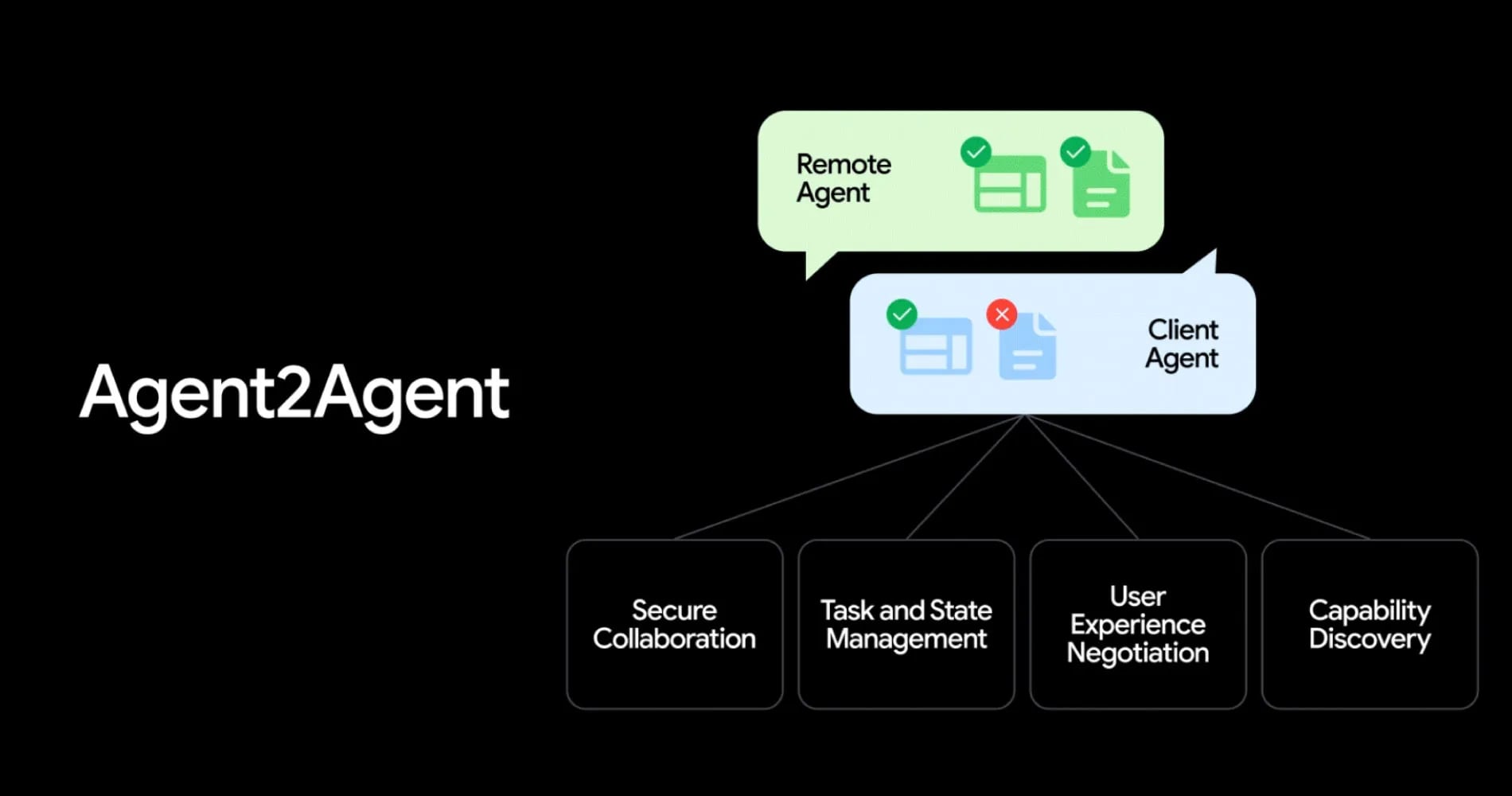
- Google also wants to be at the forefront of conversations around an open standard for independent agents working in interconnected systems. There is a case for the Device Bound Session Credentials (DBSC) open W3C standard that cryptographically links active login tokens to a user’s physical device hardware, making stolen session cookies instantly useless to bad actors, and also for the Agents-to-Payments (AP2) protocol that is designed to make authorised, low-value agent-led financial transactions (under $100) secure and accountable.
AN INKLING OF A NEW BEGINNING
Mira Murati’s Thinking Machines Labs has finally released their first AI model, called Inkling. Murati, who was OpenAI’s former CTO (and also CEO for a brief time during Sam Altman’s ouster in 2023), wrote in a post on X, “Our first model, Inkling. Trained from scratch, weights are open, fine-tunable on Tinker today.” They are calling Inkling a Mixture-of-Experts transformer with 975-billion total parameters, of which 41B active. It supports a context window of up to 1M tokens. It was pre-trained on 45 trillion tokens of text, images, audio and video. For those of you who follow my work, you’d remember that as far back as September of 2024, I had said that there are more chapters ot be written in Mira Murati’s legacy. To many, it may have seemed impossible then. It never was.
“It is the first in a family of models of different sizes: alongside it we are sharing a preview of Inkling-Small, a lighter-weight model with 12B active parameters, trained with a similar recipe, that achieves strong performance with even lower cost and latency,” the official post reads.
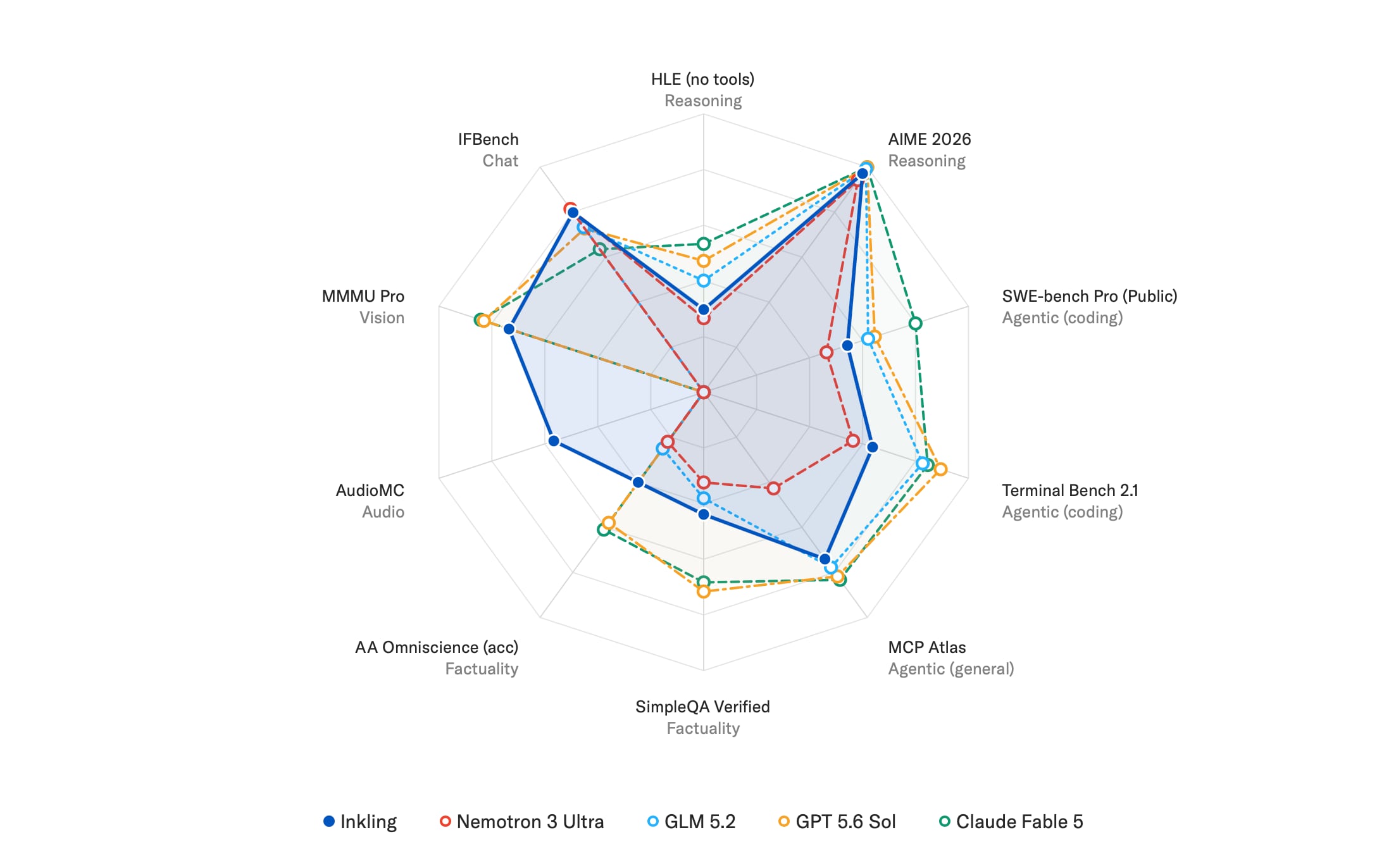
Inkling finds itself close to the likes of Zhipu’s GLM 5.2 and OpenAI GPT-5.6 Sol in AIME 2026 reasoning and the IFBench Chat benchmarks, but there’s still a long way to go before Inkling catches up elsewhere.
“Inkling is designed to be broad. We trained it across agentic, reasoning, coding, instruction-following, factuality, vision, and audio tasks, rather than narrowly optimising for one domain. That breadth matters for customisation and real-world use: different users need models that can adapt to very different workflows, not just excel on benchmarks,” the official post says, which seems like an attempt to set expectations low.
CHINA PITCHES ITSELF AS AN AI PARTNER
Mehran Gul told me two things recently. First, people are increasingly realising (particularly after Anthropic’s Mythos model was taken offline for a while) that they are not buyers of American technology but are at best renters of American tech, that can be cut off at any point in time. And secondly, while n the past questions about trust and reliability were asked of China, the country is now positioning itself as the more reliable partner, and the same questions are now being asked of the American stack instead.
That was a good perspective to have ahead of the World Artificial Intelligence Conference (WAIC) 2026 in Shanghai, where Chinese premier Xi Jinping positioned China as an AI partner for the Global South.
“China is willing to work with all parties to seize and address the opportunities and challenges of artificial intelligence development with a more open attitude, more pragmatic actions, and a longer-term vision,” he said in his address, translated from Mandarin via Google Translate.
The AI battles have heated significantly in previous months. For every powerful AI model that US companies build, Chinese frontier labs respond with more affordable models, but with similar capabilities. According to the 2026 Stanford HAI AI Index Report, the performance gap between top US and Chinese AI models has shrunk to a razor-thin 2.7%, with the US leading in total top-tier model quantity and private investment, while China leads in research volume, patents, and citations.
OpenRouter, a service that lets developers and users access hundreds of different AI models (like Claude, Gemini, and OpenAI’s GPT) through a single account and API key, notes in its latest insights data that Chinese models have surpassed US models in share of tokens, as of early June. Token is a basic unit of data processed.
OpenRouter, a US-based platform that routes traffic across hundreds of models, said Chinese-developed models overtook US models in their share of tokens – the basic unit of data processed – on the platform in early June. DeepSeek’s share has doubled to 18%, from around 9% at the start of the year.
The analytics also note that “a group of Chinese open source models, including Xiaomi, Minimax, and Tencent, all saw their share of tokens rise over the past 6 months. This seems to have come at the expense of a couple of the leading American model companies, specifically Google and OpenAI.”