
 E-Paper



The unsung guardians of Mahakumbh: Teerth Purohits lead pilgrim management
More than ten generations of each of the 1,000-odd individual families have been registered under the Prayagwal Sabha


For centuries, the Teerth Purohits (Pilgrimage Guides) have been the silent masterminds behind the seamless organisation of nearly 70% of the sprawling ‘Basawat’ settlements at the grand fairs on the banks of Sangam. Be it the annual Magh Mela, the six-yearly Kumbh, or the grand Mahakumbh held every 12 years, these unsung heroes ensure that the spiritual and logistical essence of the mela thrives effortlessly.
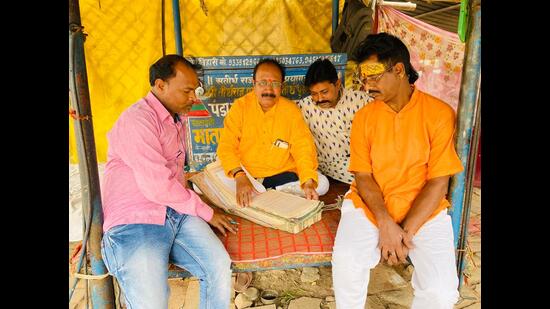
More than ten generations of each of the 1,000-odd individual families registered under the Prayagwal Sabha, the organization of Teerth Purohits, have remained devoted to facilitating the minimum requisites of Hindu rituals performed at any time of the year, be it teerth or ‘asti visarjan,’ besides organising the mela.
With changing times, at least one member of every generation of each family in the business, mostly the eldest son, is inducted into ‘Jajmaan Sewa’ to keep the family tradition.
Teerth Purohit and president of Prayagwal Sabha, Rajendra Paliwal, said: “We have been catering to pilgrims right from the inception of the mela. Though no documents of our existence in ancient times are available, we have been serving pilgrims without any disputes.”
“We Teerth Purohits are like a family without any basic rules and regulations. Our organisation, Prayagwal Sabha, was registered under the Firms and Societies Act in 1949. Our forefathers used to ensure the smooth stay of pilgrims at Sangam for the holy dip, besides performing religious rituals, including Kalpwas. It is we who conduct a mela, be it the annual Magh Mela, Kumbh, or Mahakumbh smoothly as we coordinate the arrival, stay, performance of rituals, and return of nearly three-fourths of the mela crowd,” he added.
“Our livelihood depends on what donations the pilgrims give us while returning. Our generations have set certain rules of pilgrim management that we religiously follow. We get land in the mela area allotted against payment of a fixed tax to the government and then set up tents along with basic requisite facilities at our own expense. During Kalpwas, as well as for those not practicing Kalpwas, we ensure that the requisite religious rituals are performed,” highlighted Subhas Pandey, another Teerth Purohit at Sangam.
Presently, nearly 25 lakh Kalpwasis are set to begin their month-long rigorous spiritual journey in Mahakumbh 2025, starting from the first official bathing of Paush Purnima on January 13, which will end on February 12 with the bathing of Magha Purnima. An average of 2,500 devotees will practice Kalpwas under the guidance of each of the 1,000-odd Teerth Purohits in the tent city.
-kzDF-U20355670330017-250x250%40HT-Web.jpg)


