
 E-Paper



Period till monsoon ends is crucial for Mumbai, says additional municipal commissioner Suresh Kakani
As Mumbai crossed the grim milestone of one lakh Covid-19 cases on Saturday, Suresh Kakani, additional municipal commissioner of Brihanmumbai Municipal Corporation


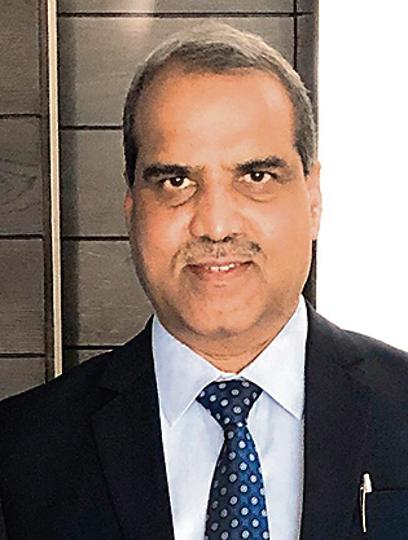
As Mumbai crossed the grim milestone of one lakh Covid-19 cases on Saturday, Suresh Kakani, additional municipal commissioner of Brihanmumbai Municipal Corporation (BMC), said the number of cases being reported every day in the city will “remain in the same range or may go down”. Kakani, who is in-charge of the civic body’s public health department, has played a crucial role in handling the Covid-19 outbreak in Mumbai.
It has been four months since the first case was reported in Mumbai. What is your take on the current situation? What does the future hold?
A lot has happened in the past four months, but in the past month, the situation has only improved in Mumbai, with the recovery rate touching 70%. The recovery rate going up has also resulted in active cases going down, and that has helped us to be ready with more beds for a future surge. The number of cases has stabilised and we have not seen more than 1,500 cases in a day, except for a couple of days. I feel the number of cases may remain the same or may go down in the coming days, but we are ready for a scenario if there is a surge in cases.
The BMC has liberalised testing and has tested over four lakh persons till now. How are you planning to increase the number of tests in the city?
We have been conducting around 6,000 to 7,000 tests every day, and the number will only increase in the coming days. We have also seen an increase in tests after we allowed citizens to get tested without prescription. In addition, we conduct around 600-700 tests every day using the rapid antigen kits. In the coming week, we plan to increase the number of tests using antigen kits to around 1,500-2,000 every day. The area where these kits will be used will also be increased. Currently, these kits are being used in the western and eastern suburbs, but we will expand it. We are also taking blood samples in the form of a sero-surveillance test to understand the development of antibodies in citizens.
How many more months or days are crucial for Mumbai? When can we see situation normalising?
We need to understand that there is no definite period to say when the situation will be normal. I can’t comment on a time limit for conducting tests, tracing and treating people. Each passing day is crucial for Mumbai. The period until the monsoon gets over will be very crucial. We also have to deal with other diseases such as malaria and dengue during this period. Even after the monsoon, we can’t say that the virus will be eliminated. We can’t eliminate, but control its spread until we have a vaccine or medicine to treat the disease.
When can we expect more relaxations in the city or will there be further lockdowns?
Locking down the city again is not something that is on the cards currently. We are working out details and in the next 15 days we might be in a position to allow small- and medium-sized restaurants to reopen. But that does not mean big restaurants will not be allowed to reopen. We will have to maintain a balance. In case of gyms and theatres, we might have to wait some more time. Gyms are confined air-conditioned spaced. There is exercise equipment, which is frequently touched by multiple individuals. There are similar issues in case of theatres. We will have gradual reopening and citizens will have to take all precautions.
What are the areas of concern for BMC?
The area of concern in terms of Mumbai remains the number of cases increasing in high-rises and multi-storey buildings. Cases in slums have been controlled. We are now focussing on high-rises. Another important factor is the number of cases being reported in the Mumbai Metropolitan Region (MMR). It is equally important that cases in MMR come under control. We are giving all assistance to the municipal corporations and councils in MMR.
What about the shortage of crucial medicines required for treatment of Covid-19 patients? There have also been allegations that there is not enough medical staff available for the newly built Covid-19 centres.
As far as civic run hospitals are concerned, there is no shortage of medicines to treat patients of Covid-19. We have sufficient medicines at civic run hospitals. It will not be correct to say that there is a shortage of doctors in jumbo facilities. We have kept the facilities ready in advance, considering it is monsoon. We will use them as and when required. Is the capacity of Covid-19 care centre is more and the admissions there are less, that’s not because there is shortage of staff. We are treating every single patient.
What about the Covid-19 deaths happening in the city? The fatality rate is around 5.50%-5.75 %.
We are constantly taking steps to bring down the fatality rate in Mumbai, and have implemented various measures for it. If we compare these deaths with the overall deaths that take place in the city, the number is not that high. But definitely, we are working towards bringing the fatality rate at par with the national average.
Kerala on Friday became the first state to confirm that community transmission of Covid-19 has occurred in two coastal hamlets of capital Thiruvananthapuram and asked people to be extra vigilant. Is there community transmission in Mumbai?
We have to understand that the BMC can’t make or announce this. In case of Mumbai, we are not claiming or even predicting that there is community transmission. This has been our stand. However, we are working on understanding the spread of the disease in the city. Currently, we are taking around 10,000 blood samples from three wards in the city as part of a sero-surveillance test. After collecting these samples and knowing their results, we will undertake such a drive again in these areas. However, that will be later, and the sample size might not necessarily be the same, but it will help us analyse the spread of the disease.


