PUNE: The reason more than 24 schools closed down in Pune district in 2023 is not just zero number of students in many schools but also pending dues worth ₹2,400 crore to be paid by the state government to thousands of schools for the Right to Education (RTE) students.
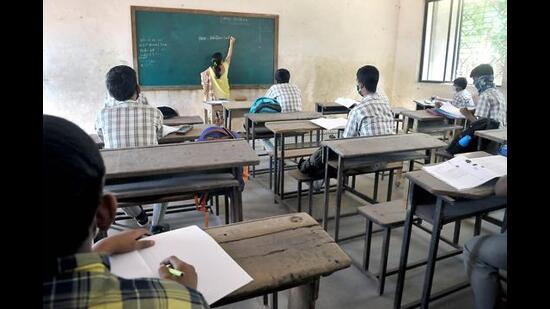
Under the RTE Act, all schools have to reserve 25% seats for children from economically weaker and disadvantaged sections. While the schools are doing their part, the state government has been found to neglect paying subsidy to these schools for the RTE students. In the last six years, RTE dues worth ₹2,400 crore are pending payment from the state government to these private unaided schools.
“The unaided schools are in trouble due to spending a large sum of money, and since they are not getting any money from the state government, the question is how to teach the poor students. Twenty-five per cent seats are reserved under RTE in English schools too, so that students from economically weaker and disadvantaged families can get quality education. For this, 31,000 schools in the state are given a subsidy of ₹17,670 per student per year. In spite of providing online education to students in English medium schools during the Covid pandemic, the government reduced this subsidy to half with ₹8,000 being paid per student now. This was also accepted by the schools, but a large amount of the dues is still pending,” said Sanjay Tayde-Patil, founder-president of the Maharashtra English School Trustees Association (MESTA).
“In reality though, in the last six years from 2017 till now, the RTE reimbursement arrears of unaided schools have been increasing. The number of students admitted under the RTE Act has reached 400 to 500 in each school, and non-payment of their RTE reimbursement is affecting the financial affairs of the schools,” Tayde-Patil said.
{{/usCountry}}“In reality though, in the last six years from 2017 till now, the RTE reimbursement arrears of unaided schools have been increasing. The number of students admitted under the RTE Act has reached 400 to 500 in each school, and non-payment of their RTE reimbursement is affecting the financial affairs of the schools,” Tayde-Patil said.
{{/usCountry}}“The government had sanctioned ₹200 crore in the 2020 budget after great efforts by the educational institutions to get the RTE reimbursement amount. However, only ₹84 crore was actually distributed to the schools. In 2023, while ₹116 crore was outstanding, the government again announced to pay ₹200 crore for the academic year 2022-23. However, out of this too, only ₹40 crore was allocated,” Tayde-Patil further said.
Prof Balkrishna Kutade, trustee of one of the private schools in Satara, said, “We are following up frequently on this issue of getting the pending RTE dues for the last two years. Protests were also held during the winter session in Nagpur. But the education minister has not taken this matter seriously so far. Even the finance minister is not interested in it. As there is no money, the question is how and till when to teach the students. Now, we are preparing for an aggressive movement on this issue as a large number of schools will get closed this year if the dues are not paid.”
Archana Mehendale, a parent, said, “My son was studying in Class 2 in one of the private schools in Pimpri-Chinchwad, which was closed last year due to pending RTE dues. So, we had to shift him to another school for Class 3 in this academic year.”
A senior education official from the state government said on condition of anonymity, “We are aware of the condition of private unaided schools and the state government is trying to pay their pending dues. But the dues cannot be paid in full, and will be reimbursed in phases.”