
 E-Paper



Monday Musings: Metro takes shape, Pune airport not even mentioned in debates
The irony is that while the city is the second largest in the state and a bigger contributor than any other city in terms of employment, the proposed airport on paper now doesn’t even figure among discussions of those ruling the state

 Prefer HTon Google


After a delay of over a year, two sections of Pune Metro – Garware College to Ruby Hall and Phugewadi to Civil Court – will finally be operational on August 1. It is an important milestone for metro rail which has been used by commuters in the past 16 months just for ‘experience’. Although incomplete, the latest sections being added to the metro map will make public transport more utilitarian, as noted by Sudhir Mehta, an industrialist.
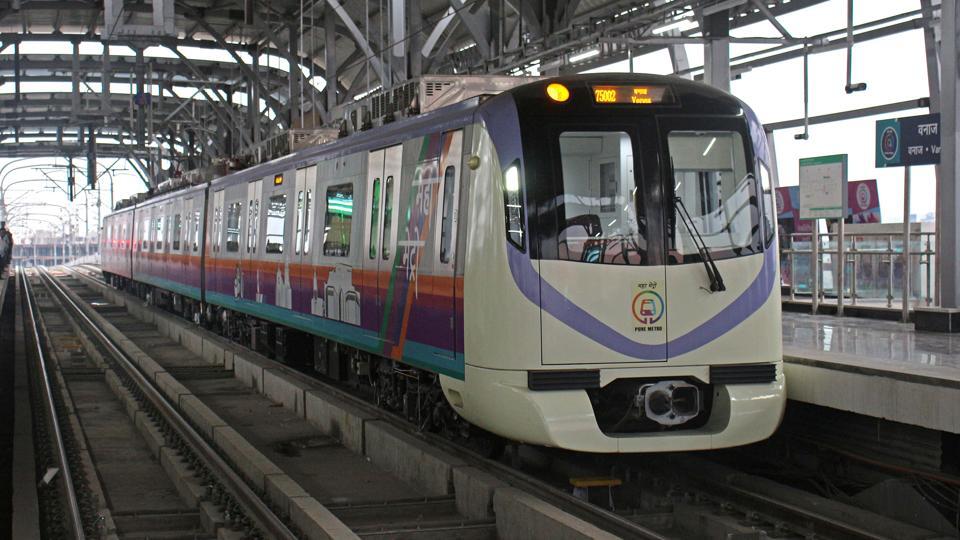
For a city like Pune, mass transport should have been operational long ago considering its growth. Pune is expanding geographically as well as demographically like other metro cities in India. According to the latest Environment Status Report (ESR) published by Pune Municipal Corporation (PMC) for 2022-2023, the city’s population is projected to cross 10 million by 2047 from the current five million. The report, released last week by PMC, states that Pune’s population will be about 6.17 million by 2032 and 8.85 million by 2042.
With around 12 km of metro rail being operational, citizens on their part need to use this mass transport system for which the government has so far spent crores of rupees. The lower-than-expected ridership due to poor last-mile connectivity, and delay in commissioning of under-construction lines which would feed ridership to the already operational lines has so far restricted metro rail in Pune to experience than utility.
The recent survey conducted by WRI India and Toyota Mobility Foundation across commuters in Delhi, Bengaluru and Nagpur, titled “Improving Metro Access in India” says when the central government has invested heavily in metro rail systems to tackle urban traffic congestion, higher transport emissions and road crash fatalities, their severe underutilisation—in some cases, just 10% of the projected ridership has been achieved—is concerning. Poor access to stations (the last-mile problem) is a major contributor to low ridership. Pedestrian and cycling infrastructure is usually inadequate, and motorised modes such as feeder buses and shared or on-demand para transit to metro stations can be infrequent, unsafe, uncomfortable, and unaffordable. This deters commuters from taking the metro.”
As seen in Pune and other cities, besides being noted in the report, planning for metro systems and complementary transport often takes place in silos by not considering actual commuter preferences. In Pune, when the Katraj-Swargate route is expected to generate the highest footfall, approval for it is still awaited.
The metro story hopefully will change in the city awaiting the inauguration of additional stretches on Tuesday. But what about the city’s airport, which has just been on paper for over 12 years?
When the city is growing rapidly, the pet peeve among Punekars has been an absence of a dedicated civilian airport. The irony is that while the city is the second largest in the state and a bigger contributor than any other city in terms of employment, the proposed airport on paper now doesn’t even figure among discussions of those ruling the state.
Earlier last week, Maharashtra Deputy Chief Minister Devendra Fadnavis spent over 15 minutes sharing updates on different airports across the states during the ongoing assembly session. According to Fadnavis, airplanes will take off from the Navi Mumbai airport by August next year once it become operational.
The deputy CM also informed the progress of Amravati and Shirdi airports, and why work at Nanded and Latur airport has come to a halt due to non-payment of dues by the assigned company. For efficient airport management, the government is planning to set up a dedicated authority. A decision on this matter is expected within the next three months.
In the entire discussion, the proposed airport in Pune did not even find a mention. The legislators from Pune neither questioned the government, nor those from the treasury side bothered to update on the mega project which is crucial for the overall development of the city and its economy.


