
 E-Paper



Female Great Indian Bustard featured extinct spotted in Solapur’s Nannaj
The department also sighted other endangered species like Lesser Florican and even fox in the same area


A female Great Indian Bustard (GIB), an endangered species, was spotted in Solapur’s Nannaj neighbourhood in the last week of April, close to a water source. The female GIB has finally returned to her habitat, according to forest officials, and this is encouraging for the grassland ecosystem restoration in the area.
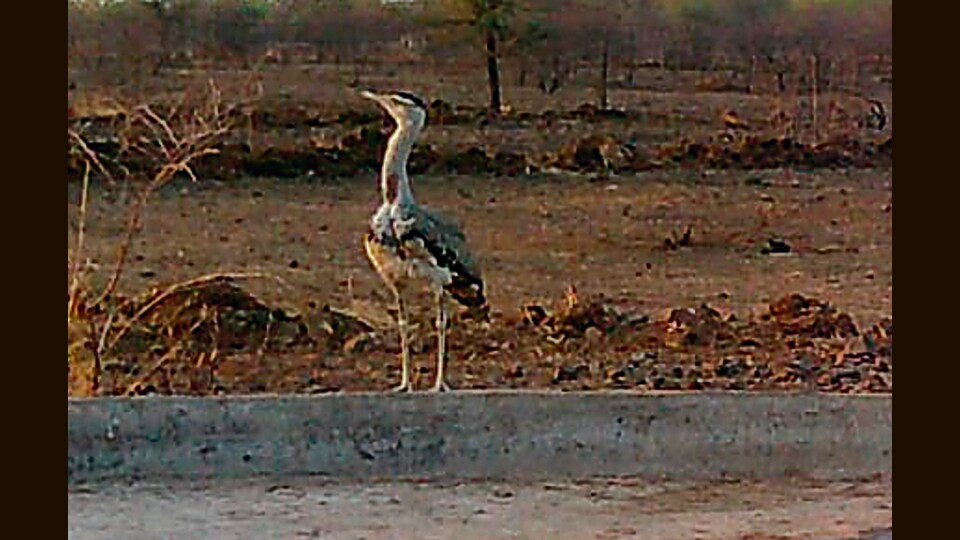
The department also sighted other endangered species like Lesser Florican and even fox in the same area. These species were earlier part of the grassland ecosystem in Nannaj, however, they were categorised as endangered due to the habitat loss here.
According to officials, there were at least 35 GIBs that existed in Maharashtra a decade ago, however, a state-wide survey by the Wildlife Institute of India (WII) in 2017 found the bird had gone extinct.
Currently, only one female GIB exists in the area. The bird which also migrates to Karnataka for some time has been seen after around 4 to 5 years into its traditional sighting area.
Tushar Chavan, conservator of forest (wildlife), Pune, said, “Birds used to congregate in a 100-hectares region in Nannaj as a customary showcase location during the breeding season. However, in recent years, the birds have not been present here, primarily as a result of habitat loss.”
“Not only GIB, but many other animals and birds have been affected due to habitat loss in the area. After realising the issue, the department took the initiative for habitat conservation at the Nannaj GIB sanctuary. With the successful efforts of the conservation programme, the bird has returned to its conventional habitat,” he said.
The efforts made by the forest department to restore the grassland ecology at Nannaj Sanctuary include the installation of firelines, grazing control measures, building and maintaining water holes, and encouraging the population of prey animals. “The conservation initiative will continue,” said Chavan.
At Nannaj Sanctuary, the department also intends to establish a GIB breeding facility. They are currently in discussions with several interested parties, including the Rajasthan Forest Department, from whom they are requesting eggs because Rajasthan has the highest number of GIBs (20), and the department runs a successful GIB habitat there.
“We are also in talks with the Wildlife Institute of India, the Bombay Natural History Society, and the Ministry of Environment, Forest and Climate Change. We are expecting a nod soon,” said Chavan.


