
 E-Paper



HC directs formation of ‘expert committee ’to address pigeon feeding dispute in Pune
The court emphasised that the opinion of the committee will be binding, and should not be contradicted by either the corporation or the state government

 Prefer HTon Google


Pune: The Bombay high court (HC) has directed the formation of an ‘expert committee’ to evaluate the Pune Municipal Corporation’s (PMC’s) decision to prohibit feeding of pigeons at 20 designated locations across the city. The court stated that the committee will comprise qualified experts in the field, and will be formed after considering suggestions from the petitioners, the state government and the municipal corporation. The court also emphasised that the opinion of the committee will be binding, and should not be contradicted by either the corporation or the state government.
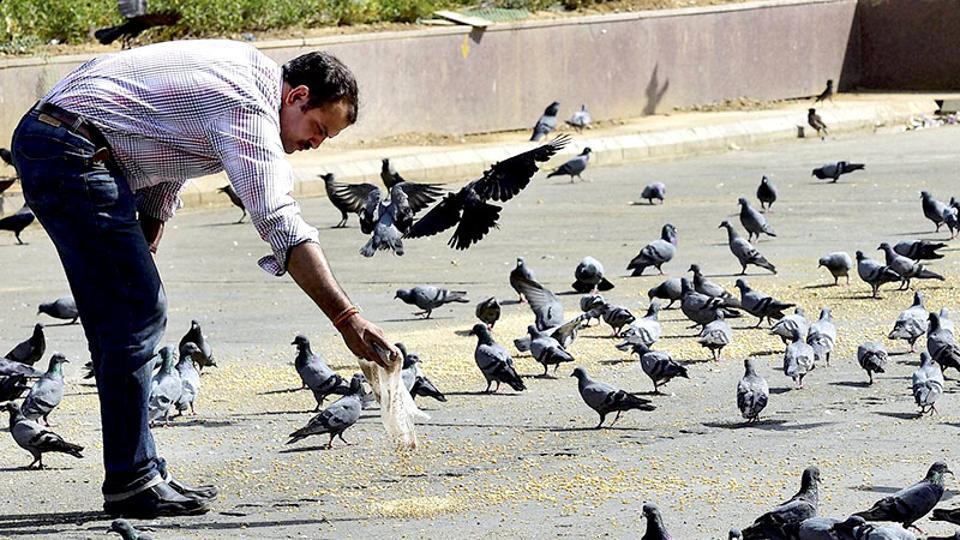
The Bombay HC order comes after hearing the petition filed by Pune-based NGO, Shashwat Foundation, challenging a directive dated March 10, 2023, issued by the chief medical officer of the PMC, Dr Kalpana Baliwant. The directive orders the removal of pigeon shelters and imposition of a fine of ₹500 on those feeding pigeons at 20 designated locations across the city.
Whereas the petition states that the directive violates Constitutional provisions and is contrary to existing legal precedents, including judgements by the Supreme Court of India. The NGO has been following the issue for several years, and in March 2025, submitted a formal representation to the PMC commissioner, requesting withdrawal of the directive.
The NGO further states that asked to clarify the legal basis of the directive, the PMC failed to do so. Left with no alternative, Shashwat Foundation president Ashapurna Ambekar, approached the Bombay HC seeking to quash the PMC directive.
Meanwhile, the Animal Welfare Board of India also took note of the issue and wrote to the State Animal Welfare Board and the animal husbandry department, Pune, urging them to intervene. Acting on this, the State Animal Welfare Board communicated to the PMC that the directive is inconsistent with legal and welfare norms. However, despite repeated objections, the PMC continued to enforce the ban, collecting fines totalling ₹55,000 to ₹
56,000. In a hearing dated August 7, 2025, a Bombay HC bench comprising justice G S Kulkarni and justice Arif S Doctor observed that there exists a wealth of medical literature concerning the issues raised in the matter. The court noted its limitations in evaluating such complex scientific material, especially if the petitioners choose to contest the medical opinions presented.
Acknowledging the technical nature of the issue, the bench stated, “It is for this reason that we are inclined to hear the learned advocate general on behalf of the state so that an ‘expert committee’ may be formed as may be suggested.”
The court further stated that if the expert committee upholds the decision of the PMC and there is no need to recall the same, the authorities in consultation with experts such as the Bombay Natural History Society (BNHS), Animal Welfare Board of India and others can explore alternative solutions. These alternatives may be proposed by various stakeholders including the petitioners, with a view to formulating and implementing a workable mechanism.
The bench added, “In our prima facie opinion, this is the only manner in which the impasse can be resolved. We accordingly adjourn the proceedings to August 13, 2025 at 3 pm so that we may hear the advocate-general and also consider the names of experts who can be part of the committee to be appointed by the state government.”
During the hearing, senior counsel for one of the petitioners informed the court that the petitioner wishes to continue feeding pigeons. In response, the court permitted the petitioner to submit a formal application to the municipal commissioner. The court directed that the commissioner grant the petitioner and other stakeholders an opportunity to be heard and issue an appropriate order in accordance with the law particularly keeping in mind the larger issue of public health.
The court also clarified that if such an application is rejected, the petitioner would have the liberty to approach the court again. Advocate Harshad Garud, counsel for the petitioner, opined, “The feeding activities cannot be stopped. Culling pigeons is not a viable solution, as they have an inherent right to live and to access food necessary for survival.”
Ambekar, president of the NGO involved in the matter, added, “This issue primarily revolves around the need for cleanliness, which is the responsibility of the Pune Municipal Corporation (PMC), particularly in areas where pigeons are being fed. While pigeon droppings may pose some exposure risk to humans, appropriate precautions can be taken. The pigeon population in Pune is significantly lower than that in Mumbai, and feeders should still be allowed to feed them responsibly.”
Advocate Madhavi Tavanandi said, “The order says that the feeders can make an application to the municipal commissioner who will decide on the feeding. The matter will be heard on Aug 13 and an expert committee will be set up ,” she said.


