
 E-Paper



How three friends are changing aerospace dynamics
Thrustworks Dynetics is a Pune-based propulsion company that designs and develops liquid rocket propulsion systems and subsystems for commercialisation

 Prefer HTon Google


When you think of rockets, images of moon landings or Elon Musk’s plans for Mars might come to mind. But the rockets we encounter most often are far more down-to-earth, literally. They launch the satellites that power our GPS, enable global communications, and even play a role in defence technology.
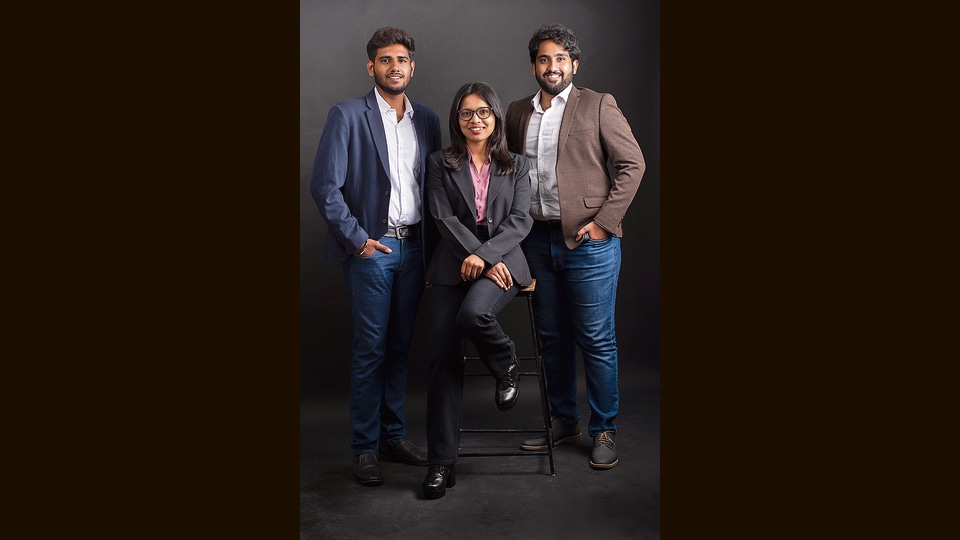
While building a rocket isn’t as common as designing an app or manufacturing an electric vehicle, three friends, Manan Joshi, Kalyani Shinde, and Vinith Shenoy, saw an opportunity in this niche corner of aerospace.
Rockets encompass a wide range of vehicles: those that soar into space, hypersonic systems that fly five times faster than sound, R&D platforms, and even missile technology. Yet access to the materials, information, and technology needed to build rocket engines remains extremely limited.
Manan explains, “If you want to develop a world-class propulsion system, and you look at NASA, you’ll realise that much of the information is confined to the US. Critical systems, materials, and certain alloys are hard to come by. Without them, building a top-tier rocket engine is almost impossible. This lack of access drives up costs, slows innovation, and increases risks in aerospace development.”
So the technology and materials needed to build a rocket engine were well guarded, and this was the problem. The three friends were working on a project for Bharat Forge on rocket technology and decided to quit the assignment and find a way to build a rocket engine. Seems audacious, but then fortune never favoured the meek. In 2023, they formed their own company, ThrustWorks Dynetics, rolled up their sleeves and set to work.
Defining the problem:
Manan explains, “Basically, there are two types of engines: air-breathing ones, much like a car or a plane, where a large amount of air is required to combust the engine and propel the vehicle. A car uses air from the atmosphere, and a plane uses the turbines that charge it. These vehicles need oxygen to burn the fuel. Air-breathing engines have been used for over a century.
“Then you have the non-air-breathing engines that are rockets. Here again, there are two types: a solid rocket and a liquid rocket. Solid rockets are much like our Diwali crackers, to give a synonym, where the fuel is in a solid state, like chemicals like potassium Nitrate, aluminium and so on are used. Liquid engines are very efficient but can be reused, unlike solid ones. Liquid rocket propulsion systems are used to build a launch vehicle. ballistic missiles and other weapons of war.”
Starting from scratch, they decided to build not just the hardware but also the software, a platform, so to speak, to build a rocket engine. Manan shares, “We spent years developing the manufacturing processes. The parameters of available alloys and built software that could account for such constraints.
They built not just their own software for design and analysis but even a platform for rocket engines. Manan states, “Instead of buying technology, we sat down to work on thousands of data points on our software so that the time required to build a liquid propulsion engine would be reduced. Our rocket engine platform is a system that can be customised to meet the user’s needs. Generally, it takes about five years to build a liquid rocket propulsion engine. Our platform cuts it down to six months.” They also did several trials with different materials that are easily available in India, whilst building their platform liquid rocket engine.
After two years of R&D, they now have an engine that can be customised in four ways. The thrust can be 2 tons to 3 tons. They can customise the size of the ‘envelope’ or the cross-sectional area of the engine, as it is called. It can be made reusable liquid propulsion engine and the turbo pump assembly that essentially works to moderate the rate at which the gas is pushed into the engines, with its various permutations and combinations.
Finance:
Thrust Works have raised two rounds of funding. The first round was in 2024, when they raised ₹1 crore ( ₹50 Lakhs in grants from government and private industries each). The second round was of ₹10 crore, which was led by Jamvant Venture, followed by Piper Serica, SINE IIT Bombay and Manish Gandhi.
Smart work:
Since they have a customisable system that can provide rocket engines within six months, they understood clearly that there were other uses their innovation could be put to. Manan explains, ”Our India’s first resonance ignitor and injector and turbo-pump can also be used by non-aerospace industries such as drones, our armed Forces, satellite companies and countries that need launch vehicles.
Go – to -market:
“Ours is a B-B business, and having the right connection is important. We do have an MOU with ISRO to develop engines and subsystems, and have partnered with a US company, Softinway, that makes software for turbo machinery that it supplies to NASA. They are helping us explore opportunities in the US and Europe. We sell our hardware, not our software.
The future:
Is a ten-year plan. Manan says, “Kalyani, Vinith and I started this company to build a high thrust-high impulse engine. Chemical rockets produce a lot of thrust but are not as efficient as electric thrusters. We aim to build an engine that will combine the thrust of chemical and the high impulse of electric engines to give high efficiency. It will take time, but we aim to get there.” Time will surely tell.


