
 E-Paper



Infrastructure neglect clouds future of Pune’s Hinjewadi IT park
Hinjewadi's IT Park in Pune faces severe infrastructure issues, impacting over 500,000 employees, as locals hope new leaders will address long-standing problems.

 Prefer HTon Google


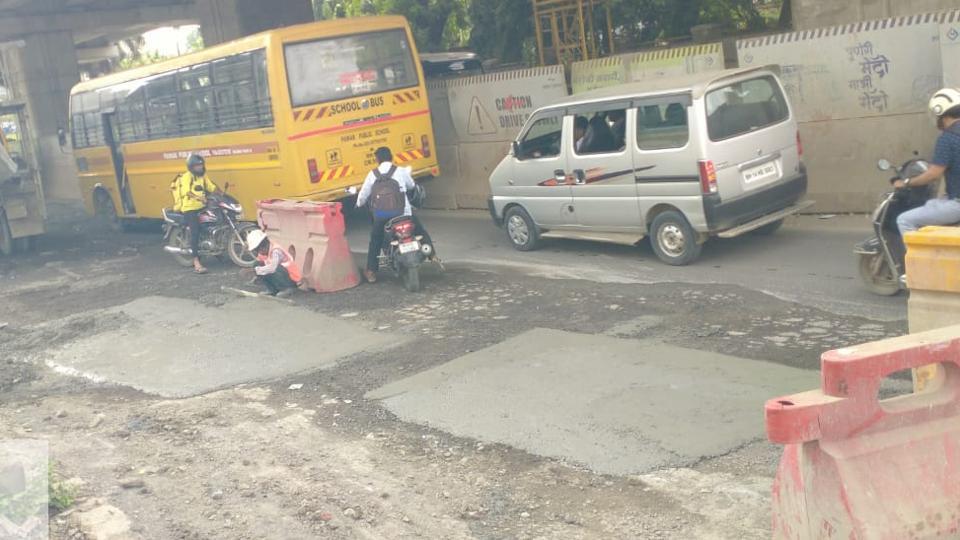
Despite being one of India’s largest Information Technology (IT) hubs, the Rajiv Gandhi Infotech Park in Hinjewadi, Pune, is grappling with longstanding infrastructure issues hampering daily life for over five lakh employees who work there. Spread over three phases, the IT Park is home to around 400 IT and IT-enabled service companies contributing roughly 60% of Maharashtra’s total IT exports. Yet, residents and employees complain of poor infrastructure – dilapidated roads, lack of water supply, limited public transport, waste management issues, and inadequate power supply – that has persisted for over two decades. With the upcoming assembly elections, the Rajiv Gandhi Infotech Park is hoping that the newly elected MLA will finally address these pressing problems.
Chronic neglect by the authorities
While the park falls mostly under the Bhor assembly constituency, managed by multiple authorities—the Pune Municipal Corporation (PMC), Pimpri-Chinchwad Municipal Corporation (PCMC), Pune Metropolitan Region Development Authority (PMRDA), Maharashtra Industrial Development Corporation (MIDC) and Gram Panchayats—locals feel it remains an afterthought for policymakers.
Pavanjit Mane, an IT employee, said, “Hinjewadi is practically at the end of the line in terms of political attention. Internal roads are in disrepair, traffic congestion is a nightmare, and our towers face severe water shortages, forcing societies to spend lakhs on tankers.”
The exponential growth in housing and real estate, driven by the booming IT sector, has left local infrastructure trailing. Elite housing societies have mushroomed across Hinjewadi, Mahalunge, Maan, Marunji, Punaawala and Wakad but basic amenities such as functional footpaths, reliable public transport, and adequate street lighting remain scarce.
Residents’ concerns: Safety, public transport and smooth traffic flow
Suraj Bhosale, a Hinjewadi resident, pointed to the poor roads and lack of pedestrian infrastructure. “Old pavements are damaged, and the few that are intact are encroached upon. The lack of flyovers and foot overbridges to manage traffic flow, combined with minimal public transport options, makes commuting a daily ordeal. The metro project here doesn’t provide last-mile connectivity either,” Bhosale said. Safety of women employees remains unaddressed, he said and added that there is need for CCTV cameras and heightened police presence.
Concerns over retention of companies
Recently, Nationalist Congress Party/NCP (SP) leader Supriya Sule, who represents this constituency in Parliament, claimed that poor infrastructure is driving companies out of the IT Park. Deputy chief minister Devendra Fadnavis refuted her claims accusing her of promoting a ‘fake narrative’ and said that 16 companies had moved out of Hinjewadi only to relocate in tier 2 cities of Maharashtra like Nagpur and Chhatrapati Sambhaji Nagar.
“The companies have expanded to tier 2 cities for growth. Let’s stop defaming Hinjewadi and Maharashtra,” Fadnavis said, adding that 13 out of the 16 companies had shifted base during the tenure of the Maha Vikas Aghadi (MVA) government and only the remaining three companies had relocated under the current Mahayuti government.
However, some employees acknowledge Sule’s claims stating that lack of infrastructure deters new investment. “Unlike cities like Hyderabad and Bengaluru where governments invest heavily in infrastructure, Pune is losing out. Bengaluru is set to get 100 new IT firms but in Pune, we’re struggling with basics,” an IT professional said on condition of anonymity.
Political promises of change
The park falls mostly under the Bhor assembly constituency represented by Congress MLA Sangram Thopte since 2009. This year, Thopte faces a challenge from NCP candidate Shankar Mandekar. “I am aware of these concerns and have plans to address them,” Thopte said.
Mandekar meanwhile criticised the longstanding neglect of the IT Park by the current administration. “The citizens need a representative who is committed to solving their issues. If elected, I promise to address all these issues, especially those affecting Hinjewadi IT Park,” Mandekar said.
With the assembly polls inching closer, residents and tech professionals of Hinjewadi are waiting to see whether or not their long-ignored grievances will be taken seriously by local leaders. With more than 25 years of operational history and vast contributions to the state’s economy, the Rajiv Gandhi Infotech Park is waiting for the infrastructure it deserves to secure its future as a leading IT hub.


