
 E-Paper



Middle East conflict: Banana prices crash in Jalgaon, farmers forced into distress sale
According to farmers, the fruit is currently sold at ₹8– ₹10 per kg in the wholesale market, while the cost of production is around ₹12 per kg

 Prefer HTon Google


The ongoing Middle East conflict has triggered a steep drop in wholesale banana prices in north Maharashtra’s Jalgaon district, forcing farmers into distress sales as returns dip below production costs. According to farmers, the fruit is currently sold at ₹8– ₹10 per kg in the wholesale market, while the cost of production is around ₹12 per kg.
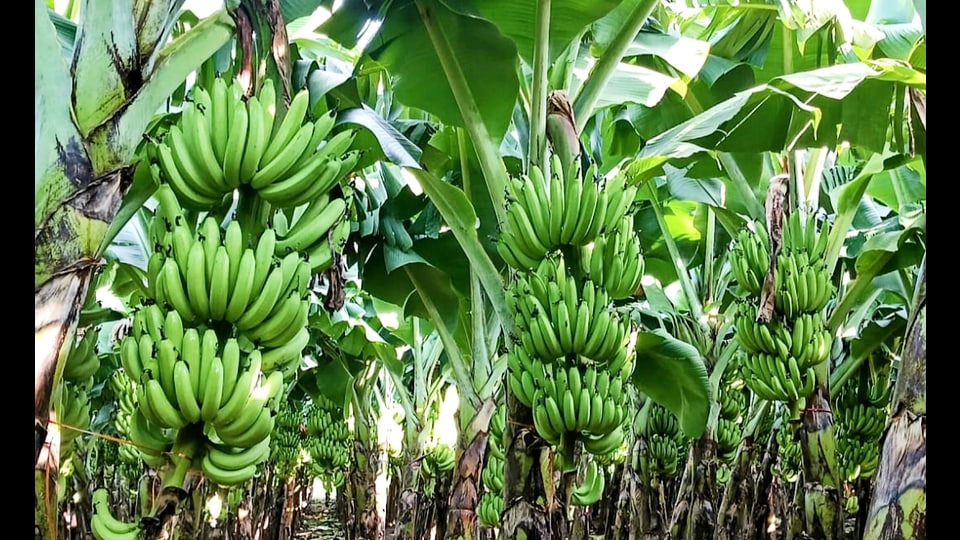
Jalgaon is the largest banana-producing district in Maharashtra, with an annual output of around 4 million tonnes. Nearly 50,000 farmers across six tehsils depend on banana cultivation for their livelihood.
Of the total production, about 10% is exported to Gulf countries such as Iran and Iraq, while the remaining is supplied to domestic markets in northern states, including Rajasthan, Delhi, Himachal Pradesh, and Jammu & Kashmir. On average, farmers earn ₹14– ₹15 per kg in the domestic market and over ₹18 per kg from exports.
Vishal Agarwal, a Jalgaon-based exporter, said, “Typically, between March and December, over 100 containers of bananas are shipped daily to Iran and Iraq, with each container carrying about 20 tonnes. Exports came to a standstill after the war broke out. Though shipments have resumed, freight charges have surged from $3,000 to nearly $12,000 per container forcing many exporters to halt operations.”
District guardian minister Gulabrao Patil attributed the crisis to disruptions caused by the ongoing conflict involving Iran and the US-Israel axis. “I am aware that prices are crashing in Jalgaon. I will raise the issue in the cabinet meeting,” he said.
Jalgaon collector Rohan Ghuge recently held a meeting with Agricultural Produce Market Committee (APMC) authorities in banana-producing tehsils. “The feedback suggests that a section of traders may be resorting to cartelisation, impacting prices. I will hold another meeting in Raver with traders and farmers next week,” he said.
Ghuge has also reached out to his counterpart in Burhanpur, Madhya Pradesh, as prices in Burhanpur’s APMC influence rates in Jalgaon. The town is located about 20 km from Raver.
Officials said traders supplying to domestic markets are aware that exporters are currently not buying in large quantities, weakening farmers’ bargaining power. “Traders are negotiating lower prices to increase their margins,” admitted a district official.
Farmers fear that any future fuel shortages could disrupt transportation to northern markets, further worsening the situation.
Ramdas Patil, a farmer from Raver, said he sold 200 quintals at ₹10 per kg despite incurring losses. “I had to harvest on time to avoid overripening and damage. Since bananas cannot be stored for long, I had no choice but to sell at the prevailing price,” he said.
Another farmer, Bhagwat Patil, said he sold 1,000 quintals at ₹8 per kg. “Traders were not offering better prices. We appeal to the administration to ensure we are not exploited. With exports hit, we should at least get a fair price in domestic markets,” he said.


