
 E-Paper



Monday Musings: Pune Metro can change our lives and the way we commute
With work reaching advanced stage on the Swargate-Chinchwad and Vanaz-Ramwadi corridors, and recently started on the third line – Hinjewadi to Shivajinagar, Metro has already changed Pune’s skyline. Metro and its pillars have become landmarks


London got Metro train in 1863; New York in 1904. In India, the Metro trains arrived first in Kolkata during 1985 and Delhi in 2002. In Pune, it took almost 20 years – from conceptualisation to execution - for this dream to become a reality, on Sunday.
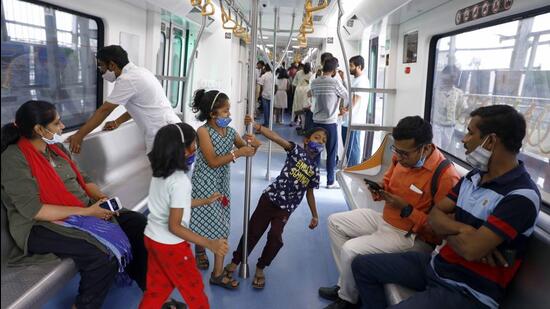
There is nothing quite like public transport to know your city and feel its pulse. There is also nothing quite like public transport to let a city expand and live out its true potential. Even as Pune missed the bus earlier and embarked on Metro journey late, it is better late than never. Sceptics may also point to only 12 km of the 32-km route Metro trains will run in Pune and Pimpri-Chinchwad. But it is a starting point, as Pune was eagerly waiting for since past two decades, when citizens were first shown the Metro’s dream.
With work reaching advanced stage on the Swargate-Chinchwad and Vanaz-Ramwadi corridors, and recently started on the third line – Hinjewadi to Shivajinagar, Metro has already changed Pune’s skyline. Metro and its pillars have become landmarks.
It will soon change the way Puneites look at life, lifestyle and environs, like in Delhi after Metro network expanded rapidly in the past one decade. Another change that the Metro rail can bring here is to unify Pune and Pimpri-Chinchwad as a single market and make it more homogenous. From Katraj to Nigdi and Wagholi to Chandani chowk, Puneites consider their locality as separate territory with an independent market.
Puneites, who always loved the independence of a personal vehicle, should now adapt to the Metro rail culture. For the city once known to be capital of bicycles, the growth brought in by industrialisation – mainly through IT and enabled services – has changed its character in the past two decades.
Pune and Pimpri-Chinchwad’s population has now crossed over 5 million. However, the absence of a strong public transport has led to sharp increase in private vehicles with city earning a sobriquet of two-wheeler capital of India, something people of Pune have been facing adversely. As per RTO figures, there are around 4 million vehicles in Pune, close to its overall population. Metro, as the global experience goes, hopes to encourage people to shun private vehicles and instead use mass transport.
The Metro is also expected to lead to social integration and evoke the feeling of being in ‘one city’, that Pune Mahanagar Parivahan Mahamandal Limited (PMPML), city’s another public transport body, hasn’t been able to do despite best efforts. The transforming landscape has a potential to change the real estate sector in a big way and rationalise housing prices as the Metro will push for horizontal growth of city rather than adding into chaos in already crowded areas. More importantly, it can create a market for reading in a city where students’ population is quite high.
At the same time, Metro can become the big leveller. If the rich and the poor share same space in one coach, it can create a ‘public space’ shared by all segments of society, becoming a melting pot of sorts.
Pune is delighted with its Metro despite struggling to keep pace with an exploding city. If Metro czar, E Sreedharan, created something that was till recently rare in India by bringing a modern Metro in Delhi, Maha-Metro can take a cue and complete the remaining corridors, and, at the same time embarking on new expansion routes. Unless the Metro network expands in Pune and Pimpri-Chinchwad, its utility will remain limited.
After Metro’s inauguration on Sunday, Prime Minister Narendra Modi said his government’s priority is to focus on improving mass transportation, including metro rail connectivity. It couldn’t be more urgently needed than it is today.
At Pune Metro, as time will pass, more stories will emerge. Just as Mumbai’s locals inspired filmmakers and authors, the Pune Metro can become a reference point in ways that are far removed from the tracks on which its trains run.
Yogesh Joshi can be contacted at yogesh.joshi@htlive.com


