
 E-Paper



MPCB extends stringent RMC plant guidelines to cover entire state
Initially applicable only within the Mumbai Metropolitan Region (MMR), these guidelines have been extended to cover the entire state of Maharashtra from October 17, 2025


With ready-mix concrete (RMC) plants having emerged as a significant contributor to the rising air pollution in urban areas, the Maharashtra Pollution Control Board (MPCB) acting on the Bombay High Court’s directives had earlier introduced stringent, revised guidelines for RMC plants with a view to curbing pollution. Initially applicable only within the Mumbai Metropolitan Region (MMR), these guidelines have been extended to cover the entire state of Maharashtra from October 17, 2025.
As per the notification issued by the MPCB head-office in Mumbai on October 17, new commercial RMC plants must not be established within 200 metres of sensitive locations such as schools, colleges, hospitals with over 50 beds, or courts. They must also maintain a minimum distance of 50 metres from the nearest human habitation, except in notified industrial areas.
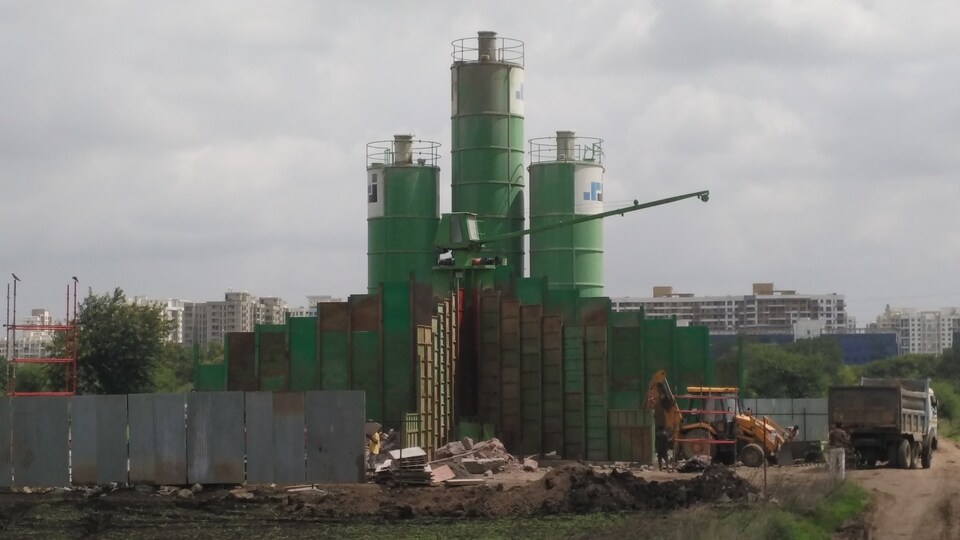
Furthermore, all existing and new RMC units must be covered from all sides with tin sheets or similar materials, creating a box-type enclosure around key sections such as raw material handling zones, silos, loading and unloading areas, conveyor belts, mixing units, and hopper bottoms. Alternatively, the entire plant premises must be fully enclosed. Existing plants have been directed to implement the same within one month of issuance of the notification and submit a bank guarantee of ₹25 lakh to ensure proper operation and maintenance of their pollution control systems.
The guidelines make it the responsibility of plant operators to ensure that all vehicles are thoroughly cleaned before leaving the premises and again at the delivery site. Transit mixers carrying material on their outer surfaces will not be allowed to operate, and plant operators will be held accountable for any violations.
To address air pollution, the notification mandates that plants monitor ambient air quality at their plot boundaries and ensure that particulate matter levels do not exceed 100 µg/m³ for PM10 and 60 µg/m³ for PM2.5. The guidelines require the use of mechanical closed systems and dust collectors such as bag filters or multi-cyclones for handling materials like cement and fly ash. Additionally, all RMC units must develop tree plantations along their site boundaries to serve as a natural dust barrier.
In terms of water pollution control, plants must collect wastewater generated from operations such as vehicle and transit mixer washing, floor cleaning, and other processes through a well-designed drainage system. This wastewater must be treated in an adequate treatment facility to meet prescribed disposal standards.
The MPCB has also emphasised compliance with Noise Pollution (Regulation and Control) Rules, 2000, to minimise noise levels from plant operations.
Regarding solid waste, the notification specifies that sludge, muck, and debris generated during operations must either be reused through recovery or reclamation systems, or disposed of at authorised construction and demolition waste sites designated by local authorities.
According to officials, this transparency-focused model will make it harder for polluting RMC plants to go unnoticed. The MPCB is also working on linking RMC plant data with the state’s urban development dashboard, enabling cross-verification.


