
 E-Paper



Pleasant summer season will have no direct impact on monsoon: IMD
Southwest monsoon is likely to advance into south Andaman Sea and adjoining southeast Bay of Bengal around May 21, according to weather department


Since the temperature in Pune, and Maharashtra have not seen a major rise this season, the feel of a ‘hot’ summer has been missing. On some days, the maximum day temperature touched the 40 degrees Celsius mark in Pune city, however, did not stay at that point for long. Scientists at the India Meteorological Department (IMD) claim that a pleasant summer may not have have a direct impact on the onset of monsoon.
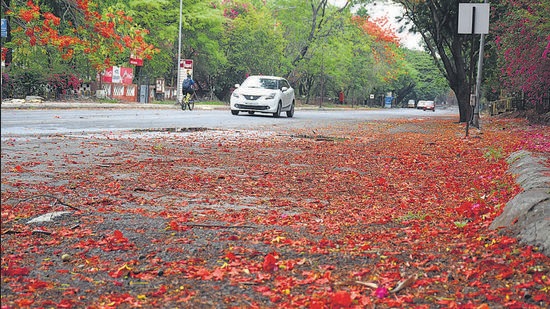
As per India Meteorological Department (IMD), the reasons for not increasing the maximum temperature are the continuous weather systems that have been active over the state.
The Southwest monsoon is likely to advance into south Andaman Sea and adjoining southeast Bay of Bengal around May 21, according to IMD.
Anupam Kashyapi, head of weather forecasting department at IMD Pune said that the day temperature in Pune city during the summer season has touched 40 degrees Celsius only on a few occasions.
“When the mercury touched 40 degrees Celsius, we experienced local instability in the weather. This has caused light rainfall with cloudy weather towards the evening. There were also thunderstorms and lightning accompanied with the rainfall but due to this, the following days become cooler. Thus, the warming effect has been cooled off,” said Kashyapi.
Until May 24, the IMD has forecasted cloudy skies and pleasant days for Pune city.
“After May 24, the temperature is not likely to rise in Pune. However, for Maharashtra, a marginal rise in day temperature may be seen in Vidarbha and Marathwada in the next few days until May 27,” said Kashyapi.
As per the seasonal outlook for April to June issued by the IMD, it has clearly been stated that subdivision in the state will experience normal day temperature.
Along with this, March as well as April this year reported very fewer incidents of heat waves.
As per a recent report by IMD, in Maharashtra and rest of Central India, no frequent heat wave conditions were observed. Also, the maximum temperature over Maharashtra and Central India was below normal by 1 to 3 degrees Celsius.
OP Sreejith, scientist, climate monitoring and forecast, IMD Pune said that the cause of isolated heat waves events in Central India which includes Maharashtra is that La Nina conditions are active this year.
“We have observed the presence of lower-level wind convergence on many days in April this year. This resulted in rainfall and thunderstorms activities over most subdivisions in Maharashtra during the summer season. This eventually restricted the heating intensity to a few days and resulted in a comparatively pleasant summer,” said Sreejith.
In May, Extremely Severe Cyclone (ESC) Tauktae brought rainfall and thunderstorms with gusty winds to many parts of the state. In Pune as well, more than 3 mm rainfall was reported in the last two days.
Since 2009, Pune has reported a maximum day temperature in the month of May at 41.9 degrees Celsius in May 2010. However, this month in May, the day temperature did not even touch 40 degrees Celsius.
Effect on Monsoon
OP Sreejith, Scientist from IMD also added that there is no direct correlation between the intensity of heat in summer season and the monsoon.
“The monsoon depends on various factors. IMD has issued the first long range forecast in April. We will be issuing another by the end of this month,” said Sreejith.
In its first long range forecast for Monsoon 2021, IMD has forecasted that Southwest monsoon seasonal that is from, June to September, rainfall over the country as a whole is most likely to be normal that is 96 to 104 per cent of Long Period Average (LPA). “Quantitatively, between the month of June to September rainfall is likely to be 98 per cent of the Long Period Average (LPA) with a model error of ± 5%,” stated IMD.


