
 E-Paper



PMC commissioner reviews Rajiv Gandhi Zoological Park, calls for immediate implementation of Master Plan
Over the past two years, the zoo has come under scrutiny due to allegations of mismanagement including data discrepancies and improper care of animals

 Prefer HTon Google


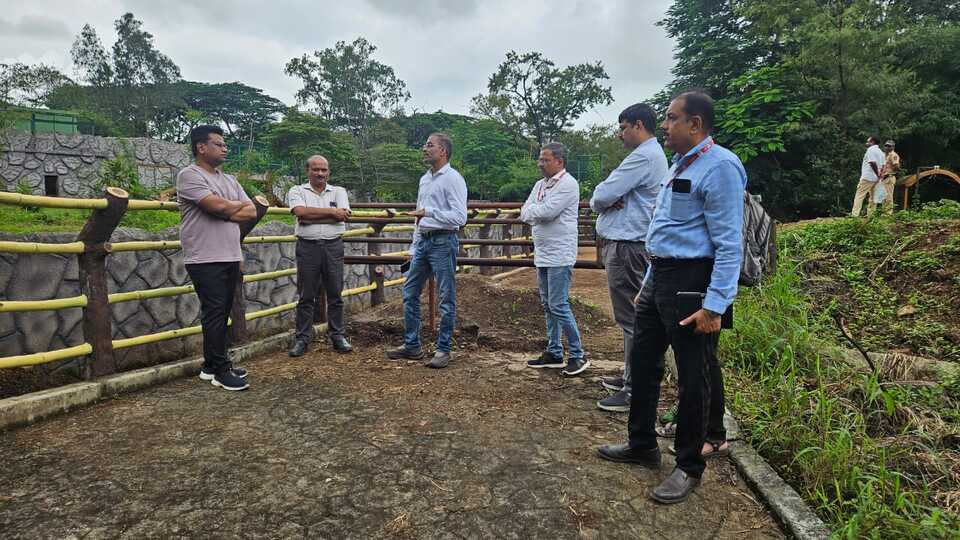
Municipal commissioner Naval Kishore Ram on Monday, September 22, 2025 visited the Rajiv Gandhi Zoological Park to review its functioning, facilities and future development. During his visit, he examined various aspects including the living arrangements of animals, daily management practices, healthcare systems for animals, and amenities available to tourists. He also reviewed the proposed development works under the zoo’s ‘master plan’ and directed officials to expedite the implementation of projects.
Over the past two years, the zoo has come under scrutiny due to allegations of mismanagement including data discrepancies and improper care of animals; an incident wherein a leopard escaped from the zoo; the death of 15 spotted deer due to foot-and-mouth disease (FMD); and detection of the highly fatal Malignant Catarrhal Fever (MCF) virus in a sample from one of the deceased deer. These incidents have raised serious concerns over the management of the zoo with some calling for a strict inquiry. Against this backdrop, the Pune municipal commissioner’s visit assumes particular importance.
During his visit, Ram interacted with tourists and sought feedback about their experience at the zoo. He emphasised the need to expand the zoo’s facilities in a way that enhances both animal welfare and visitor satisfaction. Stressing on immediate improvements, he instructed officials to speed up modern development works that are currently pending and to align the Rajiv Gandhi Zoological Park with international standards.
Among Ram’s key directives, he asked the authorities to ensure proper healthcare services for animals, maintain high standards of food safety and hygiene, and strengthen preventive healthcare measures. He suggested redesigning of tourist entry points and facilities to make them more accessible and user-friendly, while also addressing issues of vehicle management, parking and transportation. The commissioner further highlighted the need for child-friendly and tourist-friendly amenities and asked that these be developed in line with global best practices.
Ram also examined proposals under the zoo’s ‘master plan’ including habitat improvement projects and eco-friendly tourist facilities. He directed officials to prepare a detailed action plan for integrated development of the zoo and complete it within four years, focusing on scientific animal management and improved tourist services.
Additional municipal commissioner Ashok Ghorpade; zoo director Dr Rajkumar Jadhav; zoo veterinary officer Dr Rahul Sathe; deputy director Dr Suchita Suryawanshi-Patil; deputy engineer Amol Rukde; and representatives from consultant firm NKS Designer and Consultant International were present during Ram’s visit.
Ram told the media, “The Rajiv Gandhi Zoological Park in Pune spans 130 acres and features the city’s largest natural water bodies. There is a need to make better use of the available space, enhance visitor facilities, and resolve parking issues that frequently cause traffic congestion near the zoo.”
Acknowledging the zoo’s shortcomings, he said, “While the zoo draws a substantial number of visitors, its wildlife collection is limited, and staff strength is insufficient. A major city like Pune should have a larger and more diverse collection of animals. Additionally, there is no adequate water purification system for aquatic species. Currently, one sewage treatment plant (STP) is operational and we plan to install another STP, which will help remove water hyacinth and improve the quality of water in the zoo’s water bodies.”
About the ongoing ‘master plan’, a zoo official said, “The entire project is estimated to cost around ₹250 crore, with the current focus on species augmentation and development of animal exhibits. Out of the 36 proposed projects, nine have been completed so far, including enclosures for the jungle cat, leopard cat, rusty-spotted cat, Indian giant squirrel, Asiatic lion, striped hyena, antelope, Nilgai, and an ex-situ conservation breeding facility for the Malabar giant squirrel. Nearly 80% of the work on the Madras baboon, mouse deer, and zebra exhibits has also been completed. This is an ongoing process, and progress depends on budget allocation, so work proceeds accordingly.”


