
 E-Paper



PMC’s drainage, road works cause traffic, dust woes across city
Ongoing drainage, stormwater, and roadworks across Pune have caused traffic congestion and dust-related issues for residents in several areas

 Prefer HTon Google


Pune: Ongoing drainage, stormwater, and roadworks across Pune have caused traffic congestion and dust-related issues for residents in several areas.
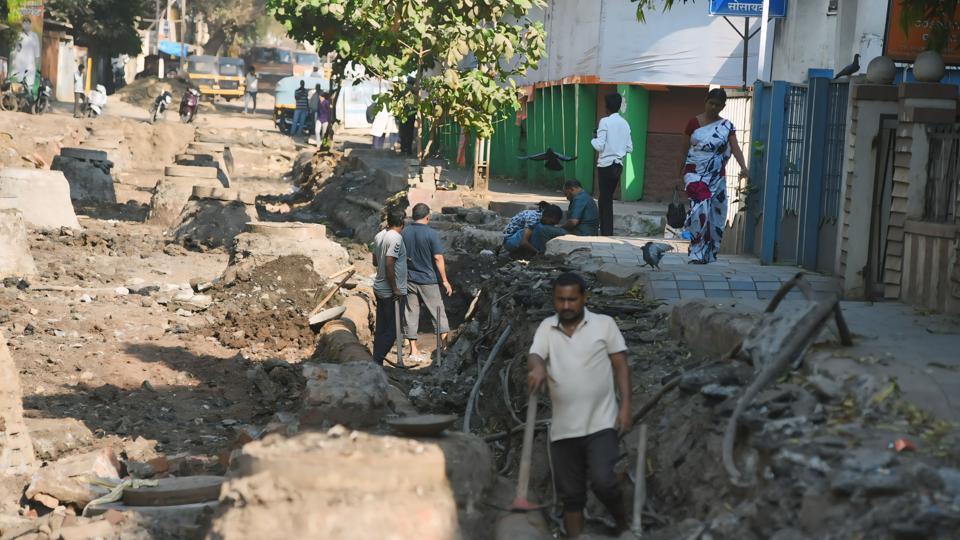
The drainage department and regional ward offices of Pune Municipal Corporation (PMC) are currently undertaking extensive drainage line work to meet the financial year deadline as ward offices struggle to cover expenditure targets. The officials, however, denied it saying it is a routine exercise.
Jagdish Khanore, head, PMC drainage department, said, “It is true that drainage work is underway at many locations in the city. Summer is our peak season for such projects, as work cannot proceed during the monsoon. While it is difficult to provide an exact number, at least 35 to 40 locations are currently under construction. Additionally, ward offices are carrying out their own projects.”
“Apart from drainage, water pipeline laying and roadworks are also happening across the city. Since all these projects are progressing simultaneously, citizens may face some inconvenience,” he said.
According to PMC data, the city has stormwater drainage network of 260 kilometres with 85,589 chambers. Alongside drainage repair, road resurfacing and concretisation work are also in progress.
“We are carrying out road surfacing in several areas, and some cement road construction is also underway,” said Aniruddha Pavaskar, head, PMC road department.
Pune municipal commissioner Rajendra Bhosale said the “equal water distribution scheme” is being expedited, with PMC aiming to complete the project by year-end.
A senior civic official admitted that most infrastructure projects typically begin in January or February. “Even though plans are made in advance, administrative processes, tendering, and contractor selection take time. Work orders for smaller projects are usually issued between October and November, but contractors often delay execution. By the end of the financial year, they rush to complete the work to ensure payments, leading to construction across multiple locations at the same time,” he said.
Citizens demand better planning
Residents have expressed frustration over poor coordination among different civic departments.
“Every day, some work is happening in our area,” said Ramesh Kharat from Dhankawadi. “Why can’t PMC plan properly? If they are digging up roads, all underground work—drainage, water pipelines, and cables—should be done simultaneously to avoid repeated digging for the next five to six years,” he said.
Anil Vaidya from Padmavati raised a similar concern. “A few days ago, our road was dug up for a water pipeline. Later, it was dug up again for drainage work. Why not complete both tasks at once to save time and money?”
Marketing professional Ritesh Shah highlighted how the projects are affecting businesses. “Traffic diversions due to these works have disrupted our schedules. We are unable to meet client visit targets due to congestion.”
Another resident Varsha Desai stressed the need for better communication regarding diversions. “PMC and contractors should put up notice boards a few days in advance, not just at the work site. Boards should be placed at a distance to allow citizens to take alternate routes. Right now, we only see the signs when we reach the spot, leaving us stuck in traffic,” she said.
With multiple civic projects ongoing, citizens are demanding better planning and coordination to minimise disruptions.


