
 E-Paper



Pune cycle event: Reduced traffic brings relief as air quality improves
According to data from the SAMEER app, managed by the Central Pollution Control Board (CPCB), the city’s air quality index (AQI) dropped to 94 on Monday

 Prefer HTon Google


Extensive road closures and traffic diversions implemented for the ‘Pune Grand Challenge Tour’ international cycling race beginning Monday, January 19, 2026, resulted in a marked improvement in the city’s air quality, highlighting the impact of reduced vehicular movement on pollution levels.
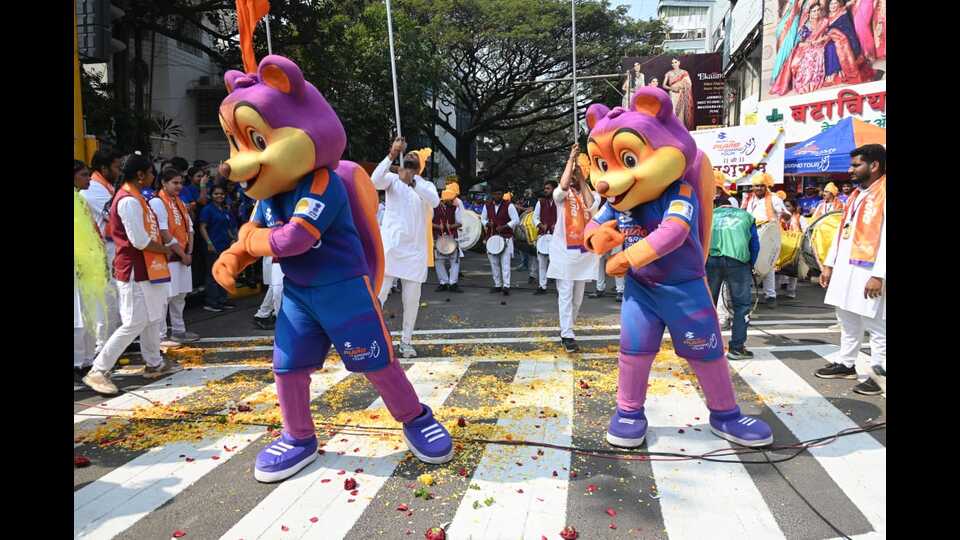
According to data from the SAMEER app, managed by the Central Pollution Control Board (CPCB), the city’s air quality index (AQI) dropped to 94 on the first day of the international cycling event on Monday as Pune city traffic police imposed daylong restrictions on vehicular movement across several key roads. This is a significant improvement, considering that AQI levels have consistently remained above 150 since November 2025.
The Shivajinagar monitoring station – one of Pune’s most polluted locations that frequently reports AQI levels above 200, and has occasionally touched the 300 mark in recent months – recorded an AQI as low as 79.
Traffic restrictions were enforced for the prologue race of the Pune Grand Challenge Tour 2026, jointly organised by the Pune district administration and the Cycling Federation of India (CFI). Several arterial roads in central Pune were closed, and traffic was diverted throughout the day to facilitate the event. To minimise disruption, the authorities also declared a holiday for schools and colleges in multiple municipal wards. Educational institutions along major corridors such as Fergusson College Road, University Road, Jangli Maharaj Road and the adjoining areas remained closed.
Apart from traffic curbs, measures taken by the Pune Municipal Corporation’s (PMC’s) environment department also contributed to the improvement in air quality. Kishori Shinde, environment officer at the PMC, said changes were made following discussions with senior officials on rising pollution levels in traffic-heavy areas. “It is pleasant to see that the air quality has dropped to a satisfactory level. Earlier, fogger vehicles were operating mainly in the afternoon, but we have now shifted their deployment to early morning hours on roads where pollution levels remain high,” Shinde said, adding that sector-wise contributors to air pollution are also being addressed.
Favourable weather conditions further aided the improvement in air quality. Over the past few days, Pune has experienced clearer skies, reduced moisture and increased wind flow, which helped disperse trapped dust particles and lower particulate matter concentrations. Air quality monitoring stations across traffic-dense locations such as Shivajinagar, Bhumkar Chowk, Lohegaon and Hadapsar - that are prone to higher pollution levels due to heavy traffic movement - also reported improved readings.
Earlier, Sachin Ghude, head of the Metropolitan Air Quality and Weather Forecasting Services (MAQWS) at the Indian Institute of Tropical Meteorology, told Hindustan Times that traffic congestion is a major contributor to pollution spikes in these zones. On Monday however, all these stations recorded a noticeable decline in pollution levels.


