
 E-Paper



Pune division tops MSRTC’s first quarterly evaluation report for 2025
The quarterly assessment evaluates each division on parameters such as administrative discipline, operational efficiency, and passenger service quality.

 Prefer HTon Google


Pune: The Pune division has secured the top position in the Maharashtra State Road Transport Corporation’s (MSRTC) First Quarterly Evaluation Report for 2025, showcasing exceptional performance across its various depots. The quarterly assessment evaluates each division on parameters such as administrative discipline, operational efficiency, and passenger service quality.
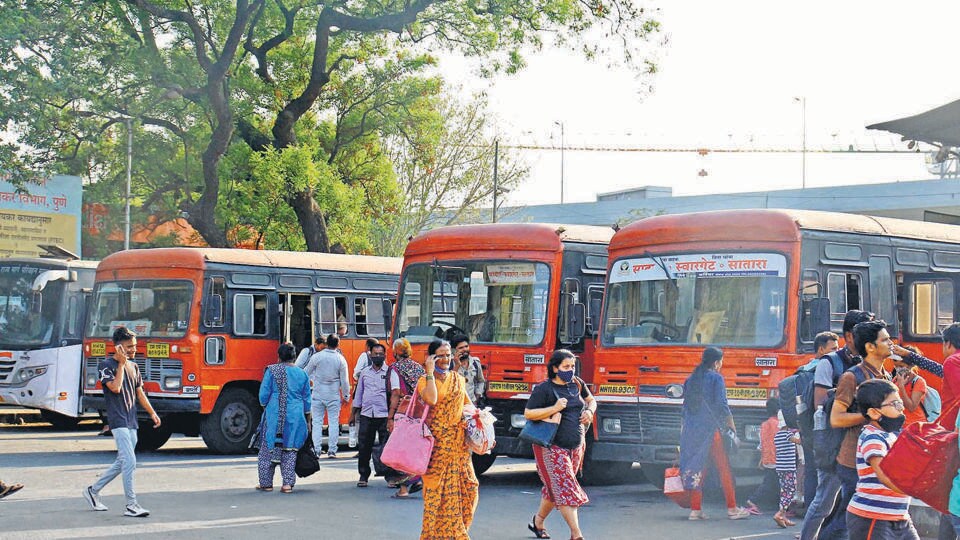
Pune division’s overall excellence reflects its consistent efforts in ensuring disciplined operations, commuter satisfaction, and strategic resource management. Among the top performers from Pune division, Baramati, Akluj (Solapur) and Medha (Satara) stood out with near-perfect scores. Baramati and Medha scored 97 out of 100, while Akluj followed closely with 96.
These depots achieved high marks in all three evaluation categories - administration, operations and passenger service - highlighting a well-rounded approach to public transport management. Other depots like Ichalkaranji, Karad, Gargoti and Sharol also performed well, scoring between 79 and 91 marks, further demonstrating the division’s broad-based strength.
As per the information given by MSRTC, the evaluation, based on a 100-mark system, allocated 30 marks for administrative discipline and cleanliness, 50 for operational performance (including number of trips, punctuality, and staff efficiency), and 20 for passenger service standards (ticketing systems, staff behavior, and depot cleanliness).
“Pune has set a benchmark for others by combining proactive planning, responsive management, and a strong commitment to passenger needs,” Arun Siya, MSRTC Pune divisional controller said.
The evaluation report also noted that while Nagpur and Amravati divisions had individual depots scoring above 90, and Mumbai division maintained moderate performance with depots like Dadar and Parel scoring between 85 and 91, it was Pune that showed consistent excellence across the board. In contrast, divisions like Latur and Nashik showed mixed results, with both high-performing and under-performing depots.
“Overall, the report suggests that Pune division’s focus on disciplined operations, efficient staff management, and commuter-oriented service has positioned it as a model for others. If this momentum continues, Pune is likely to maintain its top position in the upcoming quarterly assessments,” said Siya.
Ravi Shinde, a regular commuter from Baramati to Pune, shared his experience with MSRT Pune: “In the last few months, I’ve noticed buses are more punctual, cleaner, and the staff are polite and professional. Earlier, delays and confusion at the depot were common, but now the service feels organised and reliable. It really makes a difference for daily passengers like me who depend on ST buses to get to work on time.”


