
 E-Paper



Pune police launch student safety initiative
As part of the initiative, the Pune Police launched a year-long Student Safety Ambassador Programme (2025–26) in partnership with educational institutions across the city.


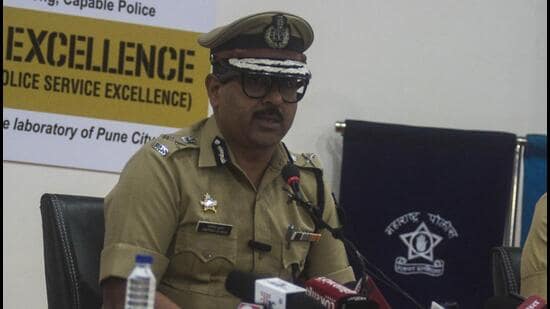
Pune: Commissioner of Police Amitesh Kumar, while addressing educationists, school authorities, Vice-Chancellors and civic officials, called for coordinated action among institutions, parents, hostel operators and city authorities to ensure student safety and uphold Pune’s reputation as the “Oxford of the East. He was speaking at the Pune City Police organised conclave “Secure Horizons in Education 2025” on Wednesday, focusing on youth engagement and campus safety.
As part of the initiative, the Pune Police launched a year-long Student Safety Ambassador Programme (2025–26) in partnership with educational institutions across the city. The programme aims to build youth capacity in safety awareness, law literacy, gender sensitivity, mental health and responsible digital behaviour.
The programme will roll out in three phases. Phase 1 (Nov–Dec 2025) will involve preparation and mobilisation, during which institutions will nominate 4–5 student ambassadors each.
Kumar said, “Day 1 will cover understanding law, youth responsibilities, police roles and anti-narcotics awareness. Day 2 will include cyber safety and online behaviour sessions led by the Cyber Cell, along with road safety modules by the Traffic Police. Day 3 will focus on sensitisation and leadership, including women’s safety, gender sensitivity, mental health, emotional resilience and project management.”
According to officials, the third Phase 3, starting from January to October 2026, will cover road safety awareness during Road Safety Week, featuring over 100 street plays.
Alongside the ambassador campaigns, the police announced stricter campus safety measures. These include regular random hostel room checks, increased security patrols around campuses, mentor–mentee support systems, and infrastructure upgrades such as fire safety improvements, CCTV checks and deployment of women security staff.
Pune Porsche case: CP Kumar links safety concerns to systemic lapses
Raising serious concerns over student safety, CP Amitesh Kumar said incidents reported in the past 12–18 months have generated public anxiety and highlighted gaps between Pune’s academic reputation and the lived realities of thousands of students staying away from home. He stressed the need to “reinvent the Oxford of the East” by addressing administrative lapses, enforcing accountability and improving living conditions across hostels and private accommodations.
Referring to the Pune Porsche case, he called it a “wake-up call” for authorities.
“Today marks exactly 18 months since the May 19, 2024, incident where two young lives were lost to rash driving by a juvenile. There were allegations that money was used to shield the accused. But from day one, much before the media attention, the Pune City Police had shown commitment to ensuring justice,” he said.
Kumar recalled the crucial decision to take a second blood sample. “When we received information that there was an attempt to tamper with the first sample at Sassoon Hospital—something unheard of, I ordered a second sample from a separate hospital. This was later used for DNA profiling to match the first sample. That step helped ensure the accused remained in custody.”
He noted that despite widespread criticism, the police prioritised accountability.
“Our investigation has ensured that the accused remained behind bars for 18 months. We have shown that the system is capable of exposing attempts to manipulate the criminal justice system.”
The CP also pointed to deeper systemic issues exposed by the case.
“A 17-year-old was given money to drink in bars and a brand-new, unregistered Porsche. The parents and elders who were supposed to guide him instead supported his misconduct. That ecosystem must be held more responsible,” he said.


