
 E-Paper



Punekars back democracy but fear fake news, Jnana Prabodhini survey shows
A survey reveals Punekars support democracy but worry about misinformation and political accountability; many feel their votes lack value


After a year of political upheaval and delayed civic elections, residents are taking a harder look at how they’re governed, a new survey by the Jnana Prabodhini Foundation (JPF) suggests. Released on December 3, 2025, the findings indicate that while Punekars remain firm supporters of democracy and timely local polls, they are increasingly anxious about misinformation and eroding political accountability.
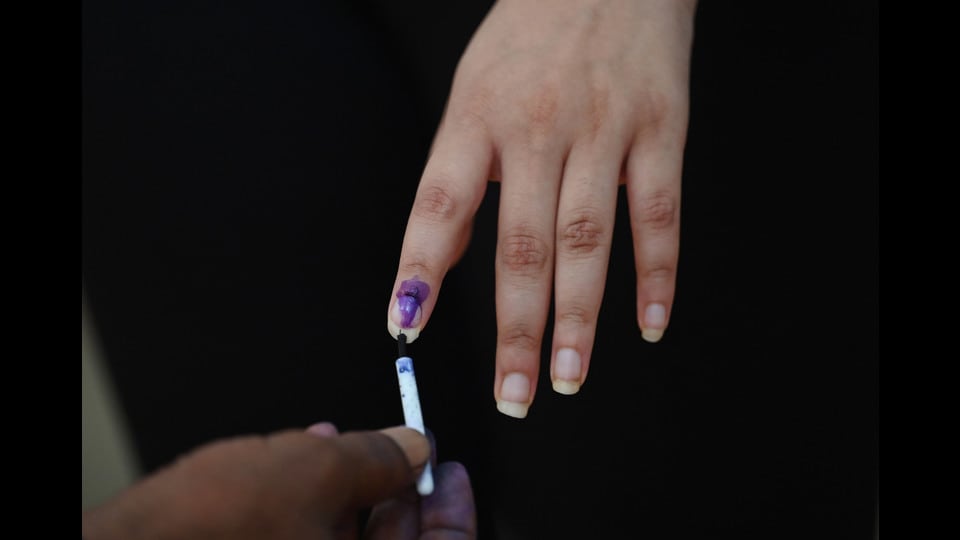
Based on responses from 697 participants surveyed between October 27 and November 23, 2024, just before the Maharashtra assembly elections, the report offers a window into how the city views voting, political conduct, governance, and civic priorities.
Project leader Abhishek Dedhe said the aim was to build a data-driven understanding of citizens’ expectations.
“Our goal is to help local bodies and social organisations plan for voter engagement, civic issues, fake news, and timely elections, including the long-pending PMC polls,” he said.
The findings will be made publicly available on an open-source platform.
The survey shows a strong belief in democracy but a sharp dip in faith that individual votes matter. While 89% said voting is very important, only 61% felt their vote is valuable. Younger respondents reported more scepticism and lower participation than older voters. The generational split was also visible on governance models: younger Punekars were far more opposed to autocratic systems and showed greater flexibility in switching political choices across elections.
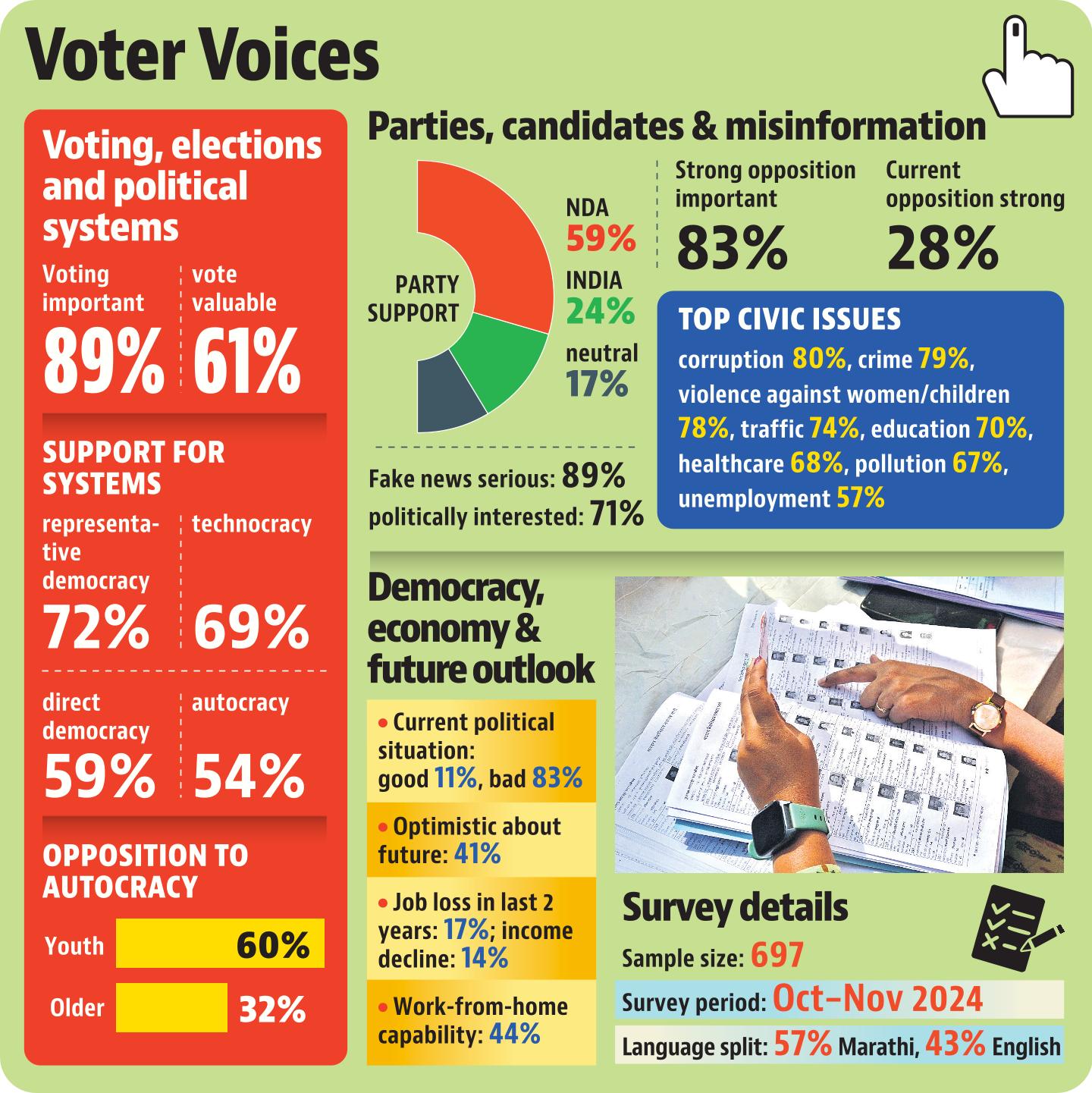
Political preferences tilted towards the BJP-led NDA, with 59% support, while 24% backed the INDIA bloc. But across party lines, 92% rejected the practice of breaking pre-poll alliances to form governments. Respondents also said Maharashtra’s opposition is not strong enough, despite believing a strong opposition is essential.
On civic priorities, corruption, crime, and violence against women and children topped the list. Traffic, health care, pollution and infrastructure issues shaped daily concerns, particularly among women and lower-income groups.
When assessing candidates, Punekars placed overwhelming weight on clean credentials: 96% said a candidate must not have a criminal record. Mental health, education and physical fitness also ranked high, while caste, religion and gender were considered far less relevant. Interestingly, many respondents believed “other Punekars” cared more about caste and religion than they themselves did, indicating a perception gap.
The most severe worry, however, was misinformation. Eighty-nine per cent called fake news a serious or very serious concern. While 64% considered themselves well-informed, only 40% felt others were equally aware of political developments.
Economic stress was another recurring theme. Seventeen per cent reported losing a job in the past two years, while 14% faced income decline. Yet, 41% expressed hope that the state’s political and democratic systems will improve in the coming years.
Dedhe said the insights underline the need for sustained civic engagement.
“We want to build a culture where decision-making and public awareness are strengthened through data,” he said, adding that the next survey will be conducted ahead of the 2026 PMC elections.


